




Medical billing notes are essential for maintaining accurate healthcare records, supporting insurance claims, and reducing preventable billing errors. When documentation is incomplete or inconsistent, healthcare providers may experience claim denials, reimbursement delays, and additional administrative work.
Understanding how to prepare accurate medical billing notes can help physicians, practice managers, and billing professionals improve documentation quality and manage the revenue cycle more effectively. In this guide, we cover the essential elements of billing documentation, common mistakes to avoid, and best practices for improving claim accuracy.
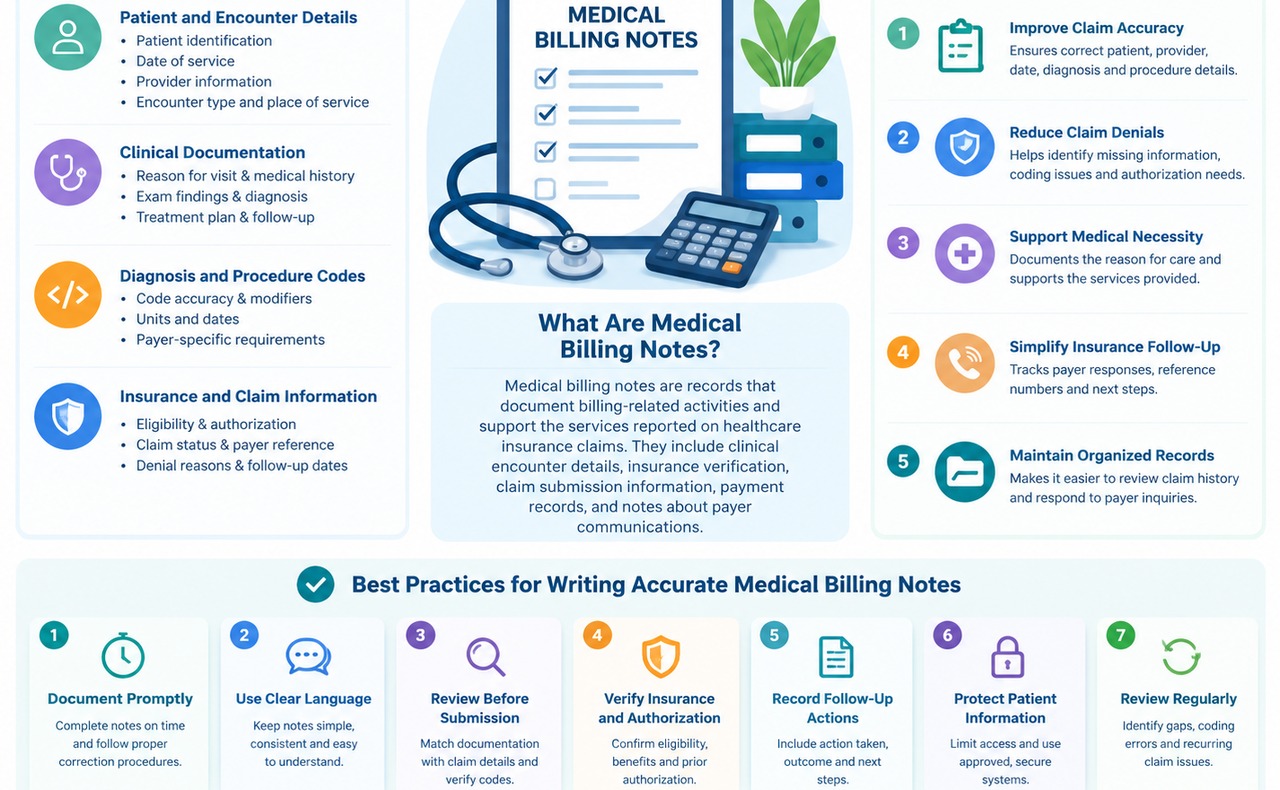
What Are Medical Billing Notes?
Medical billing notes are records that document billing-related activities and support the services reported on healthcare insurance claims. Depending on the purpose, they may include clinical encounter documentation, insurance verification results, claim submission details, payment information, and notes about payer communications.
Clinical notes explain the patient’s condition, examination findings, diagnosis, and treatment plan. Billing follow-up notes, on the other hand, record activities such as claim status checks, denial reasons, appeal submissions, and outstanding payments.
Both types of documentation are important for maintaining a consistent record of the services provided and the related billing activities.
Healthcare practices can strengthen their documentation process by establishing clear procedures and integrating them with their medical billing and practice management services.
Why Are Medical Billing Notes Important?
Accurate medical billing notes help healthcare practices maintain organized records and support the insurance reimbursement process.
1. Improve Claim Accuracy
Insurance claims must contain accurate information about the patient, provider, date of service, diagnosis, and procedures performed. Supporting documentation should be consistent with the information submitted to the payer.
Reviewing documentation before submission can help identify missing information and discrepancies that could delay claim processing.
2. Reduce Claim Denials
Incomplete documentation, incorrect coding, and missing authorization details can contribute to claim denials.
A consistent review process helps identify potential issues before claims are submitted. For additional guidance, read our article on what medical billing is and how the billing process works.
3. Support Medical Necessity
Clinical documentation should accurately describe the patient’s condition and support the services provided. Depending on the service and payer requirements, records may need to include relevant examination findings, medical decision-making, diagnoses, and treatment plans.
Documentation must reflect the actual encounter rather than information added solely to justify reimbursement.
4. Simplify Insurance Follow-Up
Billing teams frequently contact insurance companies about unpaid claims, denials, underpayments, and requests for additional documentation.
Clear follow-up notes make it easier to identify previous actions, payer reference numbers, outstanding requirements, and the next steps needed to resolve a claim.
5. Maintain Organized Healthcare Records
Well-organized records help authorized personnel review claim histories, identify recurring billing issues, and respond to payer inquiries more efficiently.
Practices should also maintain appropriate safeguards for patient information in accordance with applicable privacy and security requirements.
What Should Medical Billing Notes Include?
The information required in medical billing notes depends on the service, payer, specialty, and applicable regulations. However, the following elements provide a useful starting point.
Patient and Encounter Details
Verify the information needed to identify the patient and the relevant healthcare encounter.
Depending on the situation, this may include:
- Patient identification details
- Date of service
- Treating provider information
- Encounter type and relevant service details
- Applicable place-of-service information
Clinical Documentation
Clinical notes should accurately describe the care provided and support the reported services.
Relevant details may include:
- Reason for the visit
- Relevant medical history
- Examination findings
- Assessment and diagnosis
- Medical decision-making, when applicable
- Treatment plan and follow-up instructions
- Relevant orders and test results
The level of documentation should be appropriate for the service and applicable requirements.
Diagnosis and Procedure Codes
Diagnosis and procedure codes must accurately reflect the documentation and follow applicable coding guidelines.
Before submitting a claim, verify that:
- Diagnosis codes are supported by the medical record.
- Procedure codes reflect the services performed.
- Required modifiers are appropriate and supported.
- Units and dates are correct.
- Applicable payer-specific requirements have been reviewed.
Accurate coding helps support clean claims and reduces avoidable discrepancies.
Insurance and Claim Information
Billing notes may also include insurance verification results, authorization details, claim submission dates, payer reference numbers, denial reasons, appeal information, and follow-up dates.
Keeping these details organized helps billing teams track claims and determine what action is required next.
Best Practices for Writing Accurate Medical Billing Notes
Following a standardized documentation process can help healthcare practices improve billing accuracy and reduce unnecessary rework.
1. Complete Documentation Promptly
Clinical documentation should be completed in accordance with applicable requirements and practice policies. Timely documentation helps reduce missing details and inconsistencies.
Any corrections or late entries should follow established procedures and preserve an appropriate record history. Never fabricate information or backdate documentation to support a claim.
2. Use Clear and Consistent Language
Write notes that authorized clinical and billing personnel can understand easily. Use approved terminology and consistent formatting.
Avoid vague descriptions that do not adequately explain the service provided or the action taken to resolve a billing issue.
3. Review Documentation Before Claim Submission
Compare the documented encounter with the proposed claim details. Verify that the reported services, diagnoses, modifiers, and units are supported by the record.
A standardized claim review checklist can help identify missing information before submission.
4. Verify Insurance Eligibility and Authorization
Confirm insurance eligibility, benefits, referral requirements, and prior authorization when applicable.
Record the results of verification and any outstanding requirements. Because payer policies vary, practices should consult the relevant plan rules instead of assuming that all insurers follow the same process.
5. Record Every Important Follow-Up Action
A useful billing follow-up note should identify the action taken, the outcome, and the next step.
For example, a note might document the date of a payer call, the claim status provided, a reference number, and the date for the next follow-up.
These details help prevent duplicate work and make unresolved claims easier to track.
6. Protect Patient Information
Medical billing notes may contain protected health information. Access should be limited to authorized personnel, and patient information should be stored and transmitted through approved systems.
Review the U.S. Department of Health and Human Services HIPAA Security Rule guidance for information about protecting electronic protected health information.
Healthcare practices should implement appropriate administrative, physical, and technical safeguards based on their applicable obligations.
7. Review Documentation Regularly
Periodic reviews can help identify missing details, inconsistent coding, incomplete follow-up records, and recurring claim problems.
Use findings from these reviews to improve procedures and provide relevant training to the personnel responsible for documentation and billing.
Common Medical Billing Notes Mistakes to Avoid
Even well-established healthcare practices can experience documentation problems. Common mistakes include:
Incomplete clinical documentation: Missing relevant information can make it difficult to support a billed service.
Incorrect patient or service details: Inaccurate dates and inconsistent information can cause processing delays.
Unsupported coding: Diagnosis and procedure codes must reflect the services actually provided and the supporting record.
Missing authorization information: Failure to document required authorization can complicate claim processing.
Vague follow-up notes: Writing only that insurance was contacted does not explain the outcome or the next required action.
Poorly documented corrections: Changes should follow established policies and preserve appropriate documentation history.
Inadequate data protection: Patient information should not be exposed through unsecured communications or unauthorized access.
Addressing these issues through a consistent review process can improve documentation quality and support more efficient claim management.
How Medical Billing Notes Help Reduce Claim Denials
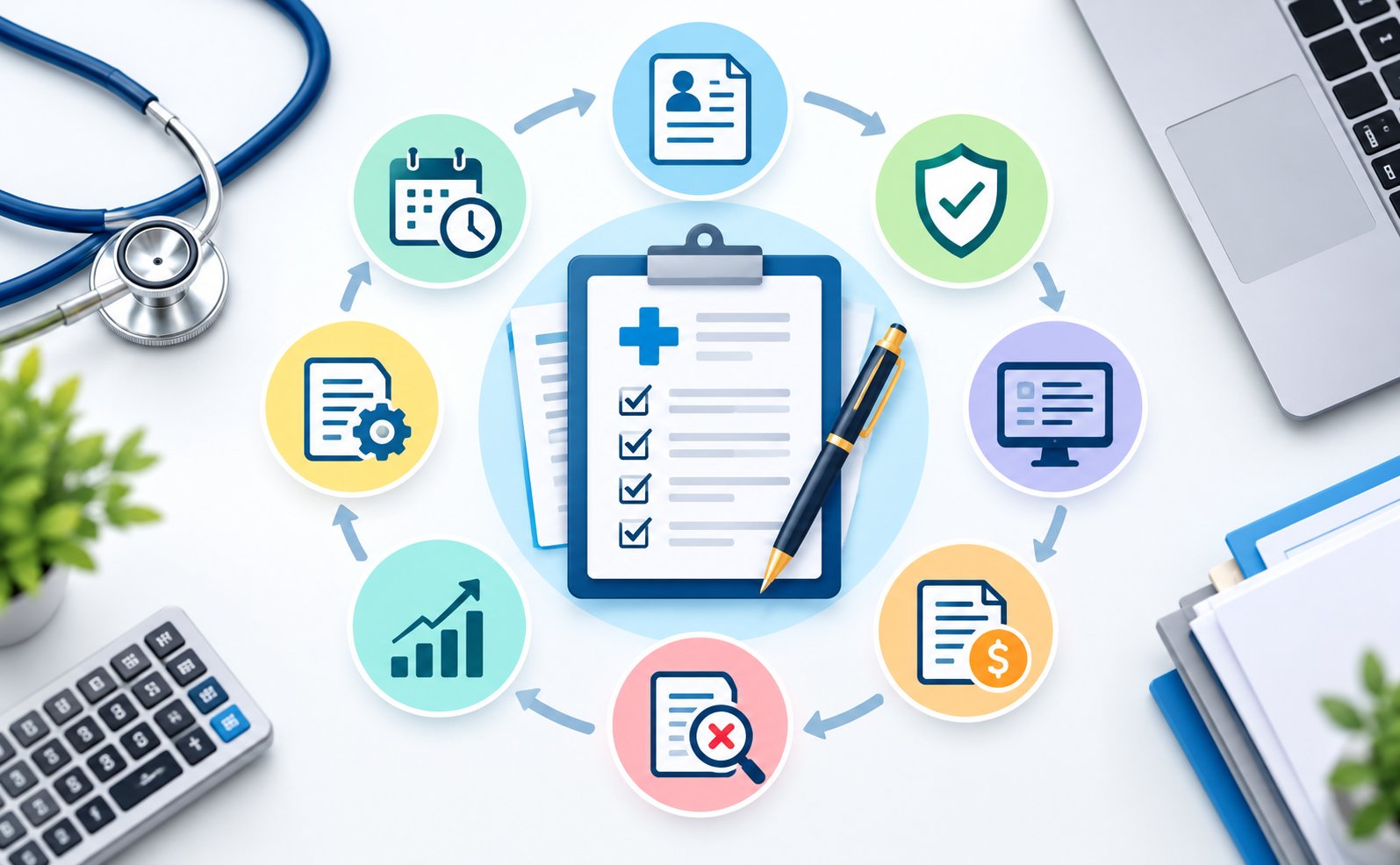
Accurate medical billing notes are one part of a broader claim management strategy. Healthcare practices should connect documentation review with coding validation, insurance verification, claim submission, and payer follow-up.
A practical workflow includes these steps:
- Verify patient and insurance information.
- Confirm required referrals or authorizations.
- Review clinical documentation for completeness.
- Validate diagnosis and procedure codes.
- Check claim details for missing or inconsistent information.
- Submit the claim through the appropriate channel.
- Monitor payer responses and document follow-up actions.
- Investigate denials and correct or appeal them when appropriate.
Tracking denial reasons can also help practices identify recurring problems by payer, service type, or code.
The Centers for Medicare & Medicaid Services (CMS) provides official Medicare billing and compliance resources that healthcare providers can use when reviewing applicable requirements.
For practices that need help managing unresolved claims, medical billing and practice management support can help organize claim submission, payment posting, denial follow-up, and accounts receivable workflows.
How Technology Improves Medical Billing Notes
Electronic health record (EHR) and practice management systems can help healthcare practices organize clinical notes, billing information, claim status, and follow-up activities.
Useful workflow features include standardized templates, required-field checks, claim-edit alerts, role-based access, and consistent documentation procedures.
Technology can help flag missing information, but professional review remains important for clinical accuracy, coding decisions, and payer-specific requirements.
Practices should also evaluate their EMR and EHR optimization options to understand how connected clinical and billing workflows can reduce duplicate data entry and improve information consistency.
How Pro Health Care Advisors Supports Medical Billing Workflows
Managing clinical documentation, claim submission, insurance follow-up, and denial resolution can create significant administrative demands for healthcare practices.
Pro Health Care Advisors provides medical billing and practice management services designed to help healthcare providers manage billing workflows, monitor claims, and address reimbursement issues.
Depending on a practice’s needs, services may include insurance eligibility verification, claim submission, payment posting, denial management, and accounts receivable follow-up.
Learn more about our medical billing and practice management services to explore available support.
Practices looking to strengthen their approach to patient information protection can also review our HIPAA compliance services.
A consistent documentation process combined with appropriate billing oversight can help practices identify errors earlier, organize follow-up activities, and manage claims more effectively.
Frequently Asked Questions About Medical Billing Notes
What Are Medical Billing Notes Used For?
Medical billing notes document clinical services and billing-related activities. They help support insurance claims, record payer communications, track claim status, and document actions taken to resolve billing issues.
What Should Medical Billing Notes Include?
Depending on their purpose, medical billing notes may include encounter details, relevant clinical findings, diagnoses, procedure information, insurance verification results, claim status, denial reasons, and follow-up actions.
Can Incomplete Medical Billing Notes Cause Claim Denials?
Yes. Missing or inconsistent documentation can contribute to claim denials, requests for additional information, and reimbursement delays. The outcome depends on the payer, service, and nature of the documentation issue.
How Can Healthcare Practices Improve Medical Billing Notes?
Practices can improve documentation by using standardized procedures, verifying patient and insurance information, reviewing coding accuracy, recording payer communications, and conducting periodic documentation audits.
Are Medical Billing Notes Protected Under HIPAA?
Medical and billing records containing protected health information may be subject to applicable HIPAA requirements. Healthcare organizations should implement appropriate safeguards and restrict access to authorized personnel.
How Often Should Medical Billing Notes Be Reviewed?
Clinical records should be completed and reviewed according to applicable requirements and practice policies. Billing teams should also review claims before submission and monitor outstanding claims regularly.
Conclusion
Accurate medical billing notes help healthcare practices maintain consistent documentation, support insurance claims, and identify issues that may delay reimbursement. A structured process connecting clinical records, coding review, claim submission, and payer follow-up can improve visibility across the revenue cycle.
If your practice needs assistance managing claims and billing workflows, explore the medical billing and practice management services offered by Pro Health Care Advisors.