






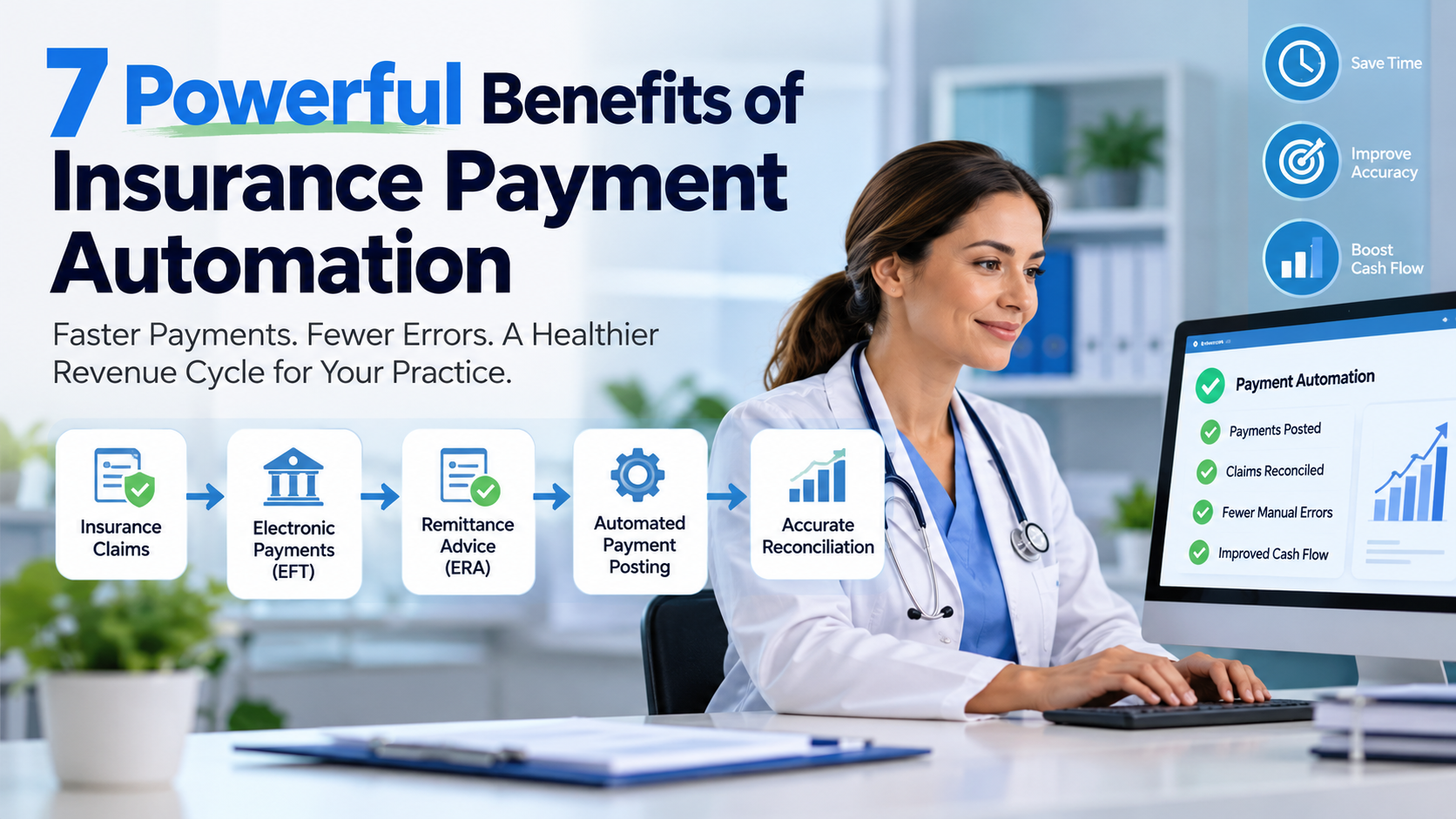
Healthcare practices need an efficient billing process to maintain predictable cash flow and reduce administrative workload. However, manually tracking insurance payments, posting reimbursements, reconciling accounts, and following up on unpaid claims can consume valuable time. Insurance payment automation helps medical practices streamline these repetitive tasks, improve payment accuracy, and gain better visibility into their revenue cycle.
For healthcare providers, payment automation is not simply about receiving money electronically. It also involves connecting insurance payment information with billing records, identifying discrepancies, and ensuring that outstanding claims receive timely attention.
In this guide, we explain how payment automation works, its benefits, the role of electronic funds transfer (EFT) and electronic remittance advice (ERA), and the practical steps healthcare practices can take to improve their payment workflows.
What Is Insurance Payment Automation?
Insurance payment automation is the use of digital tools and predefined workflows to simplify insurance reimbursement processes. These workflows can help healthcare practices receive electronic payments, import remittance information, post payments to patient accounts, reconcile transactions, and flag exceptions that require further investigation.
Traditionally, billing teams may need to log into multiple payer portals, review payment explanations, enter adjustments manually, and compare deposits against outstanding claims. Automation can reduce repetitive data entry and help teams process routine transactions more consistently.
For example, when an insurance company sends an electronic payment and its associated remittance advice, compatible billing software may match the payment to the relevant claims and prepare the information for automatic posting.
The level of automation depends on the practice management system, payer connectivity, data quality, and the rules configured for each workflow. Human review remains important for unusual adjustments, underpayments, unmatched transactions, and disputed claims.
How Does Payment Automation Work in Medical Billing?
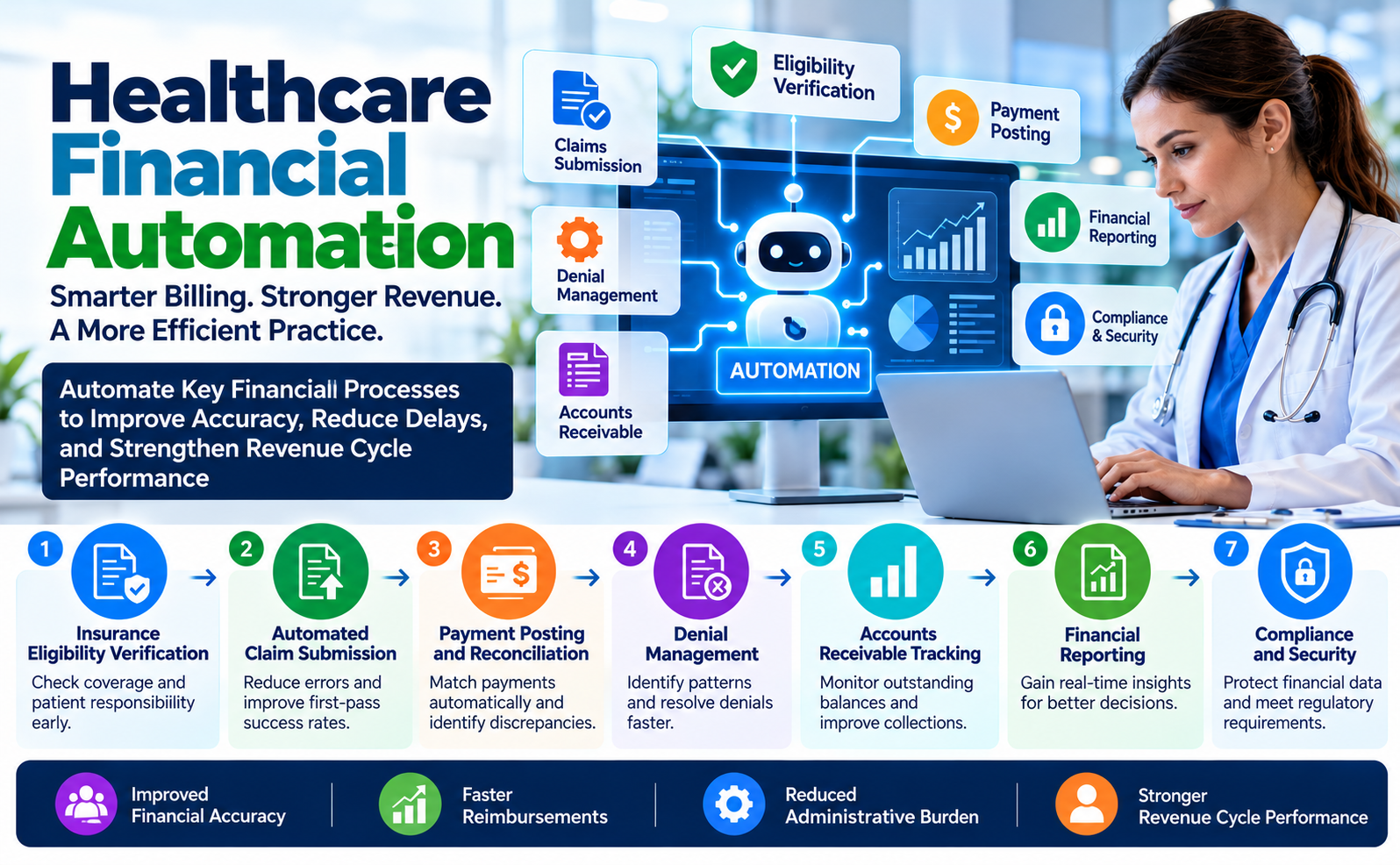
An effective payment automation workflow connects several stages of the healthcare revenue cycle.
1. Electronic Insurance Payments
Electronic funds transfer, or EFT, allows health plans to send claim payments directly to a healthcare provider’s bank account. This reduces the administrative work associated with receiving, processing, and depositing paper checks.
According to the Centers for Medicare & Medicaid Services (CMS), EFT supports electronic healthcare payments and can make payment reconciliation easier.
2. Electronic Remittance Advice
Electronic remittance advice (ERA) explains how an insurance payer processed a claim. It provides details about payment amounts, contractual adjustments, and other claim-related decisions.
When a practice receives compatible ERA files, its billing system may import the information and use predefined rules to match payment details with the appropriate accounts.
3. Automated Payment Posting
Automated payment posting transfers payment and adjustment information into the practice’s billing or accounts receivable system. This can reduce manual entry and help staff process routine payments more efficiently.
However, payment posting rules should be reviewed regularly to ensure that contractual adjustments, patient responsibilities, and payer-specific requirements are handled correctly.
4. Payment Reconciliation
Payment reconciliation involves comparing insurance deposits with remittance records and posted claim transactions. Automated matching can help identify missing payments, unmatched deposits, duplicate entries, and discrepancies between expected and received reimbursement.
Transactions that do not match established rules should be flagged for review instead of being posted without verification.
5. Exception Management and Follow-Up
Not every claim is paid correctly on the first attempt. A well-designed workflow can flag denied claims, partial payments, missing remittance information, and accounts that require additional follow-up.
Billing professionals can then investigate the issue, correct errors, submit supporting documentation, or appeal a denial when appropriate.
Key Benefits of Insurance Payment Automation
Implementing insurance payment automation can improve several aspects of daily billing operations.
Reduced Manual Administrative Work
Manual payment entry requires staff to review records, enter amounts, and update individual accounts. Automation can handle eligible routine transactions, allowing billing teams to focus on exceptions, complex claims, and payer communication.
Improved Payment Posting Accuracy
Manual data entry can introduce errors when staff process large volumes of transactions. Automated workflows use structured information and predefined rules to reduce repetitive entry and improve consistency.
Automation does not eliminate every error, so regular reconciliation and exception reviews remain essential.
Better Cash Flow Visibility
Timely payment posting gives practice managers a clearer view of outstanding balances, completed reimbursements, and unresolved accounts. This information can support better financial planning and help teams identify delayed payments sooner.
Faster Identification of Unpaid Claims
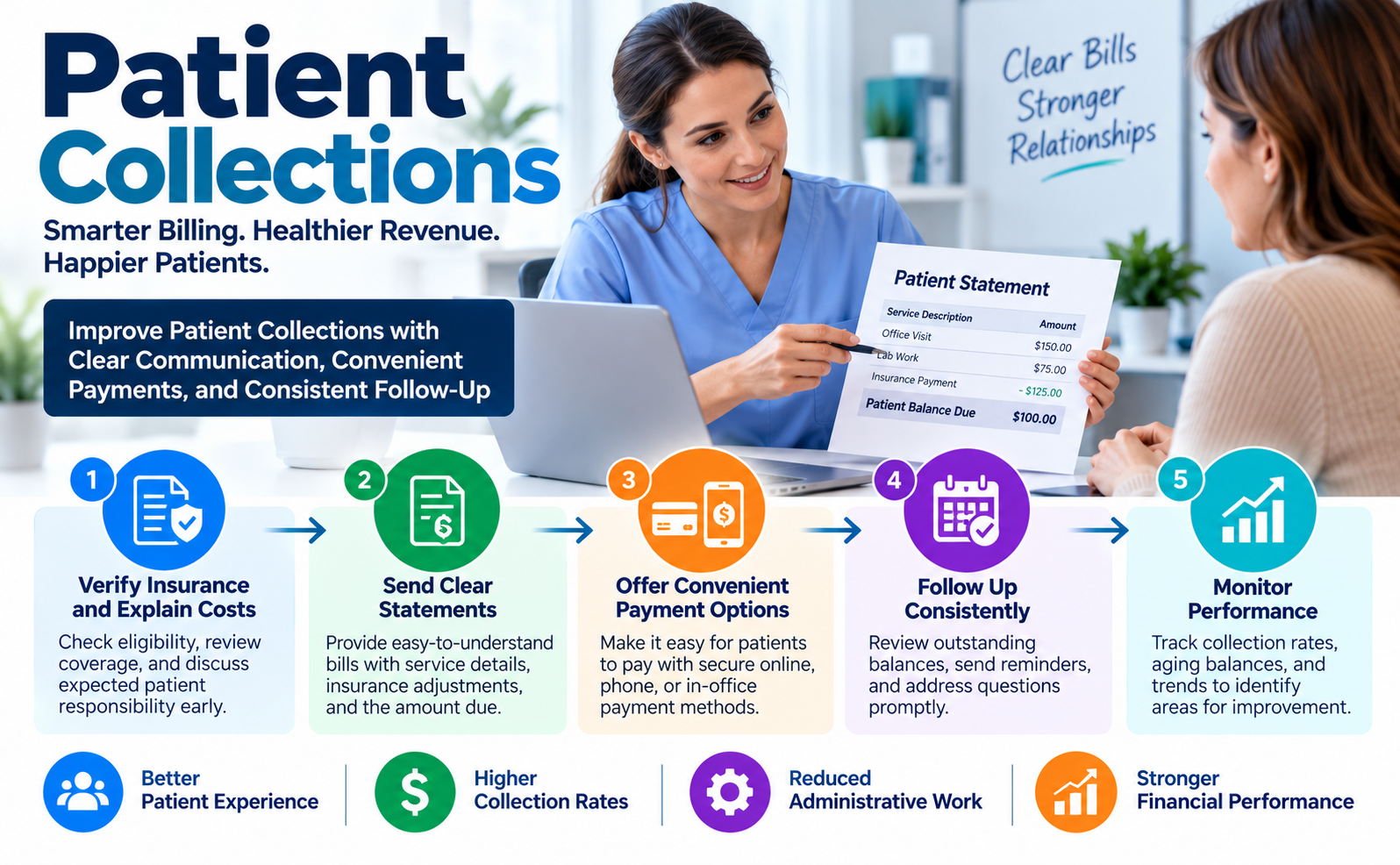
Accounts receivable (AR) management becomes more effective when payment records and claim statuses are consistently updated. Automated reports can help identify aging claims and prioritize follow-up based on outstanding balances, payer response, and filing deadlines.
More Efficient Revenue Cycle Management
Payment automation works best when integrated with the wider revenue cycle management (RCM) process, including insurance verification, medical coding, claim submission, denial management, and collections.
Explore Pro Health Care Advisors’ medical billing and practice management services to understand how coordinated billing workflows can support healthcare practices.
EFT vs. ERA: What Is the Difference?
EFT and ERA are related but serve different purposes in healthcare reimbursement.
- EFT transfers insurance payment funds electronically to a provider’s bank account.
- ERA provides the detailed explanation of how the payer processed the submitted claims.
Using both together can help a practice connect the money received with the claims and adjustments recorded in its billing system.
CMS explains these transactions in its official guide to healthcare EFT and remittance advice.
Healthcare practices should confirm enrollment requirements, payer compatibility, and transaction-matching procedures before implementing an automated workflow.
How to Implement Payment Automation in Your Practice
A successful implementation starts with a review of existing billing processes rather than simply purchasing new software.
Step 1: Review Your Current Payment Workflow
Document how your team receives insurance payments, reviews remittance advice, posts adjustments, reconciles deposits, and follows up on unpaid claims.
Identify repetitive tasks, frequent errors, and steps that create avoidable delays.
Step 2: Confirm EFT and ERA Enrollment
Check whether your practice is enrolled in electronic payments and remittance advice with its participating insurance payers.
Verify that the correct provider identifiers, tax identification information, and banking details are on file. Follow each payer’s official enrollment and verification procedures.
Step 3: Evaluate Billing Software Compatibility
Choose tools that work with your existing electronic health record (EHR), practice management system, and accounting processes.
Ask vendors about ERA import capabilities, automatic payment posting, reconciliation rules, exception reporting, audit trails, and support for your participating payers.
Step 4: Configure Matching and Posting Rules
Establish rules for matching deposits to remittance records, posting approved adjustments, and flagging discrepancies. Test the workflow with representative transactions before expanding automation across the practice.
Avoid automatically accepting unmatched payments or unfamiliar adjustment codes without appropriate review.
Step 5: Protect Patient and Financial Information
Payment automation involves sensitive patient, insurance, and financial data. Apply appropriate access controls, secure data transmission, audit logging, vendor oversight, and other safeguards required by applicable privacy and security obligations.
Review the official HHS HIPAA Security Rule guidance when assessing safeguards for electronic protected health information.
Step 6: Monitor Performance and Improve the Process
Track measurable indicators such as payment posting turnaround time, the percentage of automatically matched transactions, unmatched payment volume, days in accounts receivable, and unresolved claim balances.
Use these results to identify workflow gaps and refine automation rules. Keep a clear process for investigating errors and correcting inaccurate entries.
Common Challenges to Avoid
Although automation can simplify billing, poor implementation can create new problems.
Incomplete payer enrollment: Missing EFT or ERA enrollment may prevent electronic payments or remittance records from reaching the intended workflow.
Incorrect matching rules: Overly broad matching rules can associate payments with the wrong claims or accounts.
Unreviewed adjustments: Automatic posting without appropriate validation may result in inaccurate balances or missed underpayments.
Disconnected systems: Billing software that does not integrate properly with existing systems may create duplicate work instead of reducing it.
Insufficient security controls: Inadequate access management or vendor oversight can expose sensitive information.
To reduce these risks, combine suitable technology with documented procedures, staff training, regular reconciliation, and qualified billing oversight.
How Pro Health Care Advisors Can Help
Healthcare practices may need support with payment posting, insurance follow-up, claim denials, and accounts receivable recovery before they can achieve a more efficient reimbursement process.
Pro Health Care Advisors provides medical billing and practice management support, including payment posting, claim follow-up, denial management, and revenue cycle services.
Its medical billing and practice management services can help practices review their current workflows and identify opportunities to improve billing consistency. Practices can also explore Creative Collection Solutions for additional support with outstanding accounts and recovery workflows.
Before adopting any new automation process, practices should assess their existing systems, payer requirements, and operational priorities to determine which tasks are appropriate for automation.
Frequently Asked Questions
What is insurance payment automation?
Insurance payment automation uses digital tools to streamline insurance reimbursement workflows, including electronic payments, remittance processing, payment posting, reconciliation, and exception tracking.
How does payment automation help medical practices?
It can reduce repetitive administrative work, improve payment record consistency, help identify unmatched transactions, and provide better visibility into outstanding insurance claims.
What is the difference between EFT and ERA?
EFT transfers insurance funds electronically to a provider’s bank account. ERA explains how the insurer processed the claim, including payment amounts and applicable adjustments.
Can payment automation reduce claim denials?
Payment automation can help identify payment discrepancies and organize follow-up tasks, but it does not automatically prevent every claim denial. Accurate patient information, eligibility verification, medical coding, documentation, and timely claim submission remain important.
Is insurance payment automation suitable for small medical practices?
Yes. Small practices may benefit from automating repetitive payment tasks, especially when staff members manage multiple administrative responsibilities. The right approach depends on transaction volume, software compatibility, payer participation, and implementation costs.
How can a practice measure payment automation success?
Useful metrics include payment posting turnaround time, automatic matching rates, reconciliation discrepancies, aging accounts receivable, and the time required to resolve payment exceptions.
Conclusion
Insurance payment automation can help healthcare practices make reimbursement workflows more organized, consistent, and efficient. By combining EFT, ERA, automated payment posting, reconciliation, and structured follow-up, practices can reduce repetitive work and improve visibility into their financial operations.
The best results come from choosing compatible systems, configuring reliable matching rules, protecting sensitive information, and maintaining human oversight for exceptions.
For practices seeking to improve their billing processes, Pro Health Care Advisors’ medical billing and practice management services offer a starting point for evaluating workflow improvements and strengthening revenue cycle operations.