








What Claims Scrubbing Means
Claims scrubbing is the process of reviewing a medical claim for errors, omissions, and compliance issues before it is submitted to an insurance payer for reimbursement. The goal is simple: identify and correct every problem that would cause the claim to be rejected or denied, so that only clean, accurate, complete claims leave your practice.
In practical terms, claims scrubbing involves running each claim through a review process, whether manual, automated, or both, that checks the claim data against coding standards, payer rules, and documentation requirements. Any issue that surfaces gets flagged and corrected before the claim goes out. The claim that reaches the payer is a clean claim, and clean claims get paid faster and with far fewer follow-up actions required.
The alternative is submitting claims without scrubbing and letting the payer’s system find the errors instead. When the payer finds an error, the claim is either rejected before processing or denied after review. Either way, your practice is now spending time and resources on a claim that should have been right the first time.
Why Claims Scrubbing Is Not Optional for Any Practice
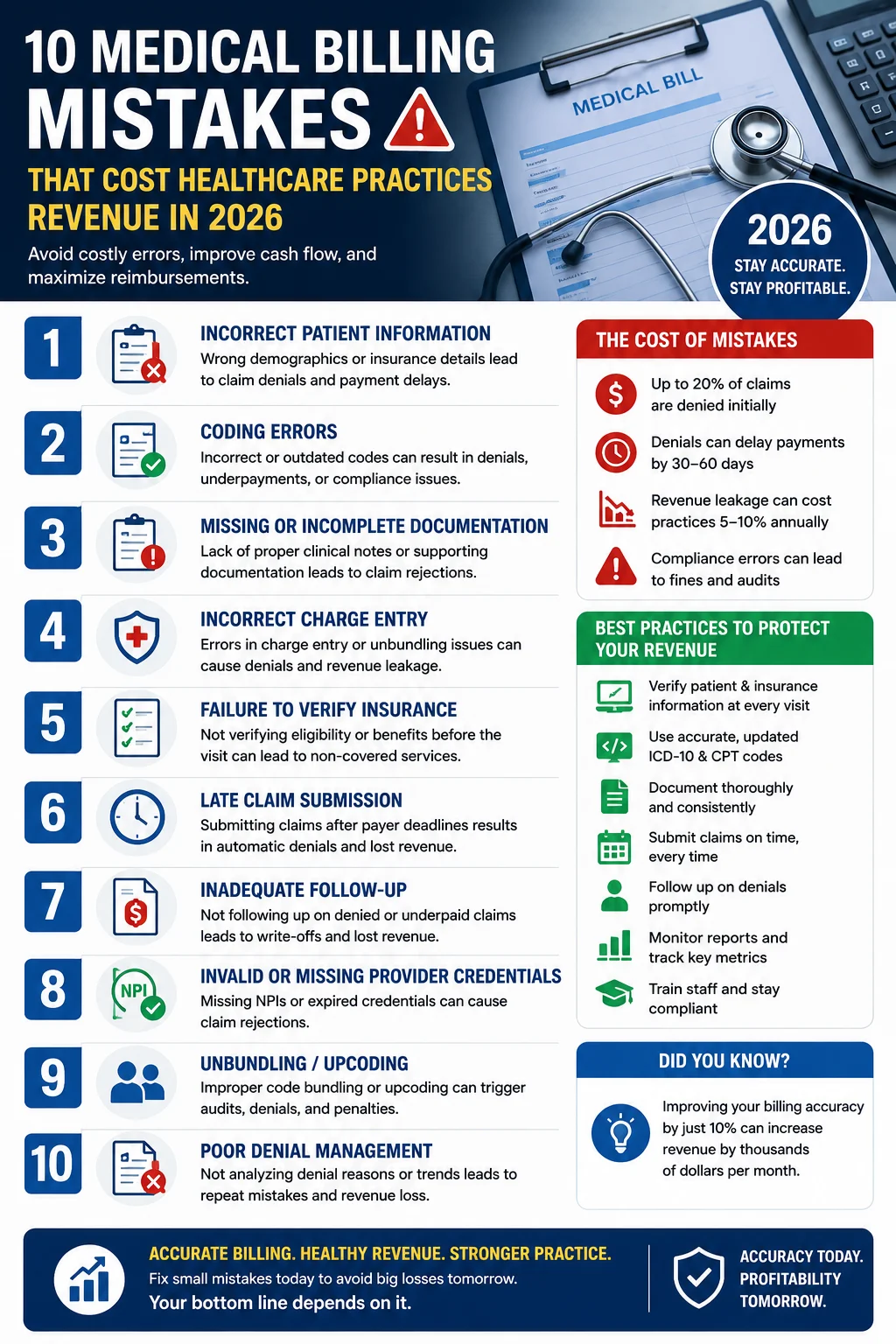
The scope of the problem is worth understanding directly. Industry data shows that medical billing errors cost the US healthcare system hundreds of billions of dollars annually. Claim denial rates across specialties average around 10 percent, with some practices running significantly higher. Each denied claim costs an average of $118 to rework, and a meaningful portion of denied claims are never recovered at all because they are not appealed before the deadline.
Most of these denials are preventable. The majority of denial reasons, including incorrect patient information, coding errors, missing modifiers, and eligibility issues, are exactly what a claims scrubbing process is designed to catch. A practice without a systematic scrubbing process is essentially pre-approving a portion of its revenue for loss.
Provider’s Healthcare PM Advisors treats claims scrubbing as a non-negotiable part of the billing workflow for every client practice. The economics are straightforward: it costs far less to catch an error before submission than to resolve a denial, resubmit a corrected claim, or write off revenue that was never recovered.
What a Claims Scrubber Actually Reviews
A claims scrubbing process, whether performed by a trained biller or an automated software tool, reviews multiple categories of information on every claim. Here is what a thorough scrub covers.
Patient Demographics and Insurance Information
The patient’s name, date of birth, insurance ID number, and group number must match exactly what is on file with the payer. A single transposed digit in an insurance ID or a name that does not match the payer’s records will result in denial. These are among the most common and most preventable errors in claims submission.
Provider Credentialing and NPI Information
The rendering provider must be credentialed with the payer and active in their system. The National Provider Identifier, or NPI, must be accurate for both the individual rendering provider and the billing entity. Billing under a provider who is not yet enrolled with a specific payer is a common source of denied claims in practices that have recently added new physicians or mid-level providers.
Diagnosis Code Accuracy and Specificity
ICD-10 diagnosis codes must be accurate, current, and specific enough to support the services billed. Using a code at too general a level when a more specific code exists, using a code that has been deleted from the current ICD-10 set, or using a diagnosis code that does not logically support the procedure being billed are all errors that claims scrubbing catches.
CPT and HCPCS Code Validation
Procedure codes must be current and must match the actual services rendered. Outdated codes, codes that do not match the payer’s fee schedule, and codes that are inappropriate for the patient’s age, sex, or condition are all flagged. The scrubbing process also checks for National Correct Coding Initiative, or NCCI, edits that prohibit certain code combinations from being billed together.
Modifier Accuracy and Completeness
Modifiers clarify circumstances that affect how a code is interpreted or reimbursed. Missing a required modifier, applying the wrong modifier, or using a modifier that is not recognized by the specific payer causes denial. Claims scrubbing verifies that every modifier on the claim is appropriate, correctly applied, and recognized by the receiving payer.
Medical Necessity Documentation
The diagnosis codes on the claim must clinically support the procedures billed. A procedure that is not medically necessary based on the documented diagnosis will be denied. Scrubbing identifies mismatches between the diagnosis and the service before the claim leaves the practice.
Prior Authorization Status
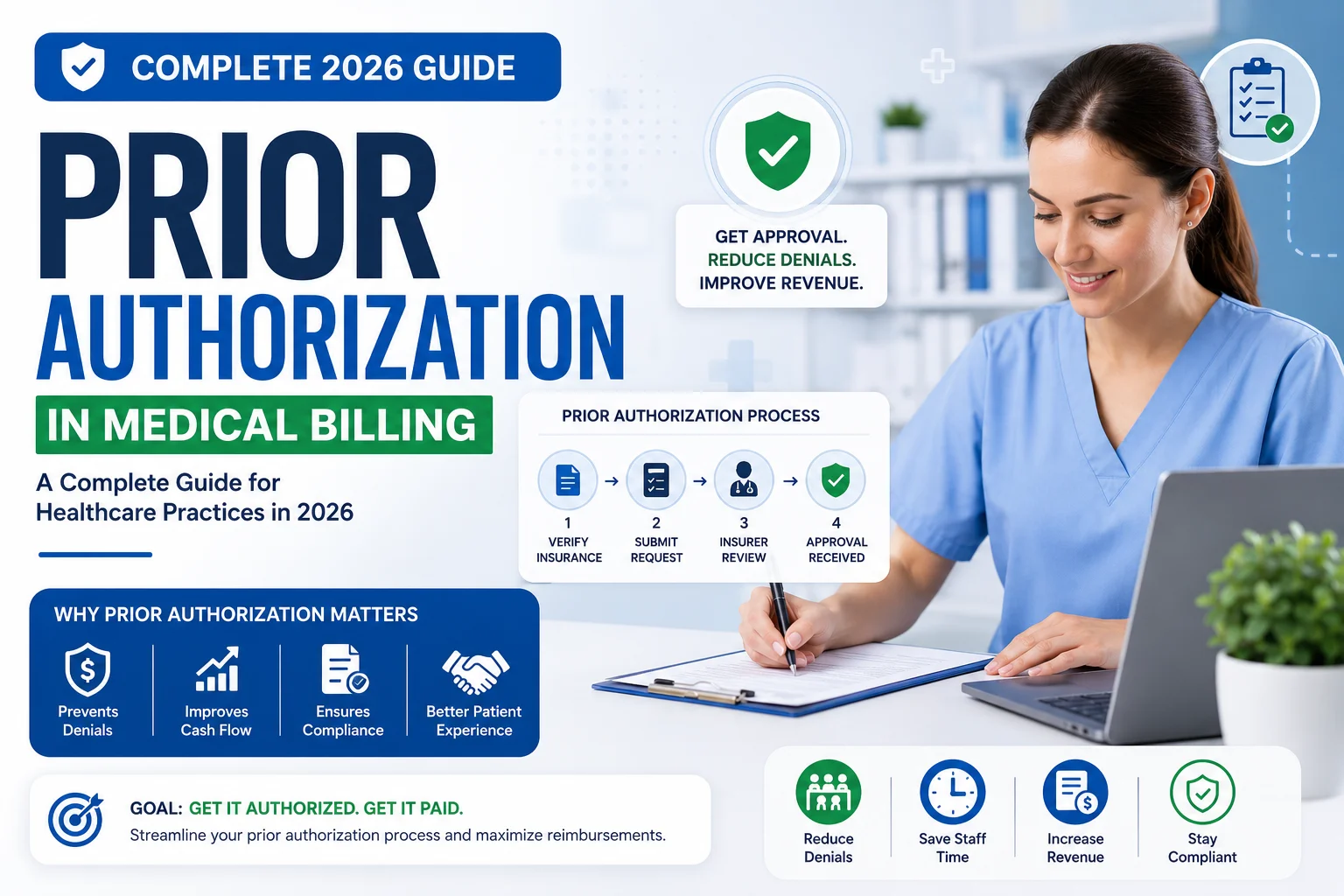
If the service required prior authorization and no authorization is on file, the claim will be denied. A claims scrubbing process checks whether authorization was obtained for services that require it and flags any claim where the authorization is missing, expired, or does not match the service being billed.
Payer-Specific Rules
Different payers have different requirements for claim submission beyond the standard coding rules. Some payers require specific modifiers for telehealth services. Some require NDC codes on drug claims. Some have specific timely filing windows that are shorter than the standard. Claims scrubbing checks each claim against the payer’s specific rules before submission.
| Error Category | Common Example |
Consequence if Missed |
|
Patient demographics |
Incorrect date of birth or insurance ID |
Denial: patient not found in payer system |
| Provider credentialing | Rendering provider not enrolled with payer |
Denial: provider not recognized |
|
Diagnosis code |
Outdated or non-specific ICD-10 code |
Denial: invalid or unsupported code |
| CPT or HCPCS code | Deleted code or incorrect code for service |
Rejection or denial |
|
Modifier |
Missing bilateral modifier or incorrect modifier |
Denial or underpayment |
|
Medical necessity |
Diagnosis does not support procedure billed |
Denial: not medically necessary |
| Prior authorization | No auth on file for authorized service |
Denial: authorization required |
| Payer-specific rules | Missing NDC on drug claim for specific payer |
Denial: incomplete claim information |
Manual Scrubbing Versus Automated Claims Scrubbing
Manual Claims Scrubbing
In manual scrubbing, a trained medical biller reviews each claim before submission. They check codes against the current coding manuals, verify patient and insurance information, confirm that modifiers are appropriate, and flag anything that does not look right. Manual scrubbing is thorough when done by an experienced biller, but it is time-consuming, scales poorly with claim volume, and is susceptible to human error, especially in high-volume environments.
Automated Claims Scrubbing
Automated scrubbing uses software to review claims against a rules engine that is updated regularly with current coding standards, payer-specific requirements, and NCCI edits. The software processes claims far faster than a human reviewer and can apply thousands of rules simultaneously. It flags errors for correction before submission and, in many systems, suggests the appropriate correction.
Most modern practice management platforms include some form of automated claims scrubbing, and medical billing clearinghouses perform an additional level of scrubbing before forwarding claims to payers. The most effective scrubbing systems combine both: automated tools catch systematic errors at scale while trained billers review flagged claims and handle edge cases that require human judgment.
The Business Impact of a Strong Claims Scrubbing Process
The financial benefits of consistent claims scrubbing are direct and measurable. Practices with effective scrubbing processes see higher first-pass acceptance rates, which means more claims are paid on the first submission without requiring correction and resubmission. Higher first-pass rates translate directly into shorter AR days and more predictable cash flow.
A clean claim rate above 95 percent is the benchmark for a well-run billing operation. Practices below that threshold are generating significant extra work for their billing staff, delaying their own reimbursements, and losing a portion of their revenue to denials that are never recovered. Getting to and staying above 95 percent requires a disciplined scrubbing process applied consistently to every claim.
Beyond the direct revenue impact, strong claims scrubbing also reduces compliance risk. Claims with systematic errors, particularly around code unbundling, upcoding, or modifier misuse, can trigger payer audits. Catching and correcting these issues before submission keeps your claims clean and your practice protected.
How to Build a Claims Scrubbing Process That Actually Works
Start With a Pre-Submission Checklist
Every claim should pass through a defined checklist before it is submitted. At minimum, that checklist should confirm patient and insurance information accuracy, provider credentialing status, code currency and appropriateness, modifier completeness, prior authorization status, and diagnosis-to-procedure alignment.
Use a Practice Management System With Integrated Scrubbing
If your practice management software does not include claims scrubbing functionality, you are adding unnecessary risk to every submission. Most current platforms include at least basic rule-based scrubbing. The question is whether the rules are updated regularly and how comprehensive the payer-specific rule sets are.
Leverage Your Clearinghouse
Medical billing clearinghouses perform their own claims validation before forwarding claims to payers. A good clearinghouse catches errors that the practice-level scrub misses and significantly reduces the number of claims that reach the payer with problems. Choosing a clearinghouse with strong payer connectivity and comprehensive editing is worth the consideration.
Track Your First-Pass Acceptance Rate
If you are not measuring your first-pass acceptance rate, you do not have a clear picture of how well your scrubbing process is working. The first-pass acceptance rate is the percentage of claims paid on the first submission without requiring correction. Track this monthly by payer. If certain payers consistently show lower rates, you have a payer-specific rule that your scrubbing process is missing.
Review Denial Patterns Regularly
Every denial that comes back is information about what the scrubbing process missed. Reviewing denial reason codes systematically and feeding those patterns back into the scrubbing rules is how a billing operation improves over time. Denials that repeat month after month represent a fixable process problem, not bad luck.
What Happens Without Consistent Claims Scrubbing
Practices that submit claims without thorough scrubbing experience predictable consequences. Denial rates climb. AR days extend. Staff spend a disproportionate amount of their time reworking denied claims instead of processing new ones. Revenue becomes unpredictable. And because denied claims often get lost in the follow-up queue, a portion of that revenue is simply never recovered.
The damage compounds over time. A practice with a 15 percent denial rate and average claim value of $150 that submits 400 claims per month is losing approximately $9,000 per month in first-pass revenue. Some of that is recovered through appeals and resubmission, but recovery is not guaranteed and always comes with a labor cost. The claims scrubbing process, applied consistently, prevents most of that loss before it happens.
Frequently Asked Questions About Claims Scrubbing in Medical Billing
What Is the Difference Between Claims Scrubbing and Denial Management?
Claims scrubbing is proactive. It happens before a claim is submitted and aims to prevent denials by catching errors in advance. Denial management is reactive. It happens after a claim has been denied and involves identifying the reason, correcting the error, and resubmitting or appealing. Both are necessary, but scrubbing is always more cost-effective because it prevents the problem rather than fixing it after the fact.
Does Claims Scrubbing Guarantee That a Claim Will Be Paid?
No. Claims scrubbing eliminates preventable errors before submission, which dramatically increases the likelihood of payment on the first attempt. However, payers may still deny claims for medical necessity reasons, coverage exclusions, or policy-specific rules that are difficult to anticipate at the point of submission. Scrubbing addresses the things that can be verified before submission. Medical necessity determinations are ultimately made by the payer.
How Often Should the Scrubbing Rules Be Updated?
At minimum, scrubbing rules should be updated at the start of each calendar year to reflect new CPT codes, updated ICD-10 codes, and any changes to NCCI edit tables. Payer-specific rules may change more frequently. Practices that use automated scrubbing tools should confirm with their vendor that rule sets are updated on a regular schedule and that mid-year changes are incorporated.
What Is a Clean Claim Rate and What Benchmark Should I Aim For?
A clean claim rate measures the percentage of claims that are accepted and paid on the first submission without requiring correction or resubmission. A rate of 95 percent or higher is the standard benchmark for a well-run billing operation. If your practice is consistently below 90 percent, your scrubbing process has gaps that are costing you real money.
Is Claims Scrubbing Different from Eligibility Verification?
They are related but different processes. Eligibility verification confirms that the patient has active coverage with the payer before the service is provided. Claims scrubbing reviews the claim itself after the service has been coded and prepared for submission. Both are important. Eligibility verification catches coverage problems before the visit. Claims scrubbing catches coding and documentation problems before the claim goes out.
Can A Small Practice Benefit from Automated Claims Scrubbing?
Yes. The benefit of scrubbing does not scale exclusively with claim volume. Even a small practice submitting a few hundred claims per month benefits significantly from automated scrubbing because the cost of each denied claim, in both revenue lost and staff time spent on rework, is the same regardless of practice size.
What Is a Clearinghouse and How Does It Relate to Claims Scrubbing?
A clearinghouse is an intermediary that receives electronic claims from providers, validates them against basic technical and formatting requirements, and forwards them to the appropriate payer. Clearinghouses perform their own level of scrubbing, which acts as a second layer of error detection after the practice-level scrub. Most clearinghouses reject claims that fail their edits before those claims ever reach the payer, which prevents rejections from occurring at the payer level.
A strong claims scrubbing process is one of the most direct investments a practice can make in its own financial stability. If you are not sure how well your current process is working, start by pulling your first-pass acceptance rate and your denial rate by payer. Those two numbers tell the story quickly. Visit prohealthcareadvisors.com/medical-billing-and-practice-management/ to learn how Provider’s Healthcare PM Advisors approaches claims scrubbing as part of a complete billing and practice management service.