







Can You Go to Jail for Not Paying Medical Bills?
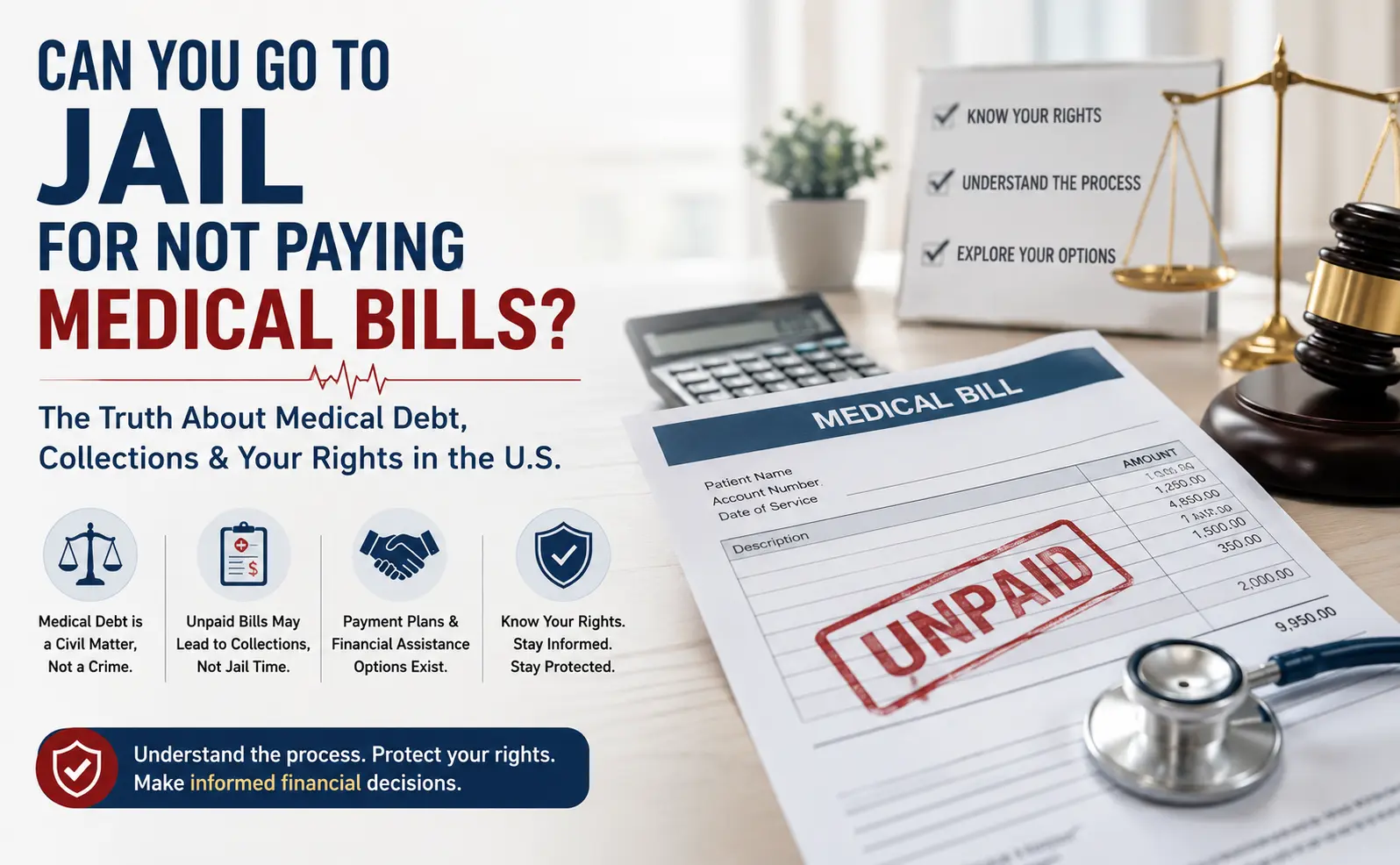
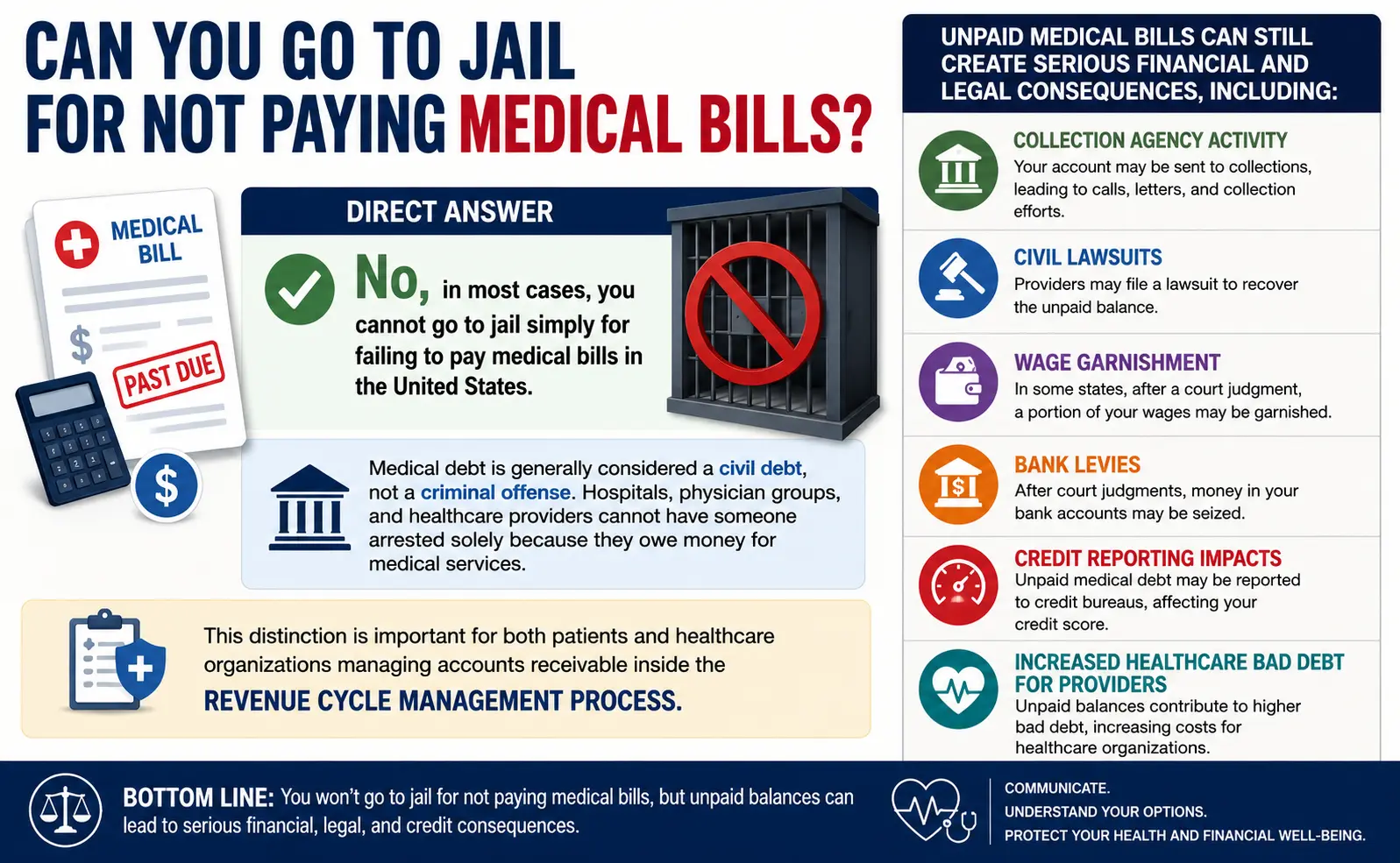
No, in most cases, you cannot go to jail simply for failing to pay medical bills in the United States.
Medical debt is generally considered a civil debt, not a criminal offense. Hospitals, physician groups, and healthcare providers cannot have someone arrested solely because they owe money for medical services.
However, unpaid medical balances can still create serious financial and legal consequences, including:
- Collection agency activity
- Civil lawsuits
- Wage garnishment in some states
- Bank levies after court judgments
- Credit reporting impacts
- Increased healthcare bad debt for providers
This distinction is important for both patients and healthcare organizations managing accounts receivable inside the revenue cycle management process.
What Happens When Medical Bills Go Unpaid?
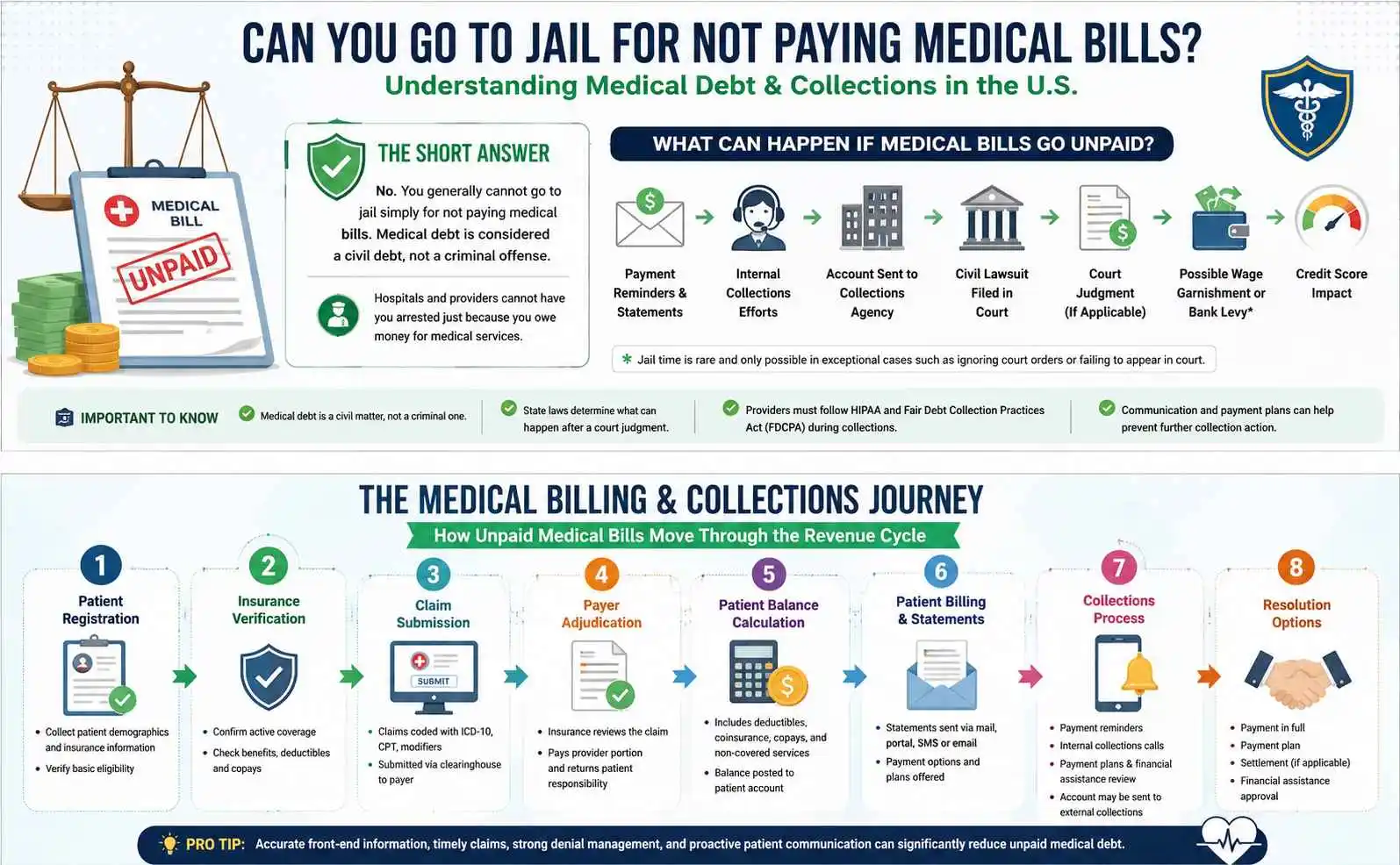
When a patient does not pay a healthcare balance, the account usually moves through several stages within the medical billing workflow.
A typical process may include:
- Insurance claim submission
- Payer adjudication
- Patient responsibility calculation
- Statement generation
- Payment reminders
- Internal collections outreach
- External collections referral
Approximate insight based on industry patterns: many healthcare organizations first attempt multiple patient outreach cycles before escalating unpaid balances to third-party collections.
Unpaid balances are often connected to:
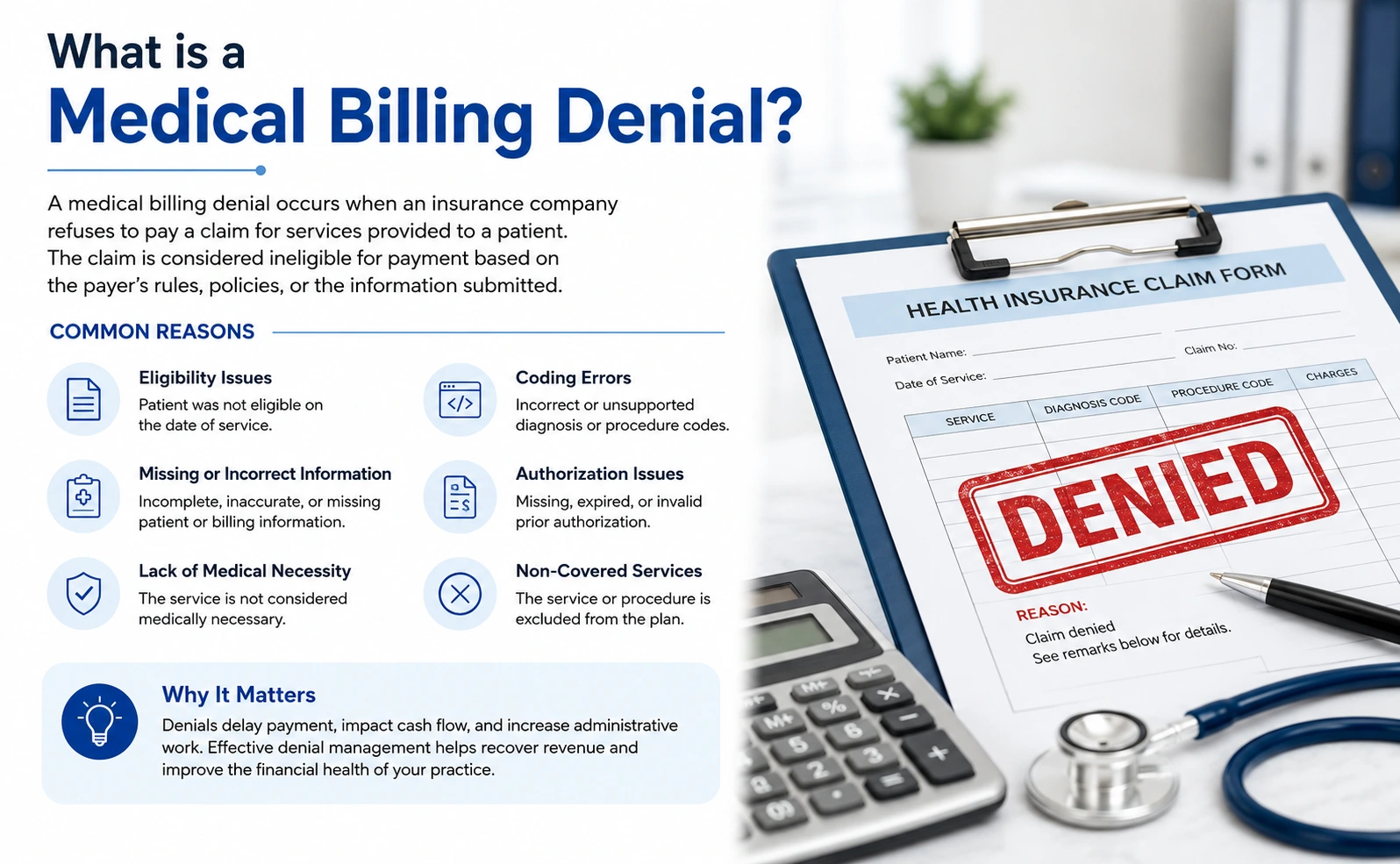
- Insurance claim denials
- High deductibles
- Prior authorization issues
- Coordination of benefits errors
- Self-pay encounters
- Out-of-network billing disputes
This is why many providers integrate patient financial counseling directly into the broader Revenue Cycle Management process.
For a broader overview, readers can explore a Medical Billing Process Guide or a detailed article on What Is Revenue Cycle Management.
How Medical Billing Collections Work
Healthcare collections differ from traditional retail debt collection because providers must balance reimbursement recovery with patient experience and compliance obligations.
Internal Billing Phase
Most clinics and hospitals begin with internal billing efforts through:
- Patient portal reminders
- EHR/EMR-generated statements
- Payment plan offers
- Financial assistance screening
- Insurance reprocessing reviews
Billing teams often review:
- ICD-10 coding accuracy
- CPT coding documentation
- Claim edits from clearinghouses
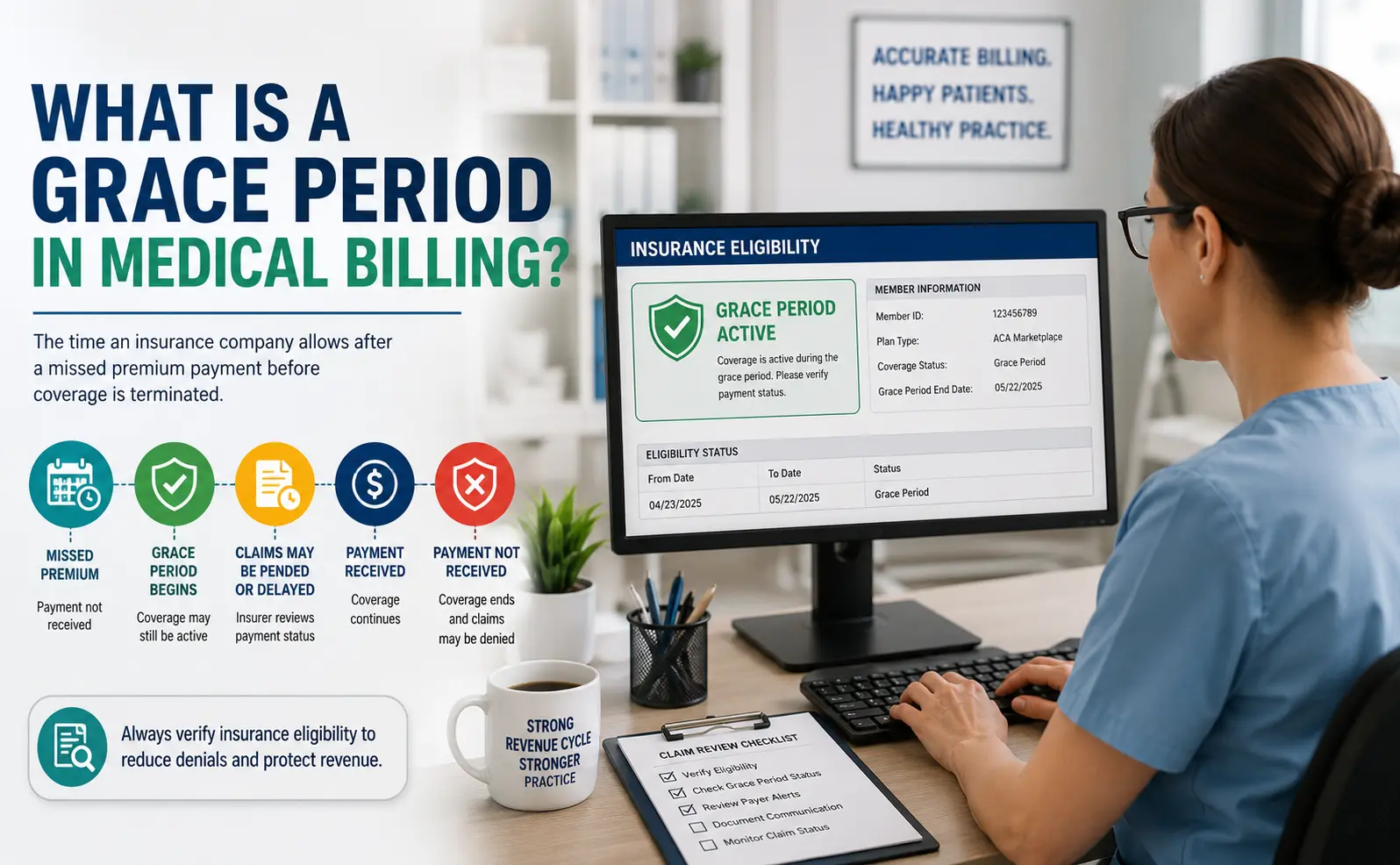
- Eligibility verification issues
- Denial management opportunities
Many unpaid balances originate from administrative issues rather than intentional nonpayment.
External Collections Phase
If internal efforts fail, providers may transfer accounts to a collections agency.
At this stage, patients may receive:
- Collection notices
- Settlement offers
- Payment negotiation requests
- Legal notifications
Healthcare organizations must still maintain compliance with privacy and data handling standards under HIPAA when sharing account information with authorized business associates.
When Legal Action Can Occur
Although unpaid medical bills alone do not result in jail time, healthcare providers or collection agencies may file civil lawsuits to recover outstanding balances.
If a court judgment occurs, consequences may include:
- Wage garnishment
- Liens in certain jurisdictions
- Frozen bank accounts
- Additional court costs
The legal outcome depends heavily on:
- State-specific debt collection laws
- Statute of limitations rules
- Court participation
- Payment agreements
Important Clarification
A person is generally not jailed because they owe medical debt.
However, legal complications can sometimes arise if someone:
- Ignores court orders
- Refuses required court appearances
- Violates separate legal obligations tied to the case
That distinction often causes confusion in online discussions about “medical debt jail.
Why Insurance Claim Problems Often Cause Medical Debt
From an operational perspective, many patient balances begin with payer workflow problems rather than direct refusal to pay.
Examples include:
- Incorrect insurance information
- Failed prior authorization
- Coding mismatches
- Untimely filing denials
- Duplicate claim rejections
- Non-covered services
Healthcare administrators frequently reduce bad debt by improving front-end revenue cycle workflows.
This is closely connected to topics such as:
- Medical Coding vs Medical Billing
- Insurance Claim Submission Process
- How Denial Management Works
Accurate claims processing helps reduce downstream collections activity and patient disputes.
How Healthcare Providers Reduce Unpaid Balances
Modern healthcare organizations increasingly focus on proactive collections prevention rather than aggressive recovery tactics.
Common strategies include:
Transparent Cost Estimates
Many providers now offer upfront patient responsibility estimates before treatment.
Flexible Payment Plans
Installment arrangements improve recovery rates while reducing patient financial stress.
Insurance Verification
Real-time eligibility checks help identify coverage issues before claim submission.
Denial Prevention
Strong coding and documentation workflows reduce payer denials that later become patient balances.
Financial Assistance Programs
Nonprofit hospitals may offer charity care or hardship screening based on organizational policies.
These workflows strengthen reimbursement performance while improving patient satisfaction.
Best Practices for Clinics and Billing Teams
Healthcare organizations can reduce unpaid medical debt exposure through operational improvements.
Improve Front-End Registration Accuracy
Incorrect demographics and insurance details frequently trigger avoidable patient balances.
Strengthen Patient Communication
Clear financial policies improve payment expectations and reduce disputes.
Use Automated Statement Workflows
Integrated EHR and billing platforms streamline reminder cycles and payment collection.
Monitor Denial Trends
Frequent denial categories often reveal larger workflow inefficiencies.
Offer Early Financial Counseling
Patients are more likely to cooperate when payment options are discussed before accounts become delinquent.
For healthcare administrators, unpaid balances are not just a collections issue — they are a full revenue cycle performance issue.
Can a hospital have someone arrested for unpaid medical bills?
No. Hospitals generally cannot have someone arrested solely for unpaid medical debt because it is typically treated as a civil matter.
Can unpaid medical bills affect credit scores?
Yes. Depending on reporting rules and balance thresholds, unpaid medical debt may appear on credit reports.
Can medical debt lead to wage garnishment?
Possibly. Wage garnishment can occur after a court judgment in some states.
Why do patients receive bills after insurance pays?
Insurance may only cover part of the claim, leaving deductibles, coinsurance, copays, or non-covered services as patient responsibility.
How can healthcare providers reduce unpaid balances?
Providers often reduce unpaid accounts through insurance verification, accurate coding, denial prevention, payment plans, and patient financial counseling.