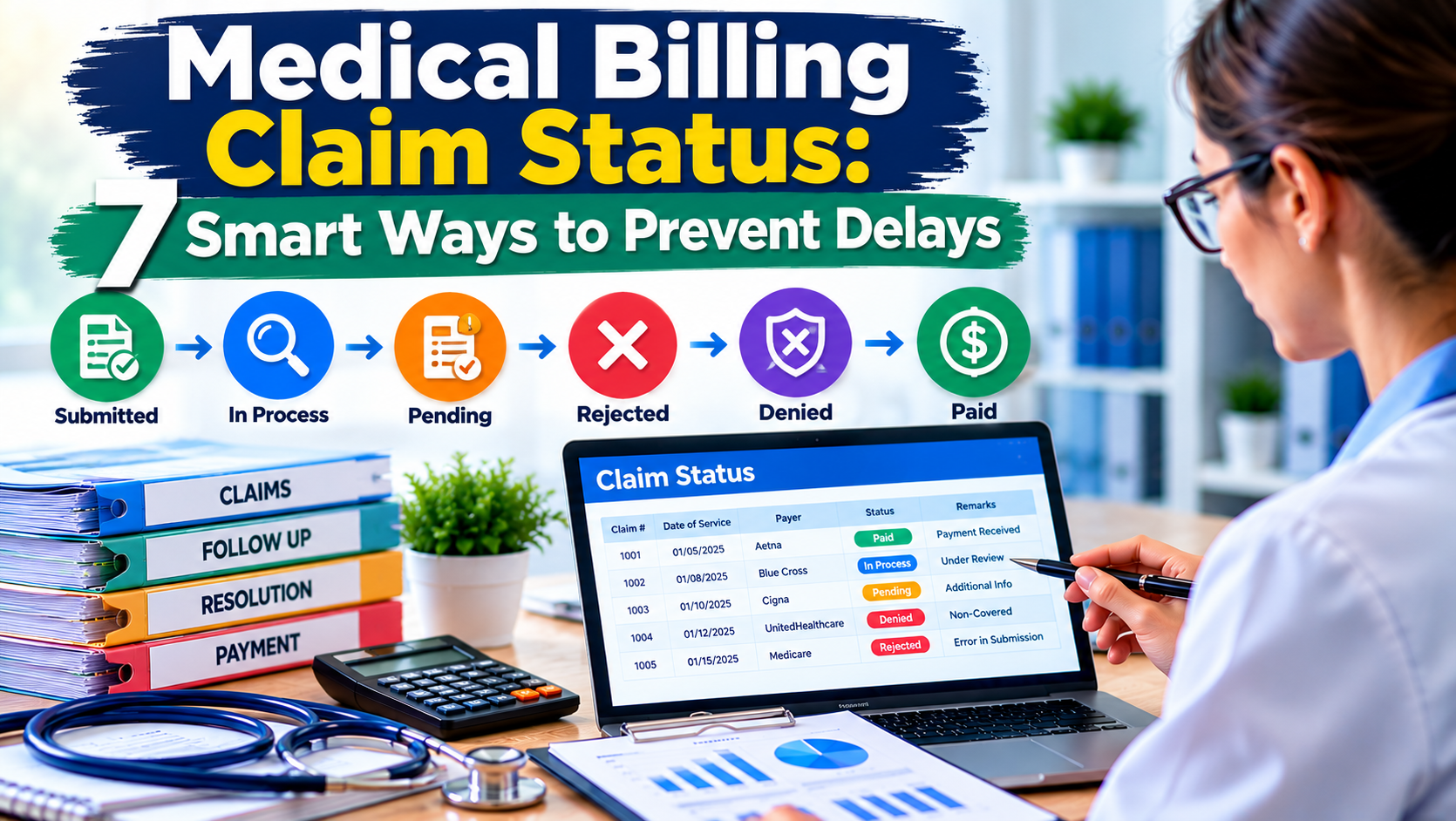
Medical billing claim status helps healthcare providers track whether an insurance claim has been received, processed, rejected, denied, or paid. Regular claim status checks help billing teams identify processing delays, correct missing information, and follow up with insurance companies before unresolved claims affect cash flow.
Without a consistent follow-up process, claims can remain unresolved for weeks. This can increase accounts receivable, delay reimbursements, and create unnecessary administrative work. In this guide, you will learn seven practical ways to improve claim tracking and reduce avoidable delays.
What Is Medical Billing Claim Status?
Medical billing claim status describes the current stage of an insurance claim after submission. It helps providers understand whether a payer has received the claim, needs additional information, has completed processing, or has made a payment decision.
Common claim statuses include:
- Received: The payer has received the claim.
- In process: The claim is being reviewed.
- Rejected: The claim failed an initial submission or data validation requirement.
- Denied: The payer has processed the claim but will not pay it as submitted.
- Paid: The payer has issued payment, subject to the remittance details.
- Pending information: The payer requires additional documentation or clarification.
Status descriptions vary by payer and clearinghouse. Always review the actual claim response instead of relying on a status label alone.
Why Medical Billing Claim Status Tracking Matters
Consistent tracking gives billing teams better visibility into outstanding claims and helps them prioritize follow-up activities.
Key benefits include:
- Identifying claims that have not moved through processing.
- Finding rejected claims that need correction and resubmission.
- Following up on unpaid claims before filing deadlines.
- Reducing avoidable delays in reimbursement.
- Improving accounts receivable reporting.
- Supporting a more organized revenue cycle.
Effective tracking also works alongside a strong revenue cycle management process.
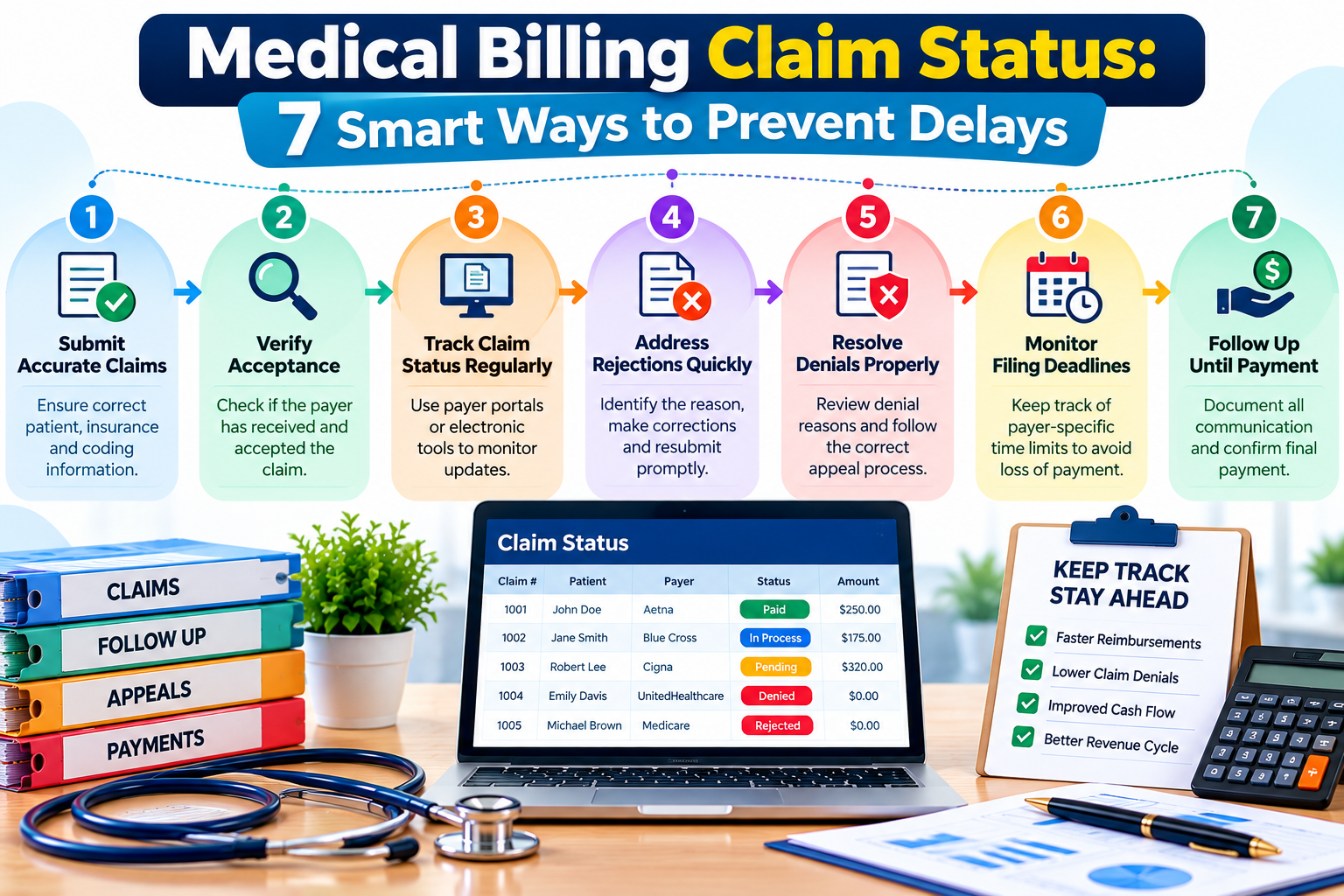
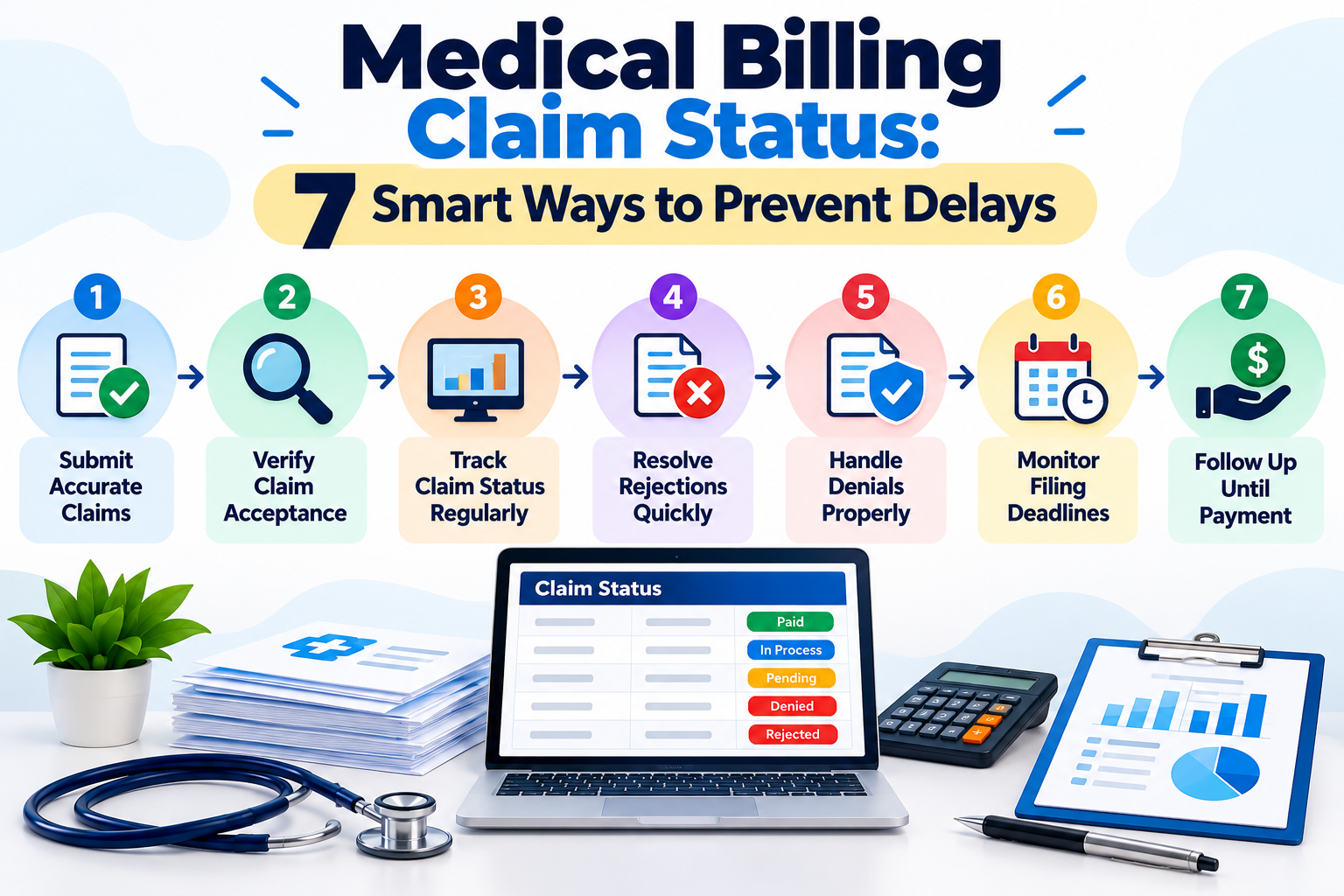
7 Smart Ways to Improve Medical Billing Claim Status Follow-Up
1. Verify Claim Acceptance After Submission
Submitting a claim does not always mean the insurance payer has accepted it for processing. A clearinghouse may identify formatting issues or missing information before the claim reaches the payer.
Check the clearinghouse response and confirm that the claim was accepted. If the submission was rejected, identify the reason, correct the affected data, and resubmit according to the applicable payer requirements.
This first step helps prevent claims from remaining unnoticed in an unresolved queue.
2. Use Electronic Claim Status Tools
Electronic claim status transactions and payer portals can help billing teams obtain updates without repeatedly making phone calls.
Under HIPAA administrative simplification standards, the ASC X12 276/277 transaction set is used for healthcare claim status requests and responses. Learn more from the official CMS electronic billing and remittance resources.
Use the tools available through your clearinghouse or payer, and confirm which transaction types and status details they support.
3. Create a Daily Follow-Up Queue
Organize outstanding claims into a centralized work queue. Include the patient account identifier, payer, date of service, submission date, latest status, outstanding balance, and next action.
Prioritize claims that are overdue, unusually high in value, approaching filing deadlines, or waiting for additional information.
A structured queue makes it easier to assign responsibility and prevents claims from being overlooked during busy billing periods.
4. Investigate Rejected and Denied Claims Quickly
A rejected claim generally requires correction before it can proceed through adjudication. A denied claim, on the other hand, has received a payment decision and may require correction, reconsideration, or an appeal depending on the reason.
Review the payer’s explanation carefully. Check patient details, insurance information, authorization requirements, coding, and supporting documentation as applicable.
For prevention, consider using claims scrubbing in medical billing to identify common errors before submission.

5. Monitor Timely Filing Deadlines
Every payer may have specific claim submission and resubmission requirements. Waiting too long to investigate an unresolved claim can put reimbursement at risk.
Maintain a record of the original submission date, acceptance confirmation, follow-up attempts, and applicable filing deadline. Use payer contracts and current payer guidance to confirm the correct time limit.
Do not assume that a claim is protected from timely filing rules simply because it appears as pending.
6. Document Every Payer Follow-Up
Whenever your team contacts a payer, record the date, representative or reference number when available, information provided, and the agreed next step.
If the payer requests records, submit the requested documentation through the approved channel and retain confirmation. If a specific processing timeframe is provided, schedule a follow-up based on that information.
Clear notes reduce duplicate work and help another team member continue the investigation without starting over.
7. Review Claim Status Trends Every Week
Weekly reporting can reveal patterns that individual claim reviews may miss. Measure the number of unresolved claims, aging by payer, rejection rates, denial reasons, and average time to resolution.
If one payer consistently delays a particular claim category, investigate whether the issue relates to authorization, eligibility, submission data, documentation, or payer processing.
Combine these findings with your wider medical billing and practice management workflow to improve accountability and operational efficiency.
Common Claim Status Tracking Mistakes
Even a well-organized billing team can experience delays when follow-up procedures are inconsistent. Avoid these mistakes:
- Assuming submission confirms payer acceptance.
- Treating rejection and denial as the same outcome.
- Checking status without recording the next action.
- Ignoring payer-specific filing deadlines.
- Repeatedly contacting the payer without reviewing previous notes.
- Closing a claim before verifying the final payment or resolution.
A documented workflow helps teams respond to each status with the appropriate next step.
Frequently Asked Questions
How often should medical billing claim status be checked?
Check status according to payer processing guidance, claim age, balance, and filing deadlines. High-priority or overdue claims may need more frequent follow-up than recently submitted claims.
What is the difference between a rejected and denied claim?
A rejected claim typically fails an initial validation or submission requirement. A denied claim has been adjudicated but is not payable as submitted. The appropriate correction or appeal process depends on the payer’s explanation.
Why is an insurance claim still pending?
A claim may be pending because it is awaiting review, additional documentation, coordination of benefits, authorization verification, or another payer action. Contact the payer when the claim exceeds the expected processing timeframe.
How can billing teams reduce claim delays?
Verify acceptance, use electronic status tools, monitor deadlines, correct errors promptly, document follow-up, and review recurring delay patterns.
Does claim status confirm that payment has been received?
Not necessarily. A paid status may indicate that the payer has issued or processed payment, but the billing team should verify the remittance advice and deposit records to confirm the financial outcome.
Accurate medical billing claim status tracking helps healthcare providers identify unresolved claims, prioritize follow-up, and reduce avoidable reimbursement delays. By verifying acceptance, using electronic tools, monitoring deadlines, documenting payer communication, and reviewing trends, billing teams can build a more reliable claims management process.
A consistent follow-up routine supports better accounts receivable visibility and helps practices manage their revenue cycle with greater confidence.