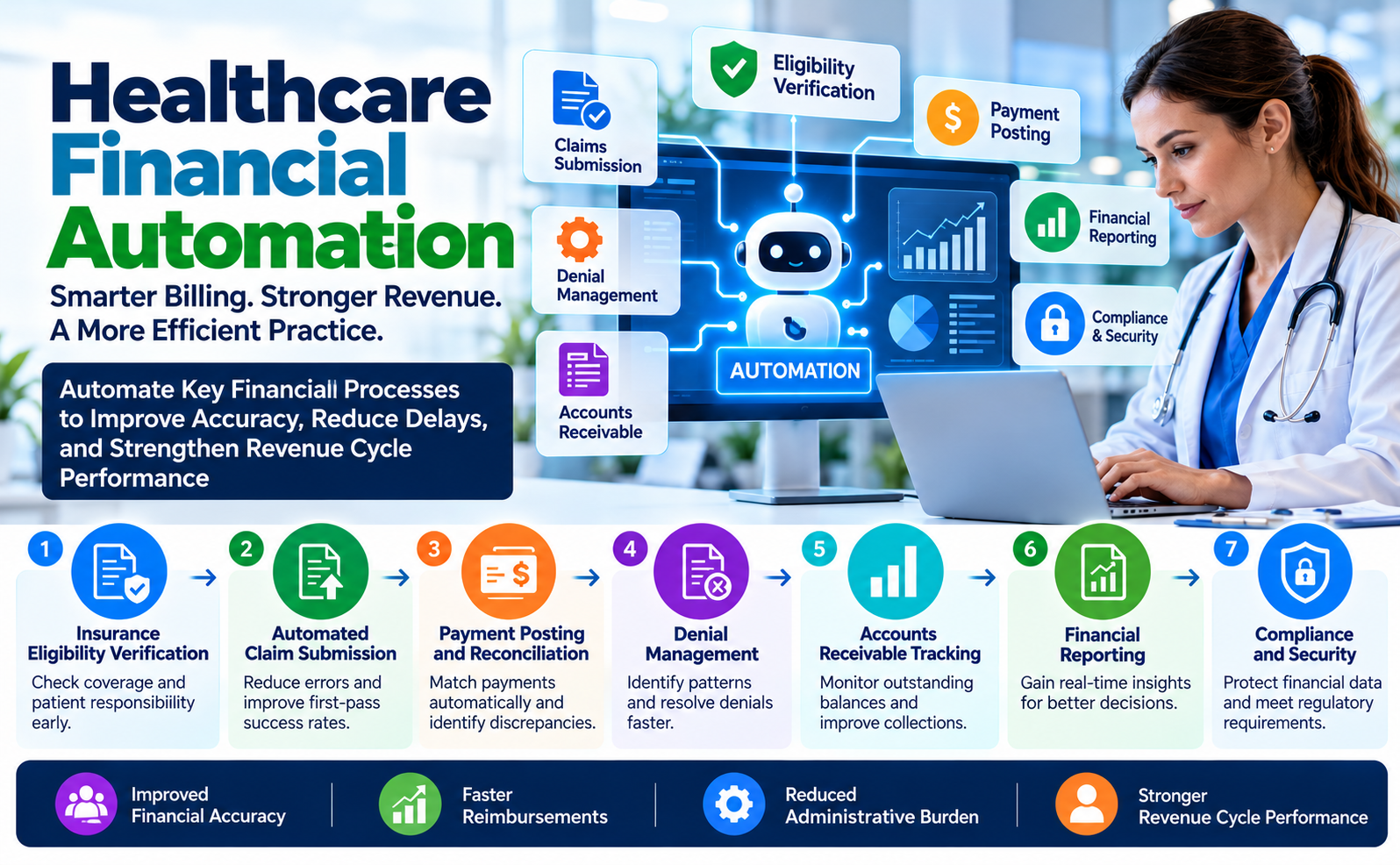








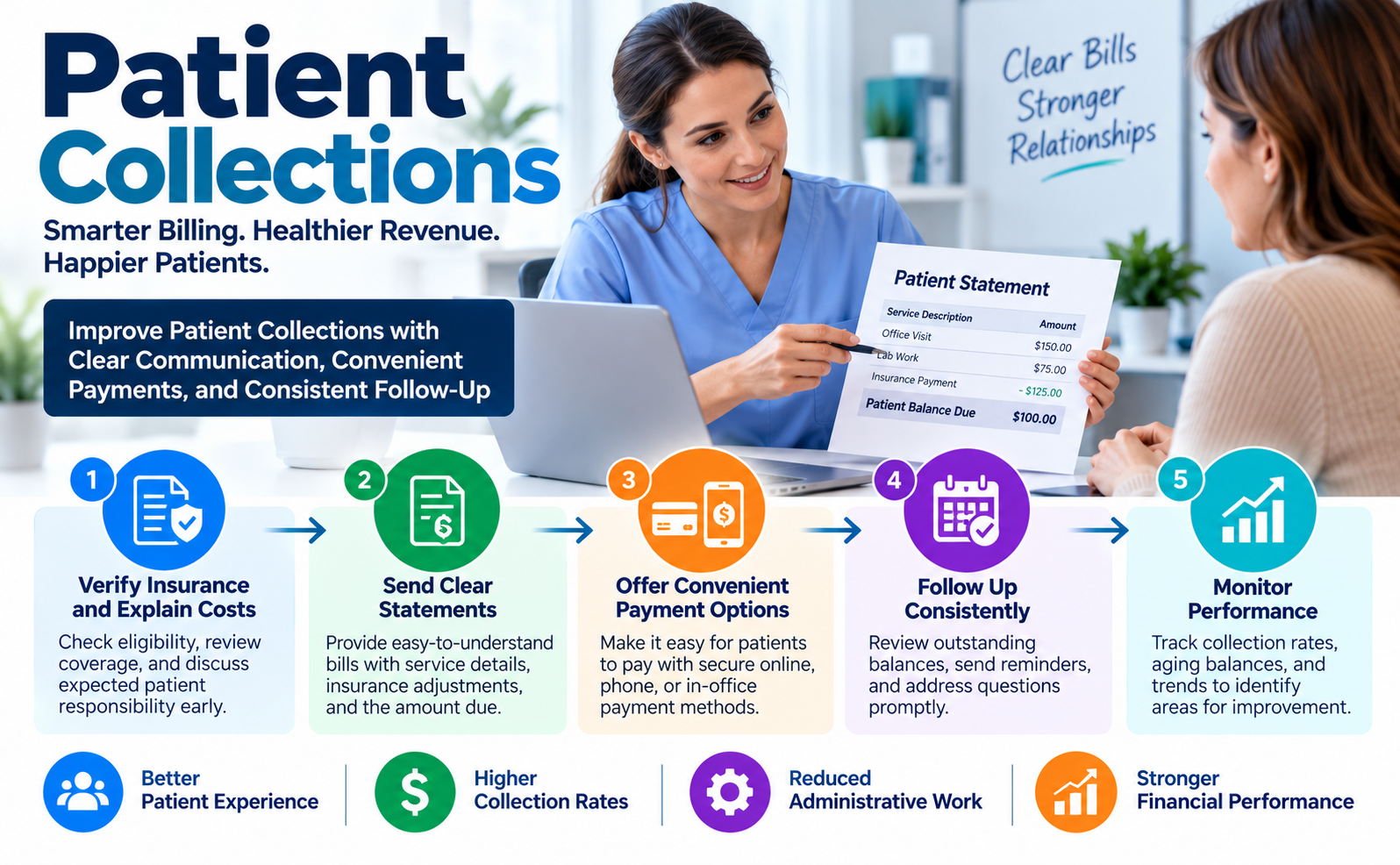
Patient collections play an important role in medical billing and revenue cycle management. When healthcare practices explain patient financial responsibility clearly, provide convenient payment options, and follow up consistently, they can improve payment workflows and reduce avoidable billing delays.
Many medical practices struggle with unpaid balances, confusing statements, and inconsistent follow-up. By identifying these problems and improving collection procedures, providers can strengthen financial operations while maintaining a positive patient experience.
What Are Patient Collections in Medical Billing?
Patient collections refer to the process of collecting outstanding balances that patients legitimately owe after insurance payments, contractual adjustments, and applicable financial assistance have been considered.
These balances may include deductibles, copayments, coinsurance, and other patient-responsibility amounts.
Effective collection procedures help practices manage accounts receivable, communicate billing information, and resolve unpaid balances. For more information, explore medical billing and practice management services.
5 Common Patient Collections Mistakes to Avoid
1. Failing to Explain Costs Before Appointments
One common billing mistake is waiting until after treatment to explain expected patient costs. Patients may not understand their deductible, copayment, or coinsurance, which can lead to confusion when they receive a bill.
How to improve: Verify insurance eligibility when possible, explain known financial responsibilities before appointments, and provide estimates when required or appropriate. Make it clear that estimates may change after insurance processing.
2. Sending Confusing Billing Statements
Unclear statements can make it difficult for patients to understand what they owe and why. This may lead to delayed payments, additional phone calls, and billing disputes.
How to improve: Use clear statements that show the balance due, relevant insurance adjustments, payment instructions, and contact details for billing questions.
3. Offering Limited Payment Options
A complicated payment process can discourage patients from resolving outstanding balances. Patients may prefer secure online payments or other convenient methods where available.
How to improve: Offer practical, secure payment options and explain any available payment plans or financial assistance policies. Ensure patients can easily contact the billing team when they need help.
4. Following Up Inconsistently
Without a consistent follow-up process, outstanding balances may remain unresolved for too long. Practices may also overlook disputed charges or balances that require further insurance review.
How to improve: Review accounts receivable regularly, document communications, prioritize accounts using clear criteria, and investigate disputed balances before pursuing additional collection activity.
5. Ignoring Collection Performance Data
Practices may miss opportunities to improve when they do not measure billing performance. Without clear metrics, it can be difficult to identify recurring delays or determine whether a process change is effective.
How to improve: Monitor collection rates, patient account aging, statement accuracy, payment posting accuracy, and dispute resolution times. Review trends regularly and adjust workflows based on the findings.
How to Improve Patient Collections Step by Step
A structured process helps medical practices manage patient balances more consistently.
- Verify insurance information: Check eligibility and relevant coverage details before scheduled services whenever possible.
- Communicate expected costs: Explain known patient financial responsibilities in clear, understandable language.
- Submit accurate claims: Review coding, documentation, and required information before claim submission.
- Confirm the final balance: Review insurance processing and contractual adjustments before assigning responsibility to the patient.
- Send clear statements: Provide accurate billing information and straightforward payment instructions.
- Follow up consistently: Use a documented schedule for account reviews and appropriate reminders.
- Measure results: Review collection metrics to identify problems and assess improvements.
For additional support with billing workflows, visit Pro Health Care Advisors.
Key Metrics for Measuring Collection Performance
Healthcare practices should evaluate several indicators to understand how well their billing processes are working.
- Patient collection rate: The proportion of defined patient-responsibility amounts collected during a specified period.
- Accounts receivable aging: The length of time patient balances remain outstanding.
- Days in accounts receivable: An estimate of how long receivables take to collect, based on the calculation method used.
- Payment posting accuracy: The accuracy of recording payments against the correct accounts.
- Billing dispute resolution time: The time taken to investigate and resolve patient billing questions.
Consistent measurement can help practices identify recurring issues and prioritize improvements.
Patient Collections and Healthcare Compliance
Collection processes should balance financial performance with accurate billing, privacy, and patient rights. Practices should investigate disputed charges, communicate balances honestly, and avoid pursuing amounts that have not been properly established as patient responsibility.
The Centers for Medicare & Medicaid Services provides information about federal protections and Good Faith Estimates through its No Surprises Act resources.
Healthcare organizations should also protect patient information during billing communications and payment processing. The U.S. Department of Health and Human Services explains safeguards under the HIPAA Security Rule.
Requirements can vary by situation, so practices should seek qualified compliance or legal advice when interpreting specific obligations.
How Pro Health Care Advisors Can Help
Managing billing workflows, unpaid balances, claims, and accounts receivable requires accurate records and consistent processes. Reviewing current procedures can help a practice identify where communication, payment posting, or follow-up needs improvement.
Pro Health Care Advisors provides information about medical billing and practice management services for healthcare practices.
Explore medical billing and practice management to learn more about billing support and revenue cycle operations.
Frequently Asked Questions
Why are patient collections important?
Patient collections help healthcare practices recover legitimate patient-responsibility balances, manage accounts receivable, and support more predictable financial operations.
How can medical practices improve collection rates?
Practices can improve collection workflows by explaining costs early, sending clear statements, providing convenient payment methods, and following up consistently on outstanding balances.
What causes delays in patient payments?
Common causes include confusing statements, unexpected balances, limited payment options, unresolved billing questions, and inconsistent follow-up.
Can billing software improve patient collections?
Billing software may help organize statements, record payments, track outstanding balances, and schedule reminders. Practices should still review account accuracy and respond appropriately to patient questions.
How often should patient balances be reviewed?
Practices should establish a regular review schedule based on account volume and operational needs. Disputed charges and time-sensitive billing issues should be addressed promptly.
Conclusion
Patient collections are an important part of effective medical billing and revenue cycle management. Clear financial communication, accurate statements, convenient payment options, and consistent follow-up can help practices reduce avoidable delays and manage outstanding balances more effectively.
By monitoring performance and reviewing billing procedures regularly, healthcare providers can improve their collection workflows while maintaining transparency and respect for patients.
Visit Pro Health Care Advisors to learn more about medical billing and practice management services.