







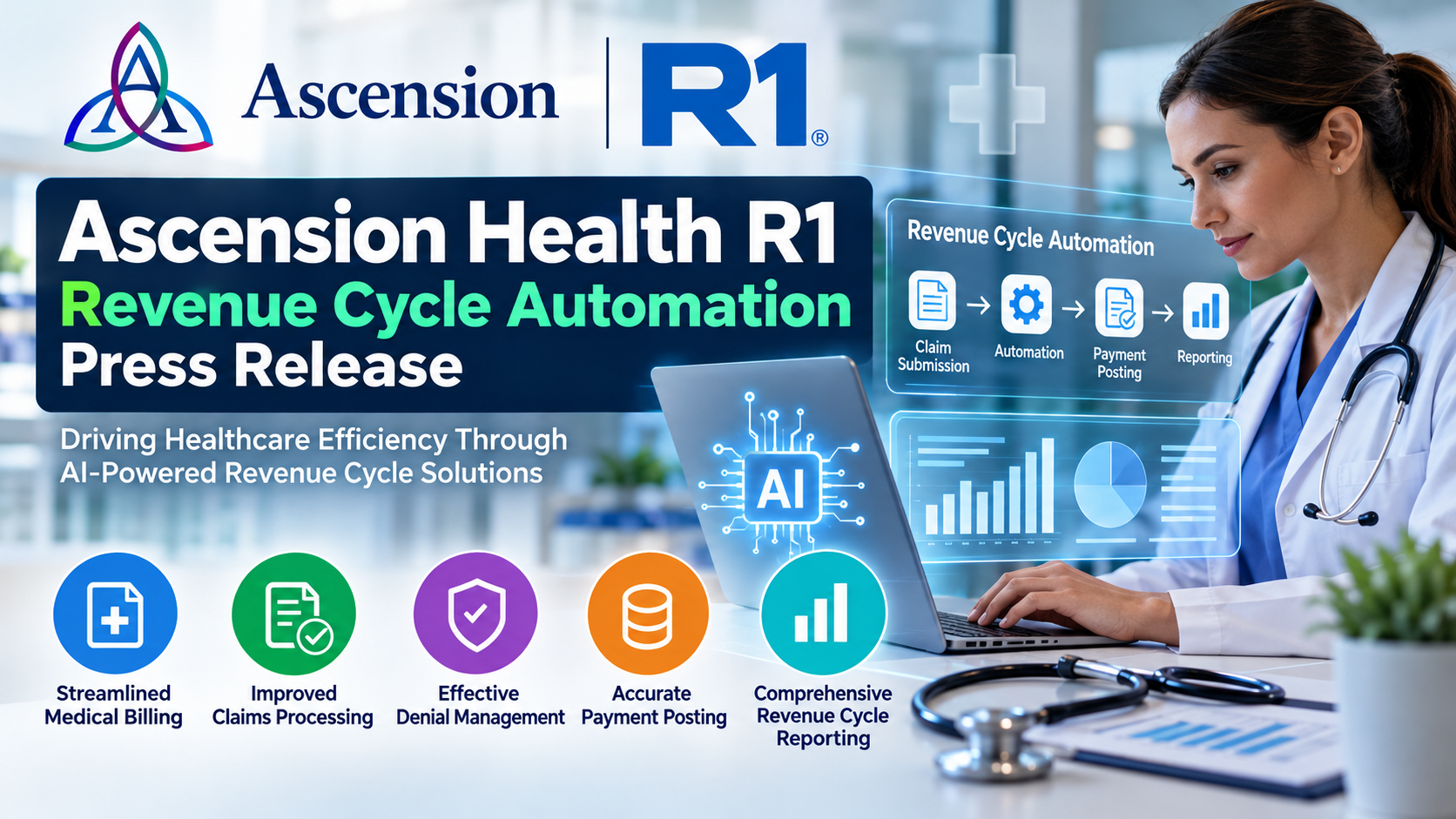
The Ascension Health R1 Revenue Cycle Automation Press Release highlights developments in healthcare revenue cycle management, medical billing, and automation. Ascension and R1 have an established partnership, while healthcare organizations continue exploring technology to improve billing efficiency and financial operations.
Understanding the Ascension Health R1 Revenue Cycle Automation Press Release can help medical practices learn about claims processing, payer connectivity, and the role of artificial intelligence in healthcare administration.
What Is the Ascension Health R1 Revenue Cycle Automation Press Release About?
The Ascension Health R1 Revenue Cycle Automation Press Release relates to announcements about the revenue cycle management partnership between Ascension and R1.
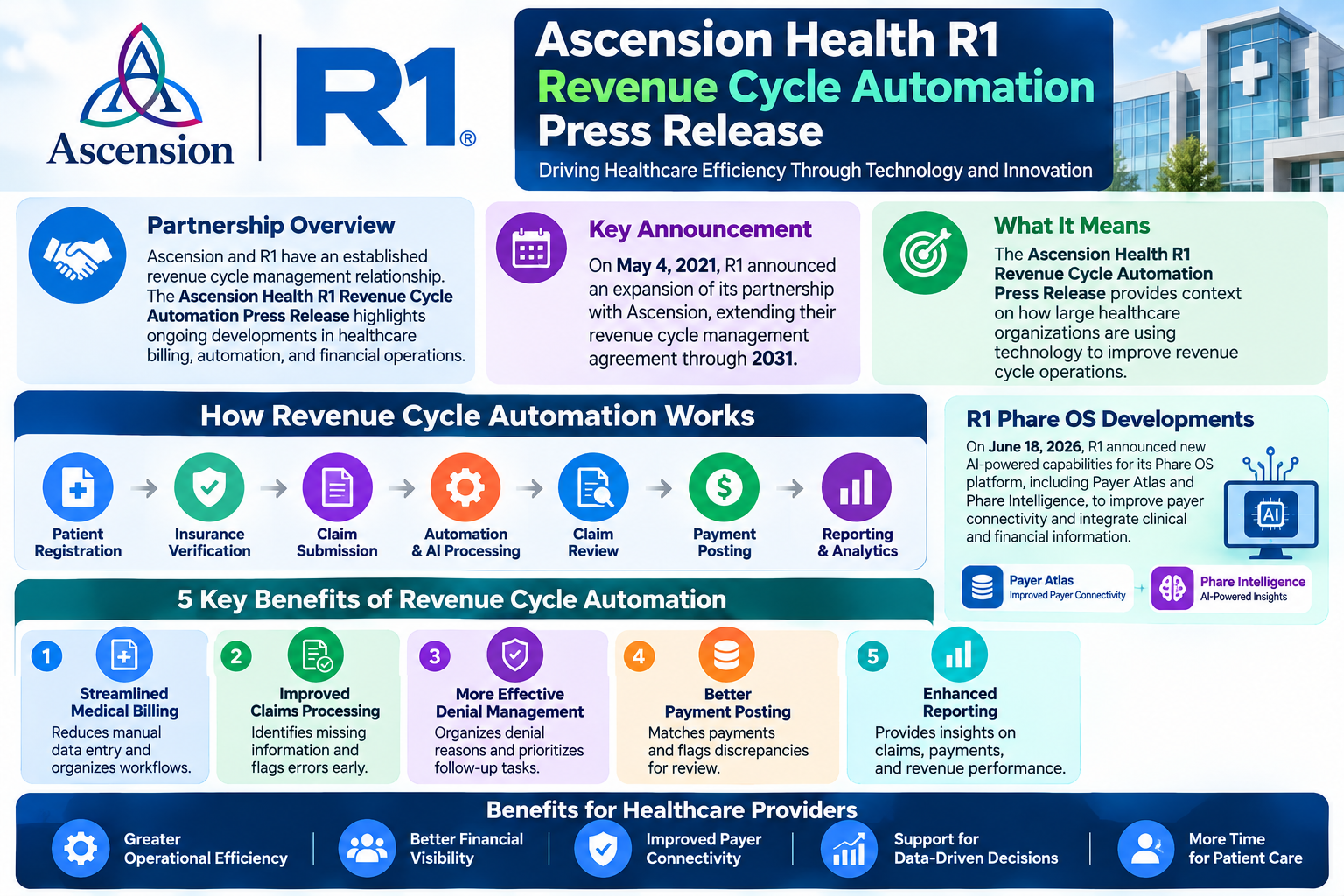
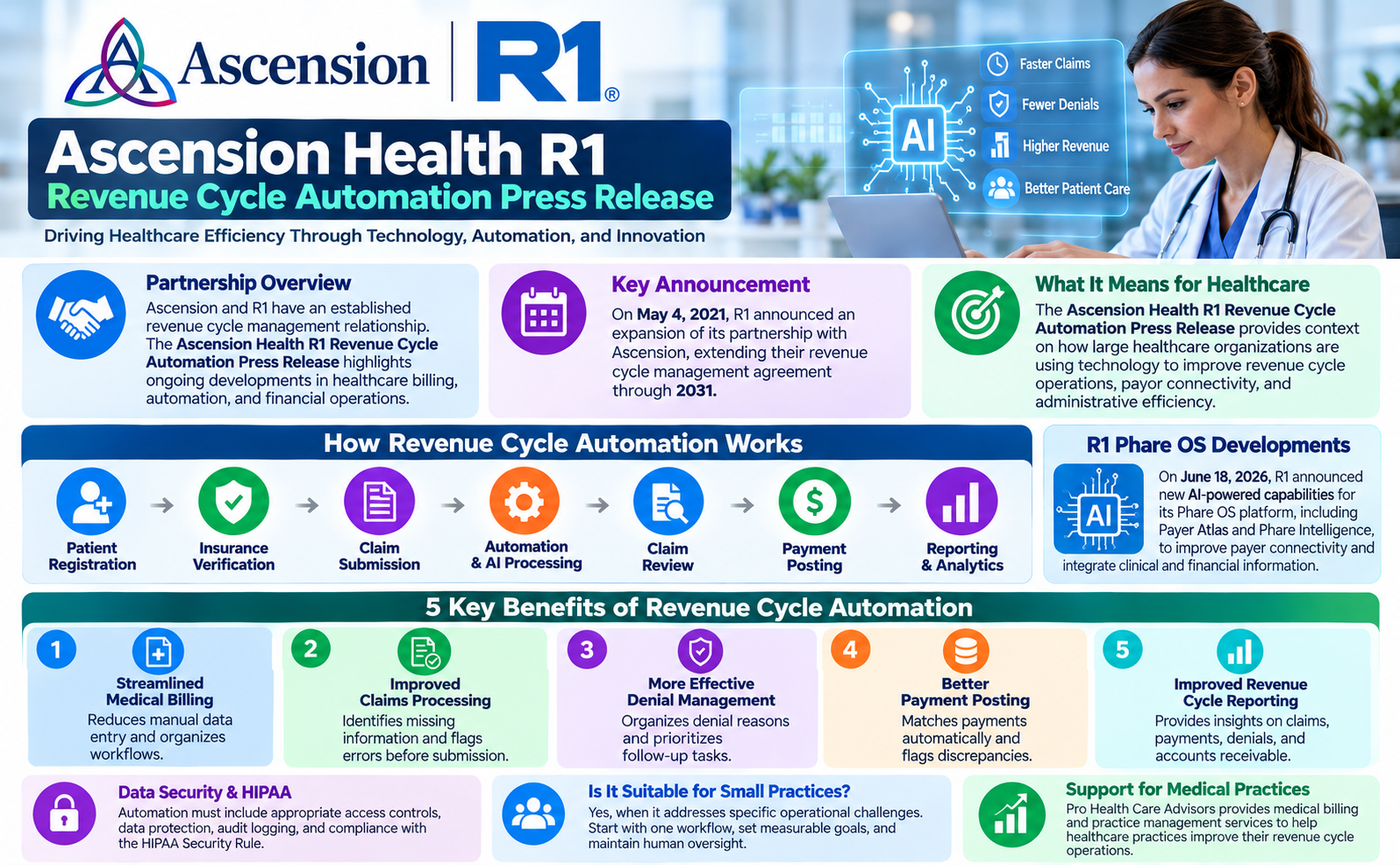
On May 4, 2021, R1 announced an expansion and extension of its partnership with Ascension, extending the agreement through 2031. This announcement provides historical context for understanding how large healthcare organizations approach revenue cycle operations.
Read the official Ascension and R1 partnership announcement for further details.
Five Benefits of Revenue Cycle Automation
1. Streamlined Medical Billing
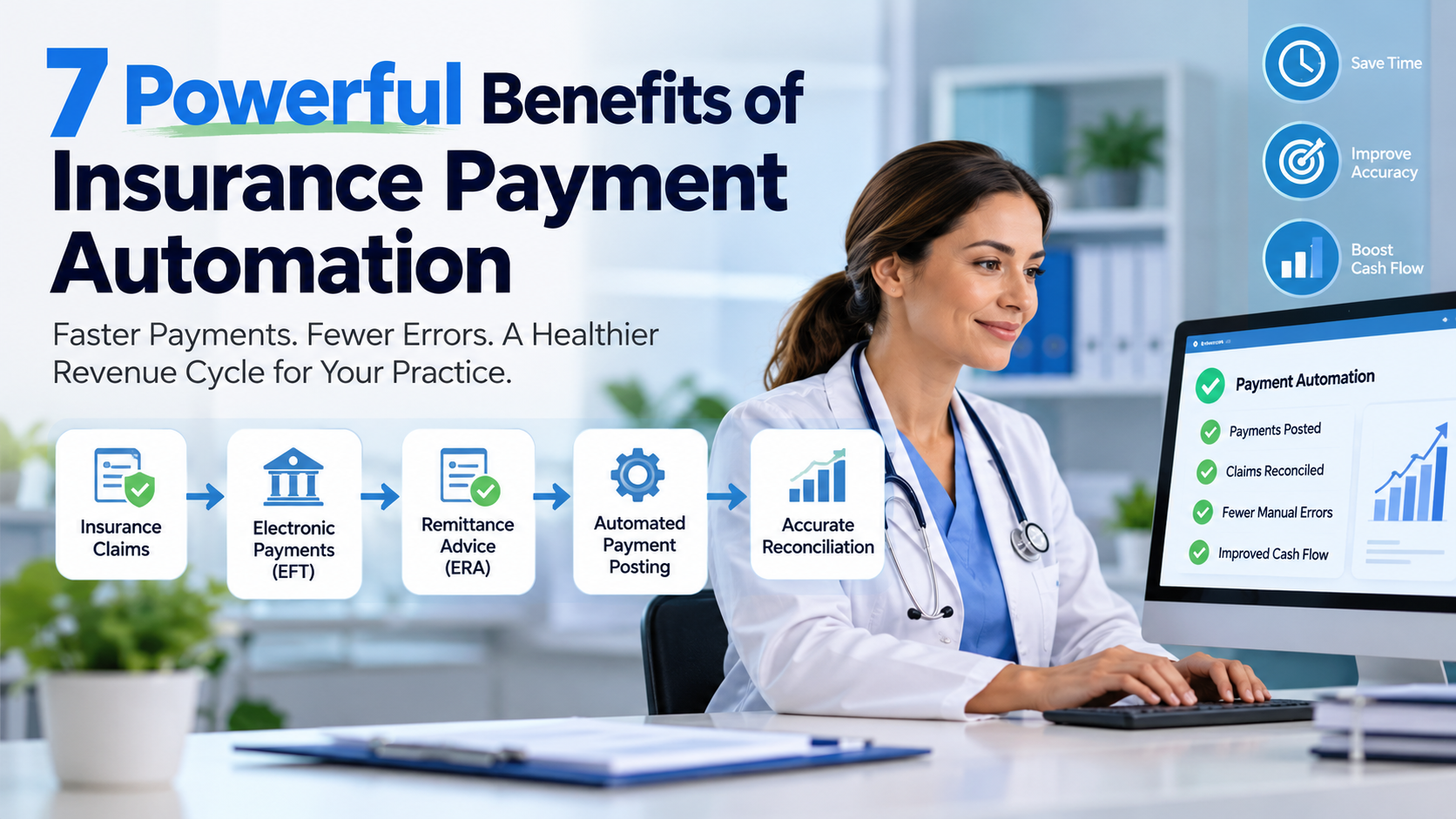
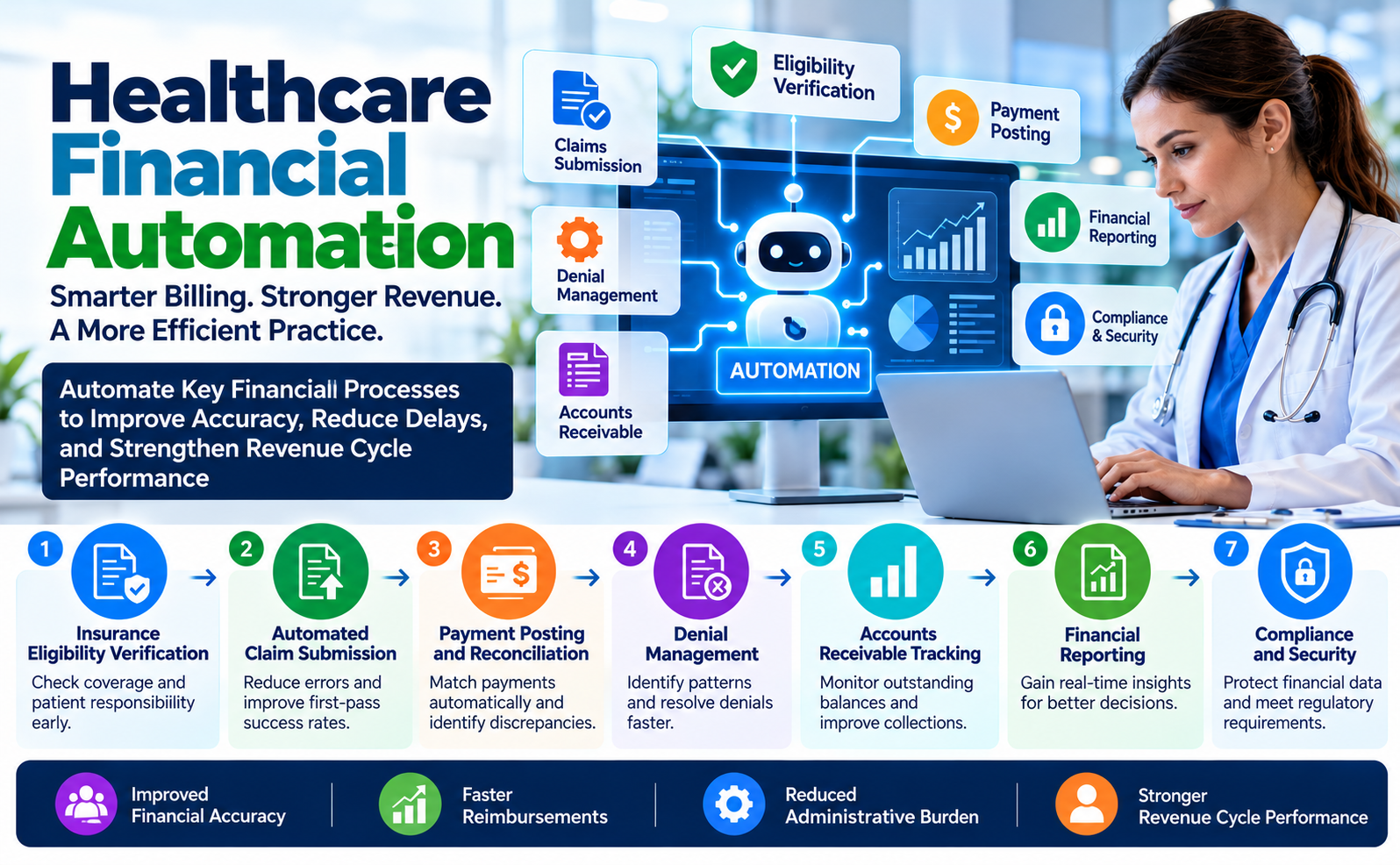
Medical billing includes insurance verification, claim submission, payment posting, and follow-up. Medical billing automation can reduce repetitive data entry and help standardize administrative workflows.
Healthcare providers can explore medical billing and practice management services for additional information.
2. More Efficient Claims Processing
Automated systems can identify missing information, check predefined fields, and flag incomplete claims before submission. These functions may help billing teams reduce avoidable errors.
However, automation cannot guarantee claim approval. Accurate coding, complete documentation, and payer requirements remain essential.
3. Improved Denial Management
Claim denials can delay reimbursement and increase administrative workload. Automated denial management can organize denial reasons, identify recurring issues, and prioritize follow-up activities.
Billing professionals should review each case to determine whether correction, resubmission, or an appeal is appropriate.
4. More Consistent Payment Posting
Automation can help match payment information with existing records and flag discrepancies for review. This supports transaction tracking and may improve the consistency of financial reporting.
5. Better Revenue Cycle Reporting
Automated reporting can help healthcare organizations monitor outstanding claims, accounts receivable, payment activity, and denial trends. These insights support data-informed operational decisions.
Practices should establish baseline performance measures before implementation to evaluate whether a new system delivers measurable benefits.
How R1 Phare OS Supports Healthcare Technology Development
On June 18, 2026, R1 announced new AI-powered capabilities for its Phare OS platform, including Payer Atlas and Phare Intelligence.
According to the official R1 Phare OS announcement, these developments focus on payer connectivity and integrating clinical and financial information.
The Ascension Health R1 Revenue Cycle Automation Press Release is relevant to this broader trend because it connects healthcare revenue cycle partnerships with technology-enabled financial workflows.
Artificial intelligence can help organize information, identify patterns, and support administrative tasks. Healthcare organizations should still validate system outputs and maintain appropriate professional oversight.
Learn more about AI medical billing automation.
Is Revenue Cycle Automation Suitable for Small Practices?
Automation may benefit smaller practices when it addresses a specific operational challenge. Before investing in a solution, practices should:
- Identify repetitive billing tasks.
- Confirm compatibility with existing software.
- Establish measurable performance goals.
- Test one workflow before expanding.
- Maintain security controls and human oversight.
Useful performance indicators include claim denial rates, first-pass acceptance rates, days in accounts receivable, and payment posting accuracy.
HIPAA and Healthcare Data Security
Medical billing systems may contain sensitive patient information. Automated workflows require appropriate access controls, data protection, audit logging, and procedures for correcting errors.
The U.S. Department of Health and Human Services provides guidance on the HIPAA Security Rule.
Automation alone does not ensure HIPAA compliance. Healthcare organizations should evaluate security risks, vendor responsibilities, and safeguards before introducing new technology.
How Pro Health Care Advisors Supports Billing Operations
Technology is only one part of effective revenue cycle management. Accurate coding, complete documentation, consistent claim follow-up, and clear reporting remain important.
Pro Health Care Advisors provides information about its medical billing and practice management services. Practices can also explore healthcare specialties to learn about services relevant to different medical disciplines.
When evaluating a billing partner, consider experience, software compatibility, data protection, communication, and measurable performance.
Frequently Asked Questions
What does the Ascension Health R1 Revenue Cycle Automation Press Release cover?
The Ascension Health R1 Revenue Cycle Automation Press Release topic covers the Ascension and R1 revenue cycle management relationship and related developments in healthcare billing technology.
When did Ascension and R1 expand their partnership?
R1 announced the partnership expansion on May 4, 2021, extending the agreement through 2031.
What is R1 Phare OS?
Phare OS is R1’s revenue cycle technology platform. R1’s June 2026 announcement described new capabilities involving payer intelligence and AI-supported workflows.
Can automation eliminate medical billing denials?
No. Automation can help identify missing information and organize claim follow-up, but denials may still occur because of coding errors, documentation gaps, coverage rules, or payer decisions.
Where can practices find medical billing support?
Healthcare providers can visit Pro Health Care Advisors to explore medical billing and practice management information.
Conclusion
The Ascension Health R1 Revenue Cycle Automation Press Release provides context for understanding the relationship between healthcare partnerships, technology, and financial operations.
R1’s partnership announcement with Ascension and its Phare OS developments illustrate the industry’s focus on payer connectivity, data integration, and automation. Healthcare practices can apply these lessons by selecting suitable workflows, measuring results, protecting patient information, and maintaining professional oversight.
Visit Pro Health Care Advisors to learn more about medical billing and practice management services.