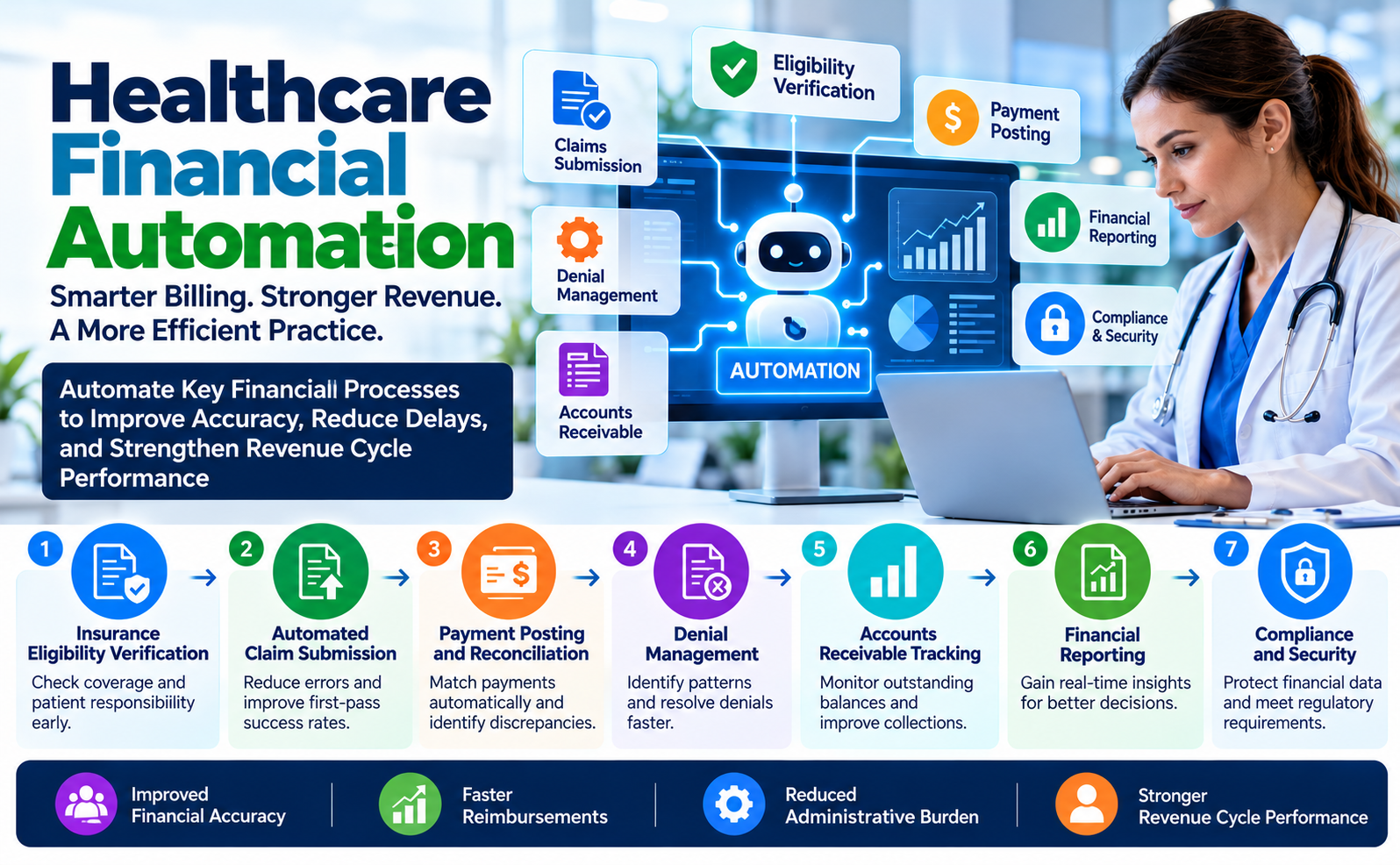









Medical billing collections are an essential part of managing a healthcare practice’s financial health. Even when providers deliver appropriate care and submit insurance claims, payments can be delayed because of claim denials, incomplete documentation, insurance processing issues, or outstanding patient balances.
Without a consistent follow-up process, unpaid claims can accumulate, accounts receivable can age, and healthcare practices may struggle to maintain predictable cash flow.
Understanding how medical billing collections work can help physicians, practice managers, and billing professionals identify outstanding payments, resolve billing issues, and improve revenue cycle performance. This guide explains the collections process, common challenges, practical recovery strategies, and ways to maintain professional patient communication.
What Are Medical Billing Collections?
Medical billing collections refer to the activities healthcare practices use to collect payments owed for medical services. These activities may involve following up on unpaid insurance claims, resolving denials, investigating underpayments, and communicating with patients about their outstanding financial responsibilities.
Collections generally involve two main categories.
Insurance Collections
Insurance collections focus on payments owed by health insurance companies for covered services. Billing teams monitor claim status, investigate delayed reimbursements, correct eligible errors, submit appeals when appropriate, and follow up with payers until claims are resolved.
Patient Collections
Patient collections involve collecting balances that patients are responsible for under their insurance plan and applicable agreements. These balances may include deductibles, copayments, coinsurance, and other legitimate patient-responsibility amounts.
Patient balances should be calculated accurately, explained clearly, and handled in accordance with applicable laws, payer contracts, and practice policies.
Both types of collections are important for maintaining an organized healthcare revenue cycle.
For a broader overview of claim processing and payment management, explore our medical billing and practice management services.
Why Are Medical Billing Collections Important?
Effective medical billing collections help healthcare practices identify unpaid revenue and address issues before they become more difficult to resolve.
1. Improve Cash Flow
Healthcare practices rely on timely reimbursement to manage operating expenses, maintain services, and plan for future needs. Following up on unpaid claims helps reduce avoidable delays and improves visibility into expected payments.
2. Reduce Aging Accounts Receivable
Accounts receivable, commonly called AR, represents money owed to a healthcare practice. When claims remain unpaid for extended periods, the likelihood of timely recovery may decline, particularly when filing or appeal deadlines approach.
Regular AR reviews help practices identify outstanding balances and prioritize appropriate follow-up.
3. Identify Claim Denials Earlier
A denied claim may still be recoverable when the issue is reviewed and addressed within the applicable deadline. Billing teams should identify the denial reason, determine whether correction or appeal is appropriate, and document each action taken.
Learn more about medical billing and denial management support to understand how claim follow-up fits into the broader revenue cycle.
4. Improve Financial Reporting
Accurate collections records help practice managers understand how much revenue has been collected, how much remains outstanding, and which issues are delaying reimbursement.
These insights can support better operational decisions and help identify recurring billing problems.
5. Maintain Clear Patient Communication
Patients may have questions about insurance adjustments, deductibles, copayments, or statements. Clear explanations and accurate account information can help resolve questions and reduce avoidable payment disputes.
How Does the Medical Billing Collections Process Work?
A structured medical billing collections process helps healthcare practices manage outstanding claims and patient balances consistently.
Step 1: Verify Patient and Insurance Information
Confirm the information needed to process the claim, including patient details, insurance coverage, eligibility, and applicable authorization requirements.
Accurate information at the beginning of the process can help prevent avoidable billing problems later.
Step 2: Submit Accurate Insurance Claims
Review the clinical documentation, diagnosis codes, procedure codes, and other required claim details before submission.
Claims should accurately represent the services provided and follow applicable coding guidelines and payer requirements.
Step 3: Monitor Claim Status
Track submitted claims to determine whether they have been accepted, processed, denied, or left pending.
If a claim remains unpaid beyond the expected processing period, investigate the status rather than allowing it to remain unattended.
Step 4: Investigate Denials and Underpayments
Review the payer’s explanation of benefits or electronic remittance advice to understand why a claim was denied or paid differently than expected.
Depending on the findings, the next step may involve correcting an error, providing requested documentation, submitting a corrected claim, or filing an appeal.
Step 5: Follow Up on Outstanding Patient Balances
Once insurance processing is complete, verify the remaining patient responsibility and provide a clear statement.
Patient communications should explain the balance and available payment options in a professional manner, following applicable requirements and practice policies.
Step 6: Record Every Follow-Up Action
Document payer communications, claim reference numbers, outstanding requirements, appeal deadlines, patient contacts, and the next follow-up date.
Consistent records help prevent duplicate work and make unresolved accounts easier to manage.
Step 7: Reconcile Payments and Close Accounts
When payment arrives, post it accurately and compare the payment with the expected amount.
Investigate discrepancies, document adjustments, and confirm that the account has been resolved appropriately.
7 Best Practices for Effective Medical Billing Collections
Healthcare practices can improve their medical billing collections process by adopting consistent procedures and reviewing results regularly.
1. Review Aging Accounts Receivable Reports
An AR aging report organizes outstanding balances according to how long they have remained unpaid.
Common reporting categories include 0–30 days, 31–60 days, 61–90 days, and more than 90 days. Practices may use different categories depending on their reporting systems.
Reviewing these reports helps identify older claims, high-value balances, repeated payer delays, and accounts that need immediate attention.
2. Prioritize Claims by Deadline and Recovery Opportunity
Not every outstanding claim requires the same action. Prioritize accounts based on factors such as timely filing limits, appeal deadlines, balance amount, denial reason, and likelihood of recovery.
A small balance approaching a filing deadline may need more urgent attention than a larger claim that is still within its normal processing period.
3. Investigate Denial Reasons
Do not treat every denial as a final loss. Review the payer’s explanation, identify the underlying problem, and determine the correct next step.
Some denials can be resolved through corrected information or additional documentation. Others may require a formal appeal, while certain claims may not be recoverable under the applicable rules.
Accurate denial categorization also helps practices identify recurring issues.
4. Verify Insurance Eligibility Before Appointments
Confirming coverage and relevant benefits before a visit can help identify potential billing problems early.
Where applicable, verify authorization, referral requirements, coverage limitations, and other payer-specific conditions.
Eligibility verification does not guarantee payment, but it can help practices identify issues that require attention before services are billed.
5. Use Consistent Patient Billing Procedures
Patient statements should clearly identify the balance due and provide appropriate instructions for questions or payments.
When patients raise concerns, review the account and explain the charges, insurance adjustments, and applicable patient responsibility.
Practices should use professional, respectful communication and follow relevant privacy, consumer protection, and billing requirements.
6. Use Technology to Track Outstanding Claims
Practice management and electronic health record systems can help organize claim status, payment posting, follow-up reminders, and AR reports.
Automated alerts may help identify pending claims or upcoming deadlines, but staff should verify the underlying information before taking action.
Explore our EMR and EHR optimization services to learn more about how healthcare technology can support organized billing workflows.
7. Review Collections Performance Regularly
Monitor relevant indicators such as AR aging, days in accounts receivable, denial rates, collection rates, and the percentage of claims resolved.
Use consistent definitions and reporting periods when comparing performance over time.
Reviewing these indicators can help identify where collections are improving and where additional investigation or workflow changes may be needed.
Common Medical Billing Collections Challenges
Even well-organized practices can experience problems that delay payment.
Incomplete or Incorrect Claims
Missing information, coding discrepancies, or incorrect patient details can prevent claims from being processed correctly. Pre-submission checks and accurate documentation can help reduce these issues.
Delayed Insurance Responses
Some claims require additional review or supporting records. Track pending claims and follow up according to the payer’s process and the practice’s established schedule.
Missed Filing and Appeal Deadlines
Claims may become difficult or impossible to recover if applicable deadlines are missed. Maintain clear deadline records and prioritize time-sensitive accounts.
Incorrect Patient Balances
Patient responsibility should be determined using the available insurance processing information and applicable agreements. Review discrepancies before sending statements or pursuing payment.
Poor Follow-Up Documentation
Without a clear record of previous actions, billing teams may repeat work or overlook required next steps. Document the outcome of every meaningful follow-up.
Addressing these challenges systematically helps practices make more informed collections decisions.
How to Measure Medical Billing Collections Performance
Tracking performance helps healthcare practices understand whether their collections processes are working effectively.
Important metrics include:
Accounts receivable aging: Shows how long outstanding balances have remained unpaid.
Days in accounts receivable: Estimates the average number of days needed to collect outstanding receivables, depending on the formula used.
Net collection rate: Measures the proportion of collectible revenue actually collected after relevant contractual adjustments, using a consistent calculation method.
Denial rate: Tracks the proportion of claims denied during a defined reporting period. Practices should distinguish initial denials from final unresolved denials.
First-pass resolution or acceptance: Helps evaluate how often claims move through initial processing without requiring correction, depending on the metric definition.
No single metric tells the whole story. Practices should review trends alongside payer mix, specialty, claim volume, contractual requirements, and changes in workflow.
Protect Patient Information During Medical Billing Collections
Collections activities often involve sensitive patient and financial information. Healthcare practices should limit access to authorized personnel and use approved systems for storing and transmitting records.
Staff should verify the recipient before sharing information, avoid disclosing unnecessary patient details, and follow organizational privacy and security procedures.
The HHS HIPAA Security Rule guidance explains safeguards for electronic protected health information.
Practices should also review the CMS guidance on provider billing responsibilities when dealing with applicable Medicare coordination-of-benefits requirements.
How Pro Health Care Advisors Supports Medical Billing Collections
Managing unpaid claims, aging accounts receivable, denials, and patient balances can require significant time and consistent follow-up.
Pro Health Care Advisors offers medical billing collections support through its Creative Collection Solutions service, which focuses on accounts receivable recovery, denial follow-up, and outstanding claim resolution for healthcare practices.
The service may help practices identify aging accounts, prioritize recovery opportunities, address eligible claim issues, and maintain records of collection activity.
Learn more about Creative Collection Solutions for medical billing collections and AR recovery.
For broader billing support, explore our medical billing and practice management services.
Practices can also review our HIPAA compliance services to learn about support related to protecting sensitive information.
Service availability and recovery outcomes depend on the account details, payer rules, applicable deadlines, and circumstances of each practice.
Frequently Asked Questions About Medical Billing Collections
What are medical billing collections?
Medical billing collections involve following up on unpaid insurance claims, resolving eligible denials, reconciling underpayments, and collecting legitimate patient balances owed for healthcare services.
Why are medical billing collections important?
They help healthcare practices identify unpaid revenue, manage outstanding accounts receivable, investigate billing problems, and maintain clearer financial reporting.
How can healthcare practices improve medical billing collections?
Practices can improve collections by reviewing AR aging reports, prioritizing time-sensitive claims, investigating denials, verifying insurance information, documenting follow-up actions, and monitoring performance metrics.
What is accounts receivable in medical billing?
Accounts receivable represents money owed to a healthcare practice for services already provided. It can include unpaid insurance claims and outstanding patient balances.
How often should medical billing collections be reviewed?
Practices should establish a consistent review schedule based on claim volume, payer requirements, and operational needs. Time-sensitive denials and filing deadlines should be addressed promptly rather than waiting for the next routine review.
Can denied medical claims still be collected?
Some denied claims can be corrected or appealed, depending on the reason for denial, supporting documentation, payer rules, and applicable deadlines. Not every denial is recoverable.
What is the difference between medical billing and medical billing collections?
Medical billing includes preparing and submitting claims, posting payments, and managing billing information. Collections focuses on following up on outstanding balances and resolving unpaid claims or patient accounts.
Conclusion
Effective medical billing collections help healthcare practices maintain better control over unpaid claims, outstanding patient balances, and accounts receivable. A structured process that includes accurate claim submission, timely follow-up, denial investigation, payment reconciliation, and regular performance reviews can help identify recoverable revenue and reduce avoidable delays.
If your practice needs help managing outstanding claims and accounts receivable, explore Pro Health Care Advisors’ Creative Collection Solutions to learn more about its medical billing collections and recovery support.