







How AI and Automation Are Changing Medical Billing in 2026 — And What It Means for Your Practice
Let’s be honest for a second.
If you run a small or mid-size medical practice, the phrase “artificial intelligence” probably makes you think of one of two things: either some expensive tech tool that big hospital systems use, or a flashy sales pitch that promises to solve all your billing problems overnight.
Neither picture is quite right anymore.
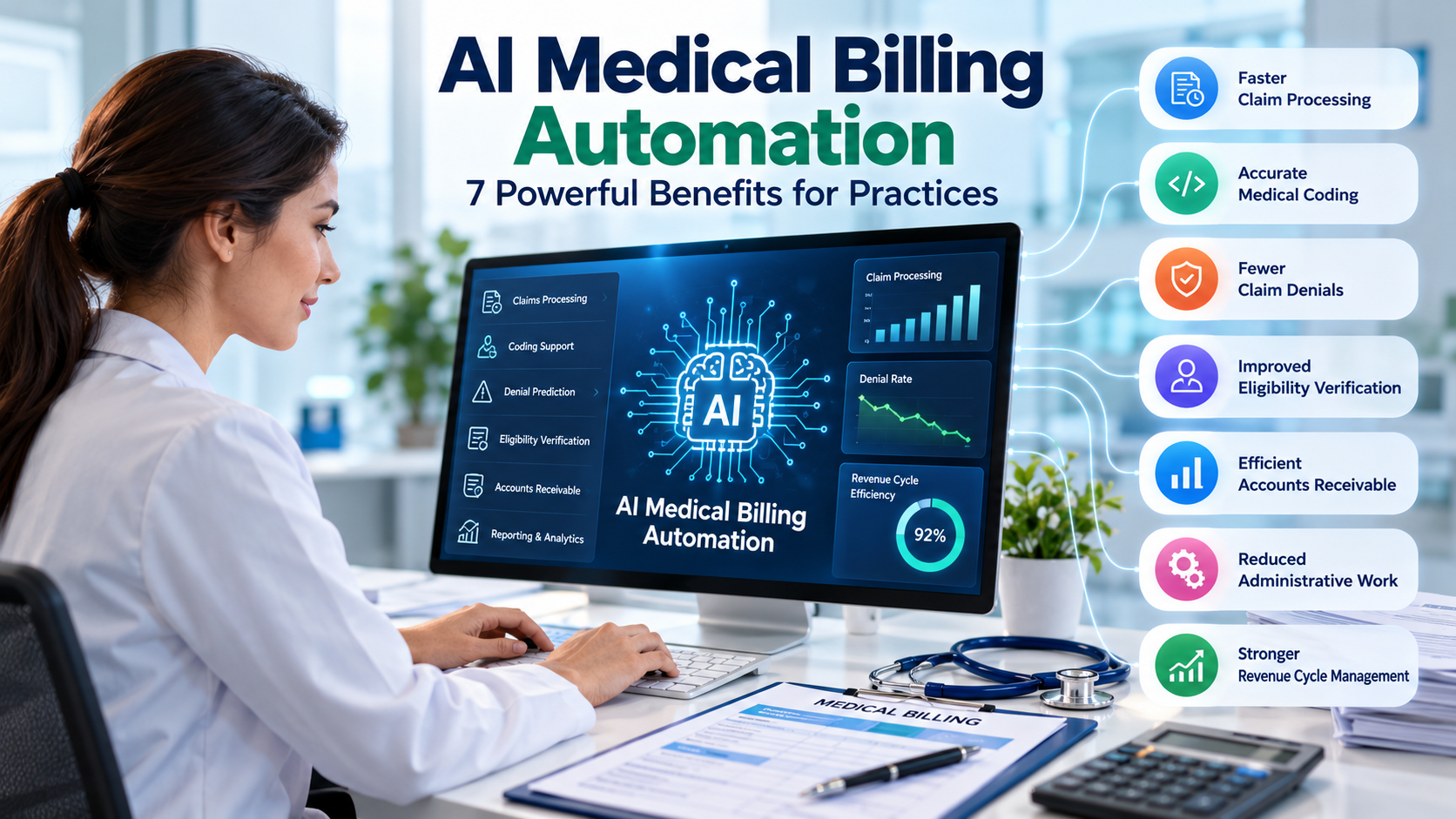
In 2026, AI in medical billing is not a futuristic concept sitting somewhere on the horizon. It is already inside the workflows of thousands of practices across the country — quietly catching claim errors before submission, flagging missing prior authorizations before they become denials, and in many cases, shaving weeks off how long it takes to get paid.
But here is the thing most people do not tell you: AI does not replace good billing people. It makes good billing people much, much better.
This guide is for providers and practice managers who want a straight-talking, no-hype breakdown of what AI in medical billing actually looks like in 2026 — what it does, what it cannot do, what the real numbers say, and whether it is something your practice should be paying attention to right now.
First, Why Is Billing Getting Harder Before It Gets Easier?
Before we talk about solutions, it helps to understand why the problem keeps growing.
Medical billing has always been complicated. But over the past two years, several things have piled on at the same time:
Payer scrutiny is up. Insurance companies have quietly deployed their own AI systems to review claims faster — and deny them faster. Automated payer edits now catch things that used to slip through. Practices that have not updated their billing workflows are losing claims they used to get paid on routinely.
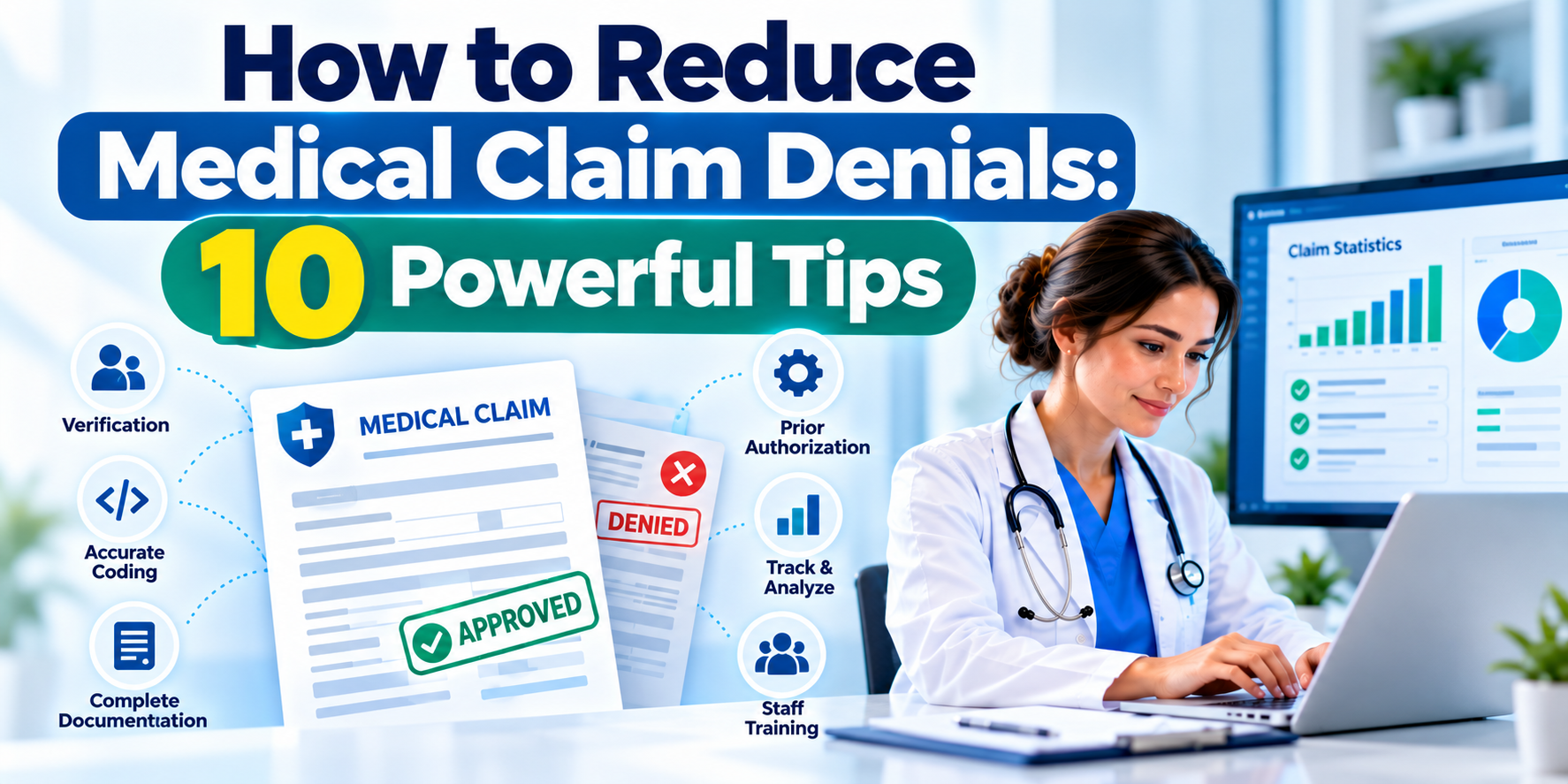
Claim denial rates keep climbing. Industry data shows that average claim denial rates have crossed 10% in 2026 — and in some specialties and settings, they are considerably higher. According to MGMA survey data, 41% of providers are now reporting denial rates above 10%. For a practice billing $500,000 per year, a 10% denial rate means $50,000 in claims sitting in a holding pattern — and a meaningful chunk of that never gets reworked.
Staffing shortages are real. Finding and keeping experienced billing staff is harder than it has been in years. Entry-level billing roles are shrinking as routine tasks get automated, while demand for experienced people who can manage complex denials and audit situations is growing. That gap is squeezing a lot of practices.
New regulations add documentation weight. The 2026 CMS prior authorization rule changes we covered in our previous post on prior authorization changes have added documentation requirements to the front end of the billing cycle. More complexity upfront means more places for errors to creep in — unless your systems catch them.
This is the environment AI tools are stepping into. Not to fix a small inconvenience. To address a structural problem that is actively costing practices money every single month.
What Does “AI in Medical Billing” Actually Mean?
Let us break this down practically, because the term gets used loosely.
When billing companies and software vendors talk about AI, they typically mean a combination of three underlying technologies working together:
Machine Learning (ML): Software that studies patterns in your historical claim data and learns from them. It figures out, for example, that claims for a particular procedure at a particular payer get denied when a specific documentation field is missing — and flags that proactively on every future claim.
Natural Language Processing (NLP): Software that reads clinical notes the way a human would — except much faster — and extracts the relevant codes, diagnoses, and documentation details needed for clean claim submission. This is what powers AI-assisted coding tools.
Robotic Process Automation (RPA): Software that handles repetitive tasks — eligibility checks, status lookups, payment posting — without anyone on your team needing to touch them. Think of it as a very patient, very fast staff member who never gets tired of running the same check 300 times a day.
Together, these three things are being applied across the entire revenue cycle — from the moment a patient schedules an appointment to the moment the final payment posts on an account.
Where AI Is Actually Making a Difference in 2026
1. Catching Errors Before Claims Leave the Building
This is where practices are seeing the clearest, most immediate return.
Claims scrubbing — the process of reviewing a claim for errors before it gets submitted to the payer — has existed for years. But traditional scrubbing tools work off a fixed set of rules. They catch the obvious stuff: missing fields, invalid codes, date errors.
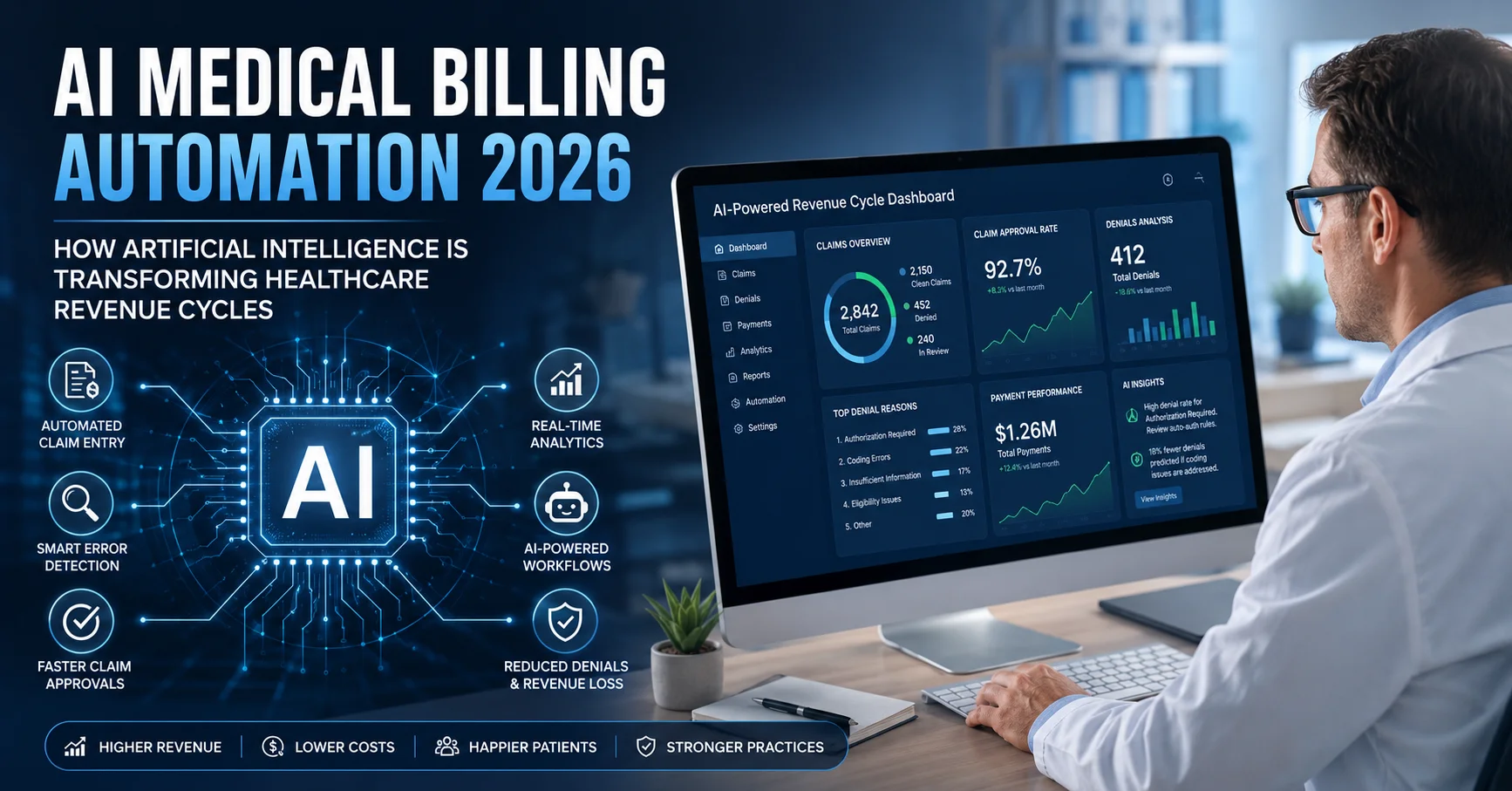
AI-powered claim scrubbing goes deeper. It compares each claim against payer-specific rules, historical denial patterns from your practice’s own data, and real-time eligibility information — all in one pass. It flags not just “this field is empty” but “based on how this payer has behaved on this procedure code in the past, this claim is at elevated risk of denial if this documentation is not included.”
The impact shows up in first-pass claim acceptance rates — the percentage of claims that get paid the first time they are submitted, without needing rework. Organizations using AI-assisted billing solutions are reporting first-pass rate improvements of 15% to 25%, along with 20% to 30% reductions in how long it takes to collect. For a practice that currently has a 78% first-pass rate, moving to 92% is not a minor operational tweak — it is a significant recovery of revenue that was previously leaking out the back door.
2. Real-Time Eligibility Verification That Actually Works
Here is a scenario that every billing team knows too well: A patient comes in, services are rendered, the claim goes out — and it comes back denied because the patient’s insurance lapsed, or their plan changed at open enrollment, or their deductible reset and nobody caught it at check-in.
These are completely preventable denials. And they happen constantly in practices that are still doing eligibility checks manually, or only once at scheduling.
AI-powered eligibility verification runs checks at multiple points in the patient journey:
- At the time of scheduling
- The morning of the appointment
- Again just before the claim is submitted
If anything changes between those checkpoints — a plan termination, a coverage gap, a new payer — the system flags it before the claim goes out. Not after.
This kind of continuous, layered eligibility checking is particularly important heading into the second half of 2026, when new payer requirements around real-time eligibility data are taking shape as part of the broader CMS interoperability push.
3. Denial Pattern Detection — Fixing Problems at the Root
Here is something that separates smart practices from reactive ones: they look at denial data differently.
Most practices look at denied claims one by one and figure out how to fix each one individually. That is denial recovery. It is expensive, slow, and it does not stop the same denial from happening again next month.
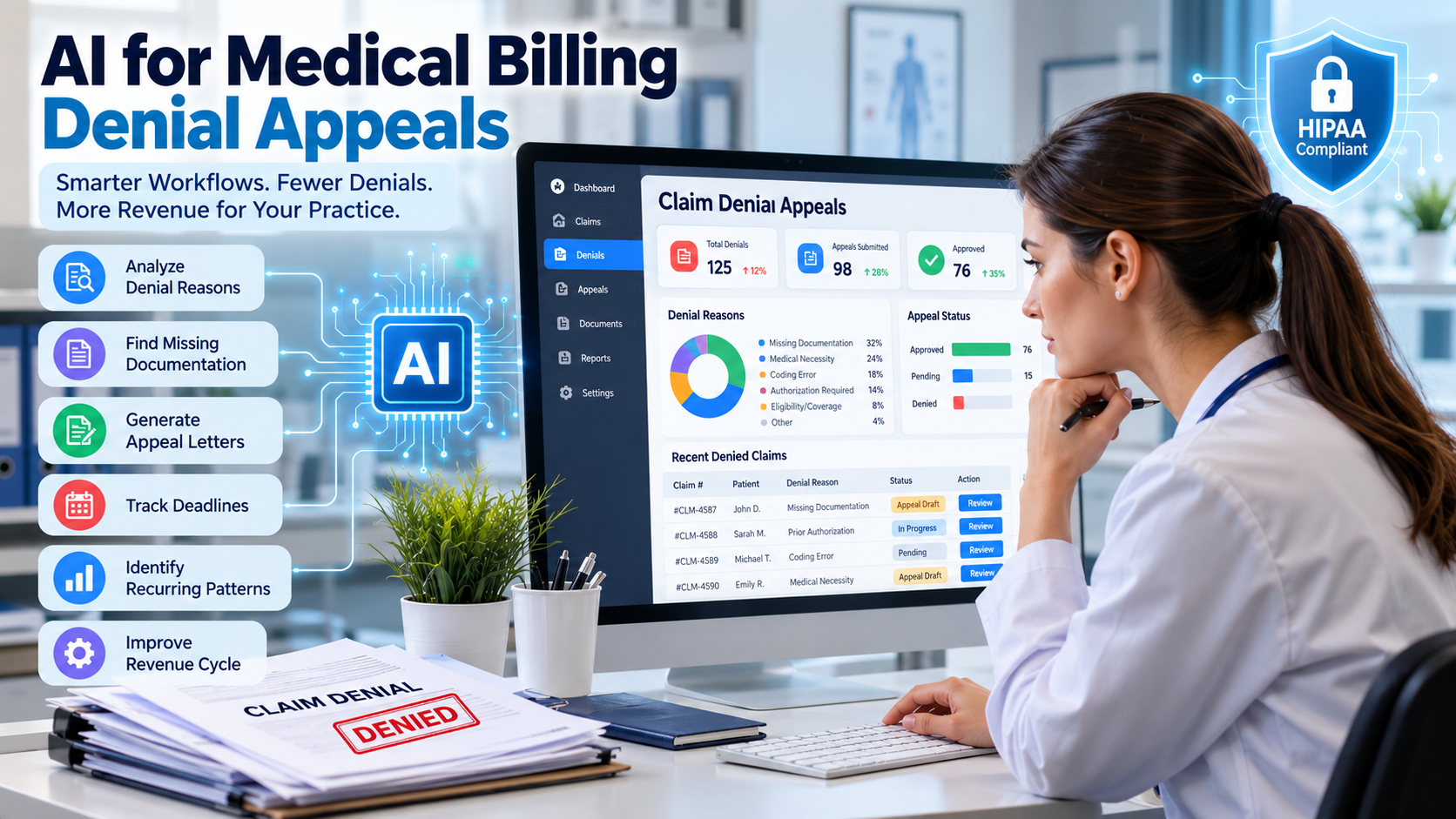
AI denial pattern detection takes the opposite approach. It looks across all your denied claims and asks: what do these have in common? Is a specific CPT code getting denied by one particular payer? Is a provider on your team generating a higher proportion of incomplete documentation? Is a certain diagnosis-treatment combination consistently triggering medical necessity reviews?
When you can see the pattern, you can fix the root cause — not just the individual claim. And when the root cause gets fixed, that entire category of denials stops happening.
This is the shift the industry is calling “denial prevention versus denial recovery.” And it is arguably the highest-leverage thing AI brings to a small or mid-size practice, because you do not need to hire more people to work the denial queue. You shrink the denial queue.
4. AI-Assisted Coding: Faster, More Consistent, Less Risky
Medical coding is one of those jobs where the margin for error is tiny and the consequences of getting it wrong are real. An upcoded claim can trigger a payer audit. An undercoded claim costs your practice money. A wrong modifier can mean an outright denial.
AI-assisted coding tools read clinical documentation and suggest the appropriate codes — then a human coder reviews, adjusts if needed, and approves. This human-in-the-loop model is important. According to AAPC research, practices using staff-AI collaboration on coding reduced denial rates by an average of 18% compared to practices that either coded entirely manually or tried to automate coding with no human oversight.
The human brings judgment, context, and accountability. The AI brings speed, pattern recognition, and consistency. Together, they produce cleaner claims than either could on its own.
For smaller practices without dedicated coding staff, AI-assisted coding tools are especially valuable. They give a billing generalist the support needed to catch what they might otherwise miss.
5. Prior Authorization Management Gets Smarter
Given the major prior authorization rule changes that took effect in January 2026 — including the new 72-hour payer decision deadlines and the WISeR model in six states — prior authorization has become one of the most critical pressure points in the entire billing cycle.
AI tools are now being applied to prior auth in several ways:
- Automatically checking whether a planned service requires prior authorization based on the patient’s payer and the procedure code
- Pulling the right documentation from clinical notes and pre-populating authorization requests
- Tracking authorization timelines and flagging any payer that has not responded within the legally required window
This kind of automated PA tracking is something our team at ProHealthCare Advisors integrates into our authorization management services — because chasing payers manually for every outstanding authorization is not a sustainable use of your front desk staff’s time.
For more on how the prior authorization rules changed in 2026 and what your practice must do to stay compliant, see our full guide: Prior Authorization Rules Changed in 2026 — What Every Provider Must Know.
The Numbers Behind the Shift
Numbers speak louder than claims, so here is a snapshot of where the industry stands:
- The global AI in medical billing market was valued at $5.90 billion in 2026 and is projected to reach $45.38 billion by 2035 — a compound annual growth rate of over 25%.
- 63% of healthcare organizations were already using AI for revenue cycle work as of 2025, according to Experian Health.
- Practices implementing AI billing solutions are reporting 30–40% reductions in administrative labor costs.
- AI-driven claim scrubbing is pushing first-pass acceptance rates toward 98% in some enterprise deployments.
- The AMA reports that physicians spend an average of 13 hours per week on prior authorization alone — AI-assisted PA tools are cutting that number significantly for practices that have adopted them.
These are not projections. These are outcomes being reported by practices that made the switch.
What AI Cannot Do — And Why That Matters
Here is where we pump the brakes slightly, because the hype around AI can be just as misleading as dismissing it.
AI cannot replace experienced billing oversight. Systems still need humans to catch context that algorithms miss — a patient note that changed a diagnosis mid-visit, a payer policy exception your software does not know about yet, an appeal that requires clinical reasoning to write effectively.
AI cannot fix broken processes. If your intake workflow is missing key data fields, an AI tool will catch the error faster — but it will not fix the underlying gap in how your team is collecting information. The workflow still has to be right.
AI cannot manage payer relationships. When a payer is consistently applying policies incorrectly or dragging out prior auth decisions past the legal deadline, that requires a human being who knows the rules and knows how to escalate. Technology flags the problem. People solve it.
The practices getting the best results from AI in 2026 are treating it as a tool that amplifies their team’s capabilities — not a replacement for having a capable team in the first place.
Should Small Practices Be Thinking About This Right Now?
Absolutely — but not necessarily by buying software.
For solo providers and small group practices, the most practical path to AI-enhanced billing is usually through a trusted billing partner that already has these tools built into their workflows. You get the benefit of the technology without the overhead of licensing, implementation, training, and ongoing maintenance.
This is one of the reasons practices choose to work with ProHealthCare Advisors. Our billing and revenue cycle services are built for individual and small group practices — and our approach to denial management, eligibility verification, and prior authorization management incorporates the tools and workflows that 2026 actually requires.
You do not need to become a technology expert. You need a billing partner who already is one.
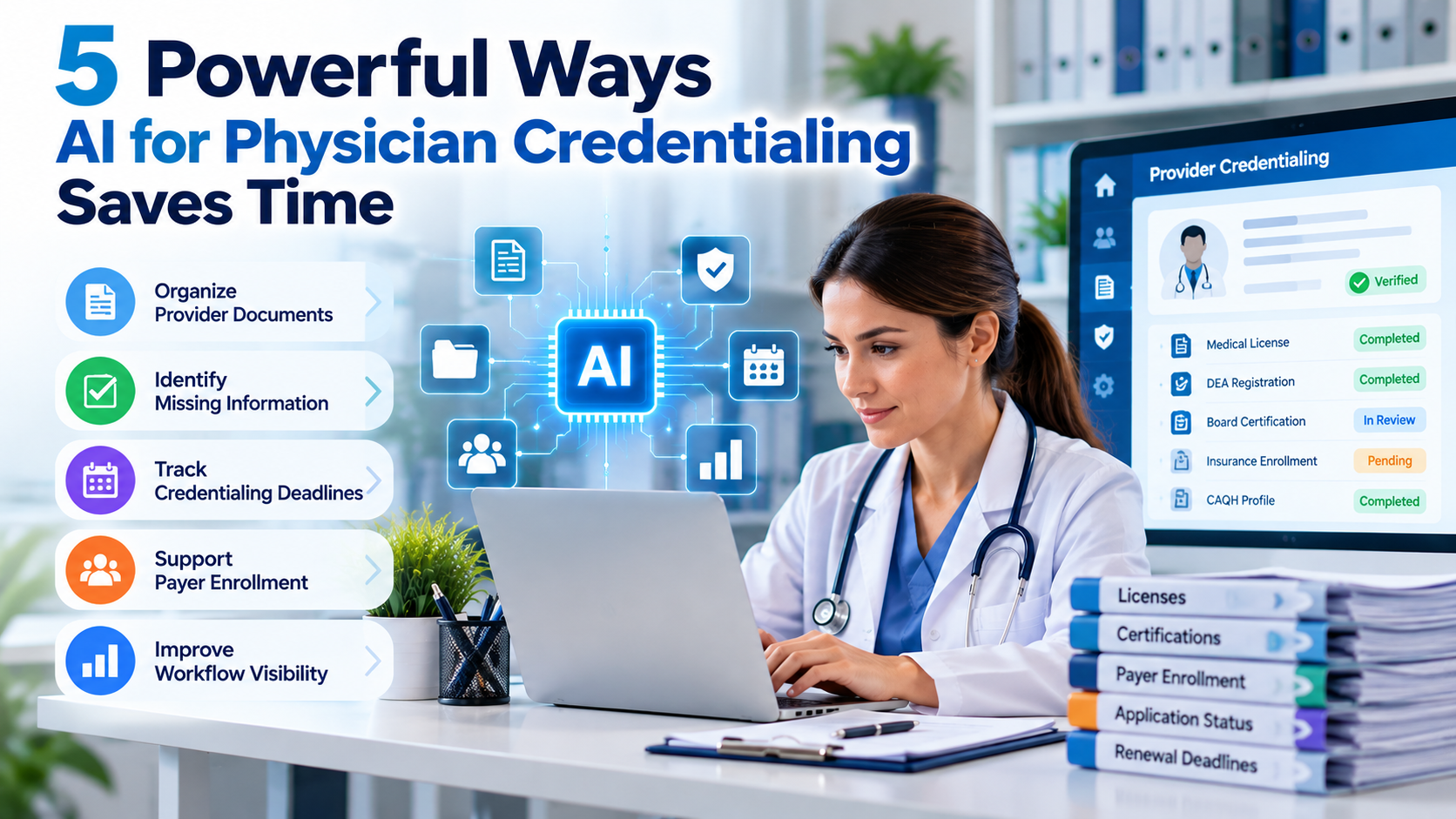
Our medical credentialing services also ensure that the foundation beneath your billing operation — provider enrollment, credential verification, payer network status — stays current and compliant, so AI tools have clean data to work with.
A Practical Checklist: Is Your Billing Ready for 2026?
Walk through this honestly. It will tell you a lot about where your revenue cycle stands:
Claims & Submissions:
- [ ] Are claims being scrubbed for payer-specific rules before submission — not just basic field validation?
- [ ] Do you know your current first-pass claim acceptance rate?
- [ ] Are denied claims being analyzed for patterns, or addressed individually each time?
Eligibility:
- [ ] Is eligibility being verified at scheduling, at check-in, AND before claim submission?
- [ ] Does your team get alerts when a patient’s coverage changes between scheduling and appointment?
Prior Authorization:
- [ ] Is there a system that automatically identifies which services require prior auth for each payer?
- [ ] Are you tracking authorization timelines to enforce the new 72-hour/7-day CMS deadlines?
Coding:
- [ ] Is coding being reviewed for payer-specific nuances, not just general ICD/CPT accuracy?
- [ ] Are denial trends being reviewed monthly to catch coding-related patterns?
Credentialing:
- [ ] Are provider credentials monitored on an ongoing basis, not just at annual renewal?
- [ ] Is payer enrollment current for all active providers, including any recent additions to the team?
If you found gaps in this checklist, you are not alone. These are the exact pain points that drive most practices to look for a billing partner rather than trying to manage everything in-house with limited staff.
The Honest Bottom Line
AI is not going to make medical billing effortless. The system is genuinely complex, regulations keep changing, and payers are not going to make it easier just because the technology is getting better.
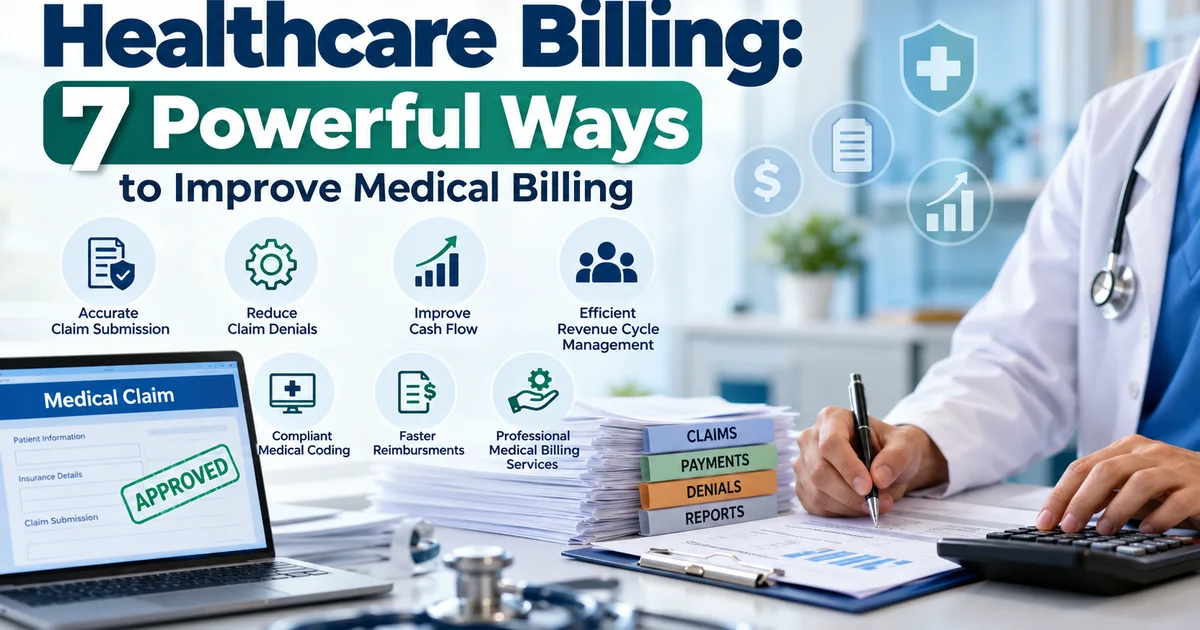
What AI is doing — right now, in practices like yours — is shifting the odds. Claims are cleaner before they go out. Denials are caught earlier. Patterns get spotted faster. Staff time gets redirected from repetitive checking to genuine problem-solving.
For a practice that is currently running a 10% denial rate, improving to 6% is not a minor efficiency gain. At $500,000 in annual billing, that is $20,000 in recovered revenue. Every year.
The practices that are thriving financially in 2026 are not necessarily the ones with the most patients or the highest fee schedules. They are the ones that have gotten serious about how they manage the billing side of the house — and they are using the best available tools to do it.
If you want to have an honest conversation about where your practice’s revenue cycle stands and what a smarter billing operation could look like, reach out to our team at ProHealthCare Advisors. We have been doing this for individual and small group practices for years, and we know how to make real improvements without making your life more complicated.
Sources & External References
- Experian Health — AI Adoption in Revenue Cycle Management 2025
- AAPC — AI-Assisted Coding Denial Rate Study 2025
- AMA — Prior Authorization Time and Cost Burden on Physicians
- Precedence Research — AI in Medical Billing Market Size Report 2026–2035
- Guidehouse — Medical Group RCM Priorities 2026
- HFMA — Claim Denial Rate Benchmarks 2026
- MGMA — Provider Denial Rate Survey Data
- CMS — Interoperability and Prior Authorization Final Rule CMS-0057-F