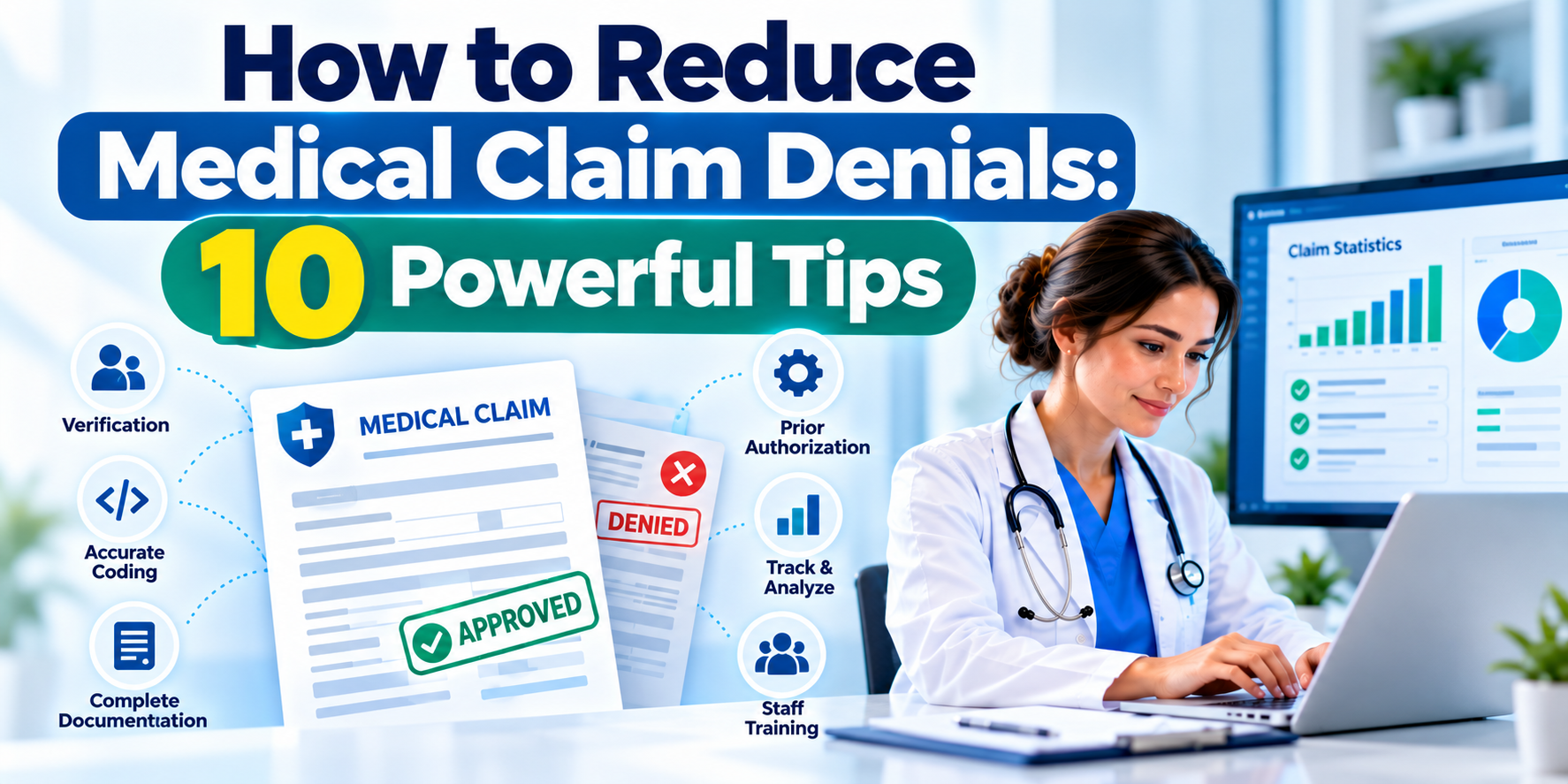
AI for physician credentialing can help medical practices organize provider documents, identify missing information, and streamline administrative workflows. Physician credentialing involves collecting licenses, certifications, education records, work history, and other information required by healthcare organizations and insurance payers.
For busy medical practices, managing these requirements manually can be time-consuming. AI-assisted tools can support document organization, application tracking, and deadline management while credentialing professionals remain responsible for verification and approval.
What Is AI for Physician Credentialing?
AI for physician credentialing uses artificial intelligence to assist with repetitive administrative tasks involved in provider credentialing and insurance enrollment.
Depending on the system, these tools may help organize documents, extract information from forms, identify incomplete records, and summarize application status. This can make it easier for credentialing teams to manage multiple provider applications.
However, AI does not replace primary-source verification, professional judgment, or payer-specific enrollment requirements. Every application should be reviewed carefully before submission.
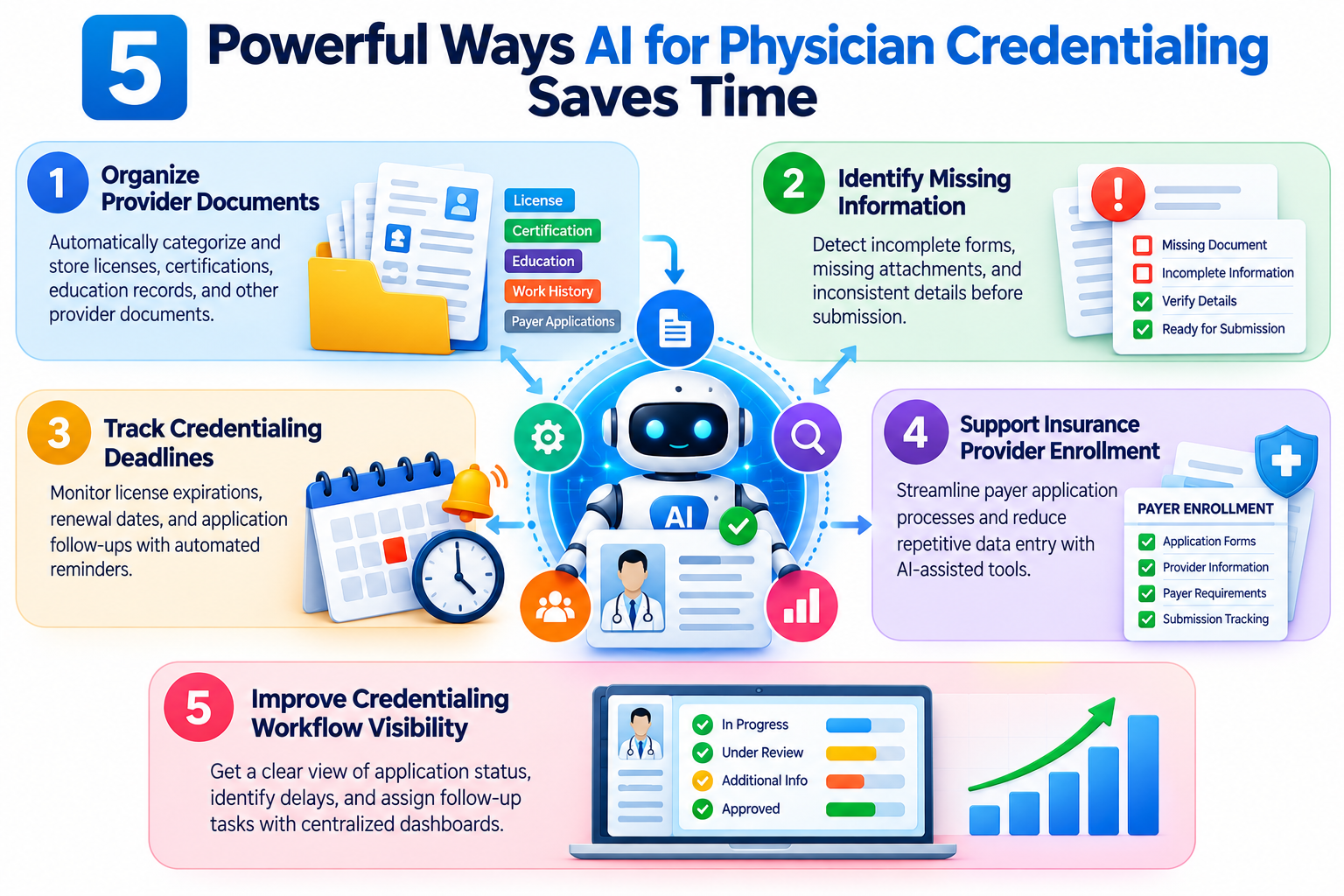
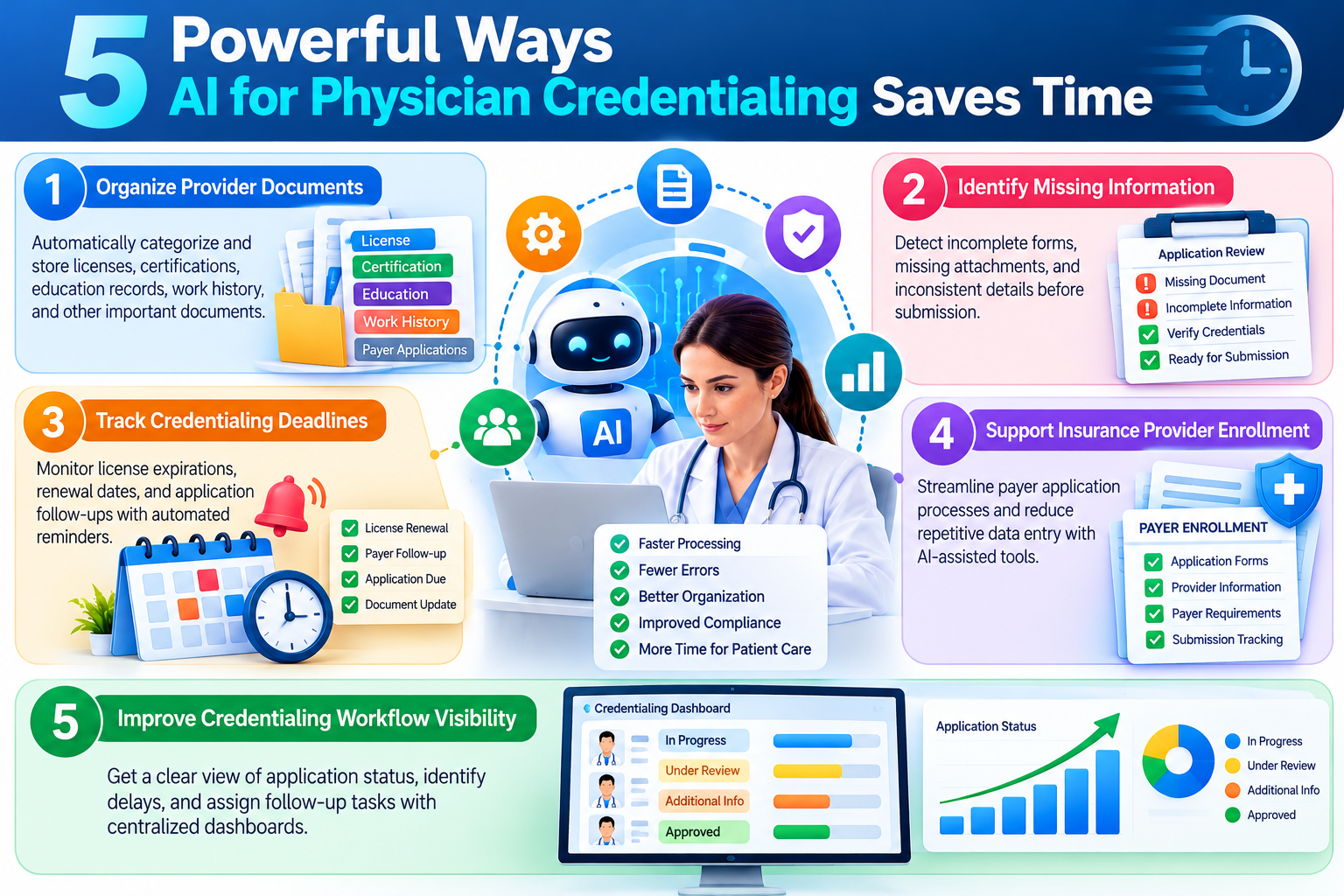
5 Powerful Benefits of AI for Physician Credentialing
1. Organize Provider Documents Efficiently
AI-assisted systems can help organize licenses, certifications, education records, and other provider documents. This makes information easier for authorized staff to locate and review.
A well-organized document management process can also reduce unnecessary searching and help teams identify records that need updating.
2. Identify Missing Information Before Submission
Incomplete applications can lead to additional follow-up and processing delays. Automated document checks may flag missing attachments, incomplete fields, or inconsistent information before an application is submitted.
Credentialing staff should verify every flagged issue against the original records and the relevant organization’s requirements.
3. Track Credentialing Deadlines
Credentialing teams often need to monitor license expiration dates, renewal deadlines, application follow-ups, and other important dates.
AI-assisted workflow tools can organize reminders, assign follow-up tasks, and help staff prioritize upcoming deadlines. These features can support a more consistent process and reduce the risk of overlooking routine administrative tasks.
4. Support Insurance Provider Enrollment
AI can assist with organizing payer application information and reducing repetitive data-entry work. It may also help staff identify information that needs further review before submission.
Because payer requirements vary, credentialing specialists should verify all details and follow the relevant payer’s current instructions.
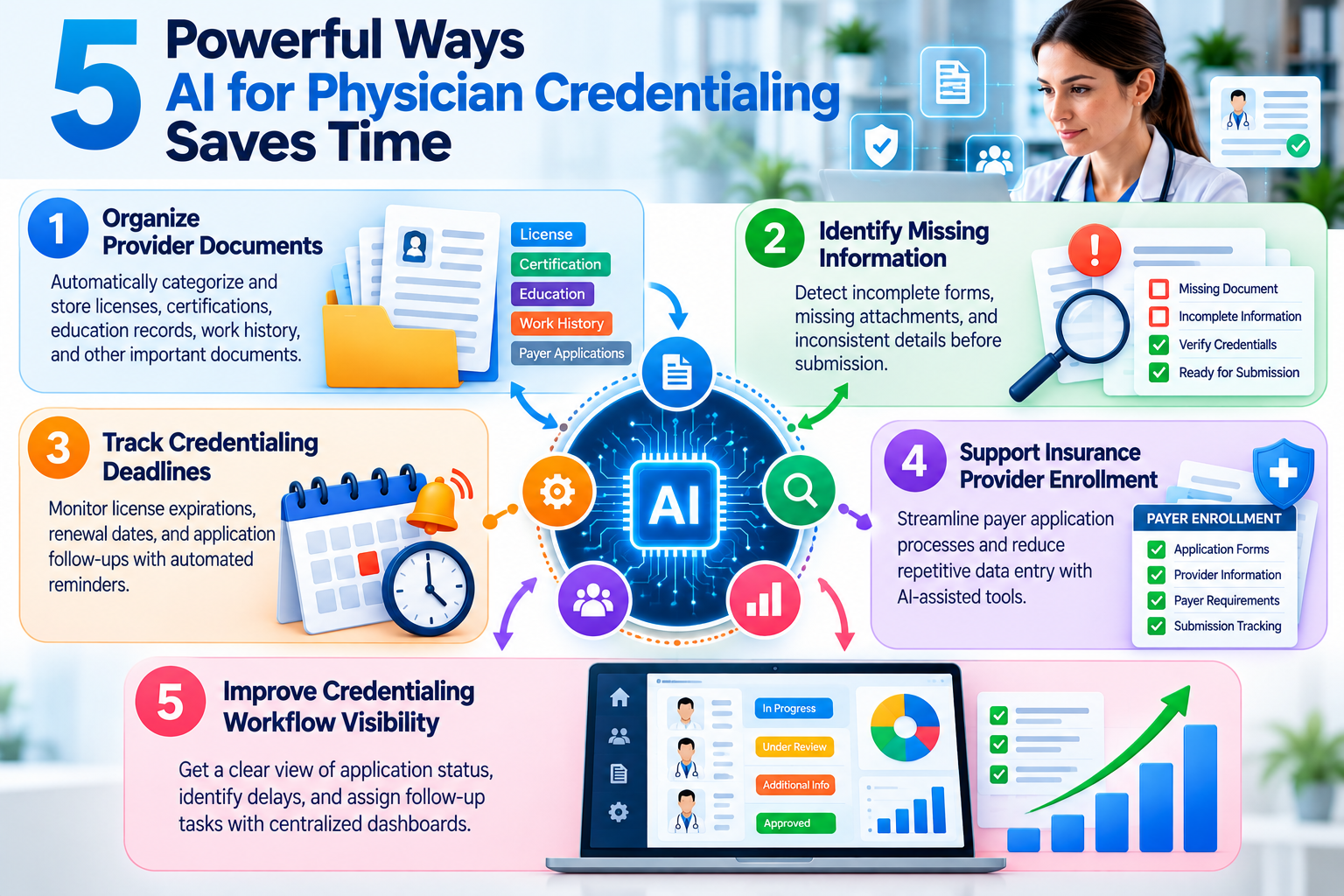
5. Improve Credentialing Workflow Visibility
Centralized dashboards and reporting can help practice administrators monitor application status, identify delays, and assign follow-up tasks.
For example, a team may track applications awaiting documentation, applications submitted to payers, and applications requiring additional information. This visibility can help administrators allocate resources and follow up more consistently.
How Small Medical Practices Can Start Using AI for Physician Credentialing
Small practices do not need to automate their entire credentialing process immediately. A practical starting point is to identify one repetitive administrative task, such as document organization or deadline reminders.
Next, evaluate tools based on their suitability, cost, integration options, access controls, and data-handling policies. Test the workflow with approved data and establish a clear process for human review.
Practices should also measure whether the new workflow improves document completeness, reduces administrative effort, or makes application tracking more consistent. Results should be assessed using actual operational data rather than assumed benefits.
AI for Physician Credentialing and Compliance
Provider information must be handled securely. Medical practices should review vendor security, access permissions, data retention policies, and applicable privacy obligations before using AI tools with sensitive information.
Staff should understand which tools are approved, what information may be entered, and how records must be handled. Practices should also verify that AI-generated summaries and extracted information match the original documents.
For additional information, consult the HHS HIPAA guidance for professionals.
The CAQH website is another useful resource for learning about provider data collection and credentialing-related industry initiatives. Always confirm current requirements with the relevant payer or healthcare organization.
How Pro Health Care Advisors Can Help
Managing provider enrollment requires accurate documentation, consistent follow-up, and attention to payer requirements.
Pro Health Care Advisors offers healthcare administrative services that may help medical practices manage these responsibilities.
Explore our Physician Credentialing and Provider Enrollment services to learn more about available support.
You can also explore Medical Billing and Practice Management for additional help with healthcare administrative workflows.
Frequently Asked Questions
Can AI automate physician credentialing?
AI can assist with document organization, data extraction, reminders, and application tracking. Verification and final decisions still require appropriate human oversight.
Does AI replace provider enrollment specialists?
No. AI can support repetitive tasks, but specialists remain important for reviewing documentation, resolving exceptions, communicating with payers, and verifying requirements.
Is AI for physician credentialing secure?
Security depends on the specific tool and its implementation. Practices should evaluate vendor safeguards, permissions, retention policies, and applicable privacy requirements before using AI with sensitive provider information.
Final Thoughts
AI for physician credentialing can help medical practices organize provider information, track deadlines, and manage repetitive administrative work. The most effective approach combines suitable automation with accurate verification, secure information handling, and human oversight.
For help with provider enrollment and credentialing workflows, visit Pro Health Care Advisors.