








The healthcare industry is changing faster than ever before. Clinics, hospitals, and healthcare providers are under pressure to manage more patients, handle insurance claims quickly, and reduce billing mistakes at the same time.
For years, medical billing has been one of the most stressful parts of running a healthcare practice. Staff members spend hours entering patient data, checking insurance eligibility, correcting claim errors, and following up on unpaid claims.
Now, artificial intelligence is changing everything.
In 2026, AI is no longer just a futuristic idea. It has become a practical tool that helps healthcare providers save time, reduce claim denials, and improve revenue without increasing workload.
Healthcare practices that adopt AI-driven billing systems are seeing faster reimbursements, fewer errors, and smoother operations.
In this guide, we will explore how AI is transforming medical billing, why healthcare providers are adopting it quickly, and what the future looks like for revenue cycle management.
What is AI in Medical Billing?
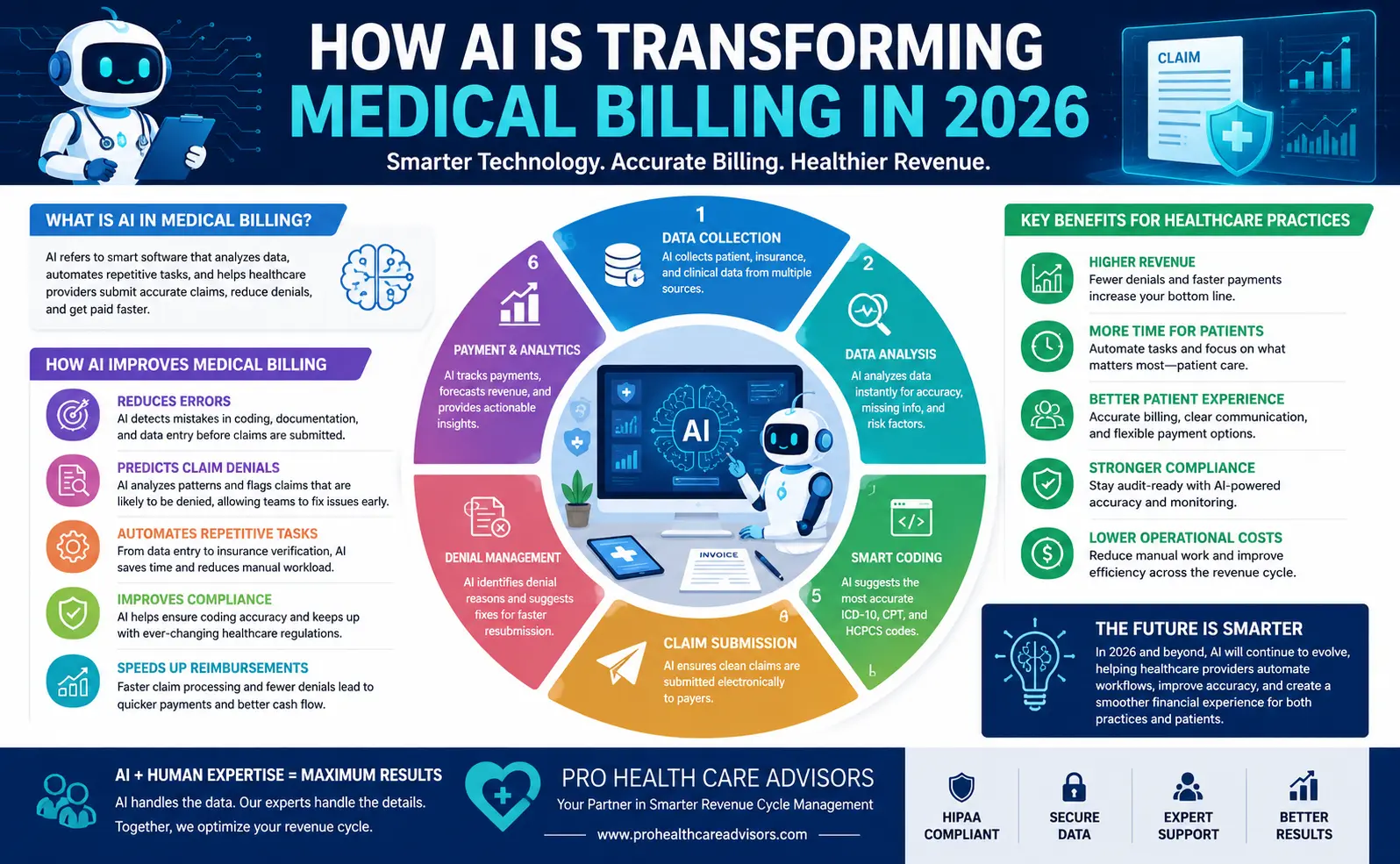
Artificial intelligence in medical billing refers to smart software systems that can analyze data, automate repetitive tasks, and improve billing accuracy without constant human involvement.
Instead of manually processing every claim, AI systems can:
- Detect billing errors
- Verify insurance information
- Predict claim denials
- Automate coding suggestions
- Track unpaid claims
- Improve payment collections
- Analyze billing patterns
These systems learn from data over time, which means they become more accurate and efficient as they process more claims.
Healthcare organizations are now using AI to improve their entire revenue cycle management process.
For healthcare providers looking to improve billing efficiency, professional billing support can make a major difference. Pro Healthcare Advisors offers healthcare-focused revenue cycle management and billing support designed to help practices reduce operational stress.
Why Medical Billing Needs AI in 2026
Medical billing has become more complicated over the years.
Insurance policies change frequently. Coding updates happen regularly. Compliance requirements continue growing. At the same time, healthcare providers expect faster payments and fewer claim rejections.
Traditional billing methods struggle to keep up with these demands.
Common billing problems include:
- Incorrect patient information
- Coding mistakes
- Delayed claim submissions
- Claim denials
- Manual data entry errors
- Slow payment processing
- Staff burnout
AI helps solve these problems by automating tasks that normally take hours of manual work.
According to American Medical Association, administrative burdens continue to impact healthcare practices across the United States. AI-powered systems are becoming an important solution for reducing these inefficiencies.
How AI Improves Medical Billing Accuracy
One small billing mistake can delay payments for weeks.
Traditional billing systems rely heavily on human accuracy. Even experienced billing teams can accidentally enter incorrect codes or miss important details.
AI systems help reduce these errors.
Modern AI billing platforms can:
- Identify missing claim information
- Flag incorrect CPT or ICD codes
- Detect duplicate claims
- Verify payer requirements
- Review claims before submission
This improves clean claim rates and helps practices receive payments faster.
Many healthcare providers now use AI-assisted coding systems to support billing accuracy and compliance.
For practices managing high claim volumes, accurate billing processes are essential for long-term revenue growth.
AI Helps Reduce Claim Denials
Claim denials are one of the biggest financial problems in healthcare billing.
Every denied claim requires additional work:
- Review the issue
- Correct errors
- Resubmit claims
- Follow up with insurance companies
This process consumes valuable time and resources.
AI tools can analyze historical billing data and predict which claims are likely to be denied before submission.
This allows billing teams to fix issues early.
Some AI systems can even recommend:
- Correct coding adjustments
- Documentation improvements
- Insurance verification updates
This proactive approach helps healthcare practices reduce denial rates significantly.
If your practice struggles with denied claims, exploring specialized denial management strategies can improve reimbursement performance.
Faster Insurance Verification with AI
Insurance verification is another time-consuming process.
Staff members often spend hours checking:
- Patient eligibility
- Coverage status
- Co-pay requirements
- Authorization details
AI-powered systems can automate insurance verification in real time.
Benefits include:
- Faster patient check-ins
- Fewer eligibility mistakes
- Better patient experience
- Reduced administrative workload
Automation also helps practices avoid billing patients incorrectly.
This improves trust and reduces confusion for both patients and providers.
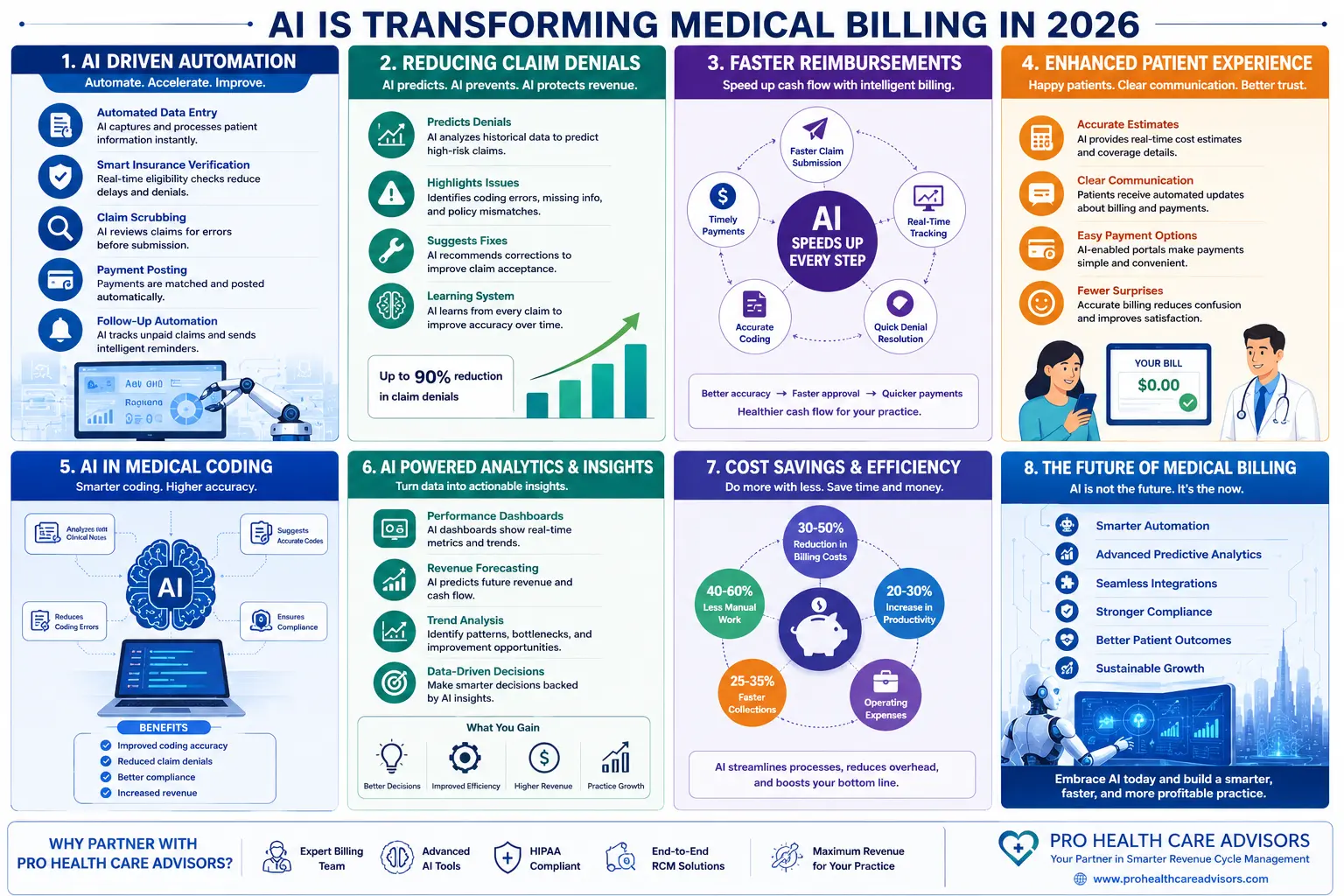
AI and Revenue Cycle Management
Revenue cycle management includes every financial step from patient registration to final payment collection.
AI is improving every stage of this process.
Patient Scheduling
AI systems can:
- Predict appointment no-shows
- Optimize scheduling
- Improve patient communication
Billing & Coding
AI helps:
- Suggest accurate codes
- Reduce manual errors
- Improve documentation quality
Claims Processing
Automation speeds up:
- Claim creation
- Claim validation
- Claim submission
Payment Collection
AI tools can identify:
- Outstanding balances
- Collection risks
- Payment trends
Healthcare practices using AI-driven revenue cycle management often experience:
- Faster reimbursements
- Better cash flow
- Lower administrative costs
The Centers for Medicare & Medicaid Services (CMS) regularly updates billing and compliance requirements, making automation even more valuable for healthcare providers.
How AI Saves Time for Healthcare Staff
Administrative burnout is a growing issue in healthcare.
Medical billing staff often work long hours managing repetitive tasks.
AI helps reduce this pressure by automating routine work.
Examples include:
- Data entry
- Claim tracking
- Eligibility checks
- Payment posting
- Reporting
This allows staff to focus on more important responsibilities that require human attention.
Healthcare practices can improve productivity without constantly increasing staffing costs.
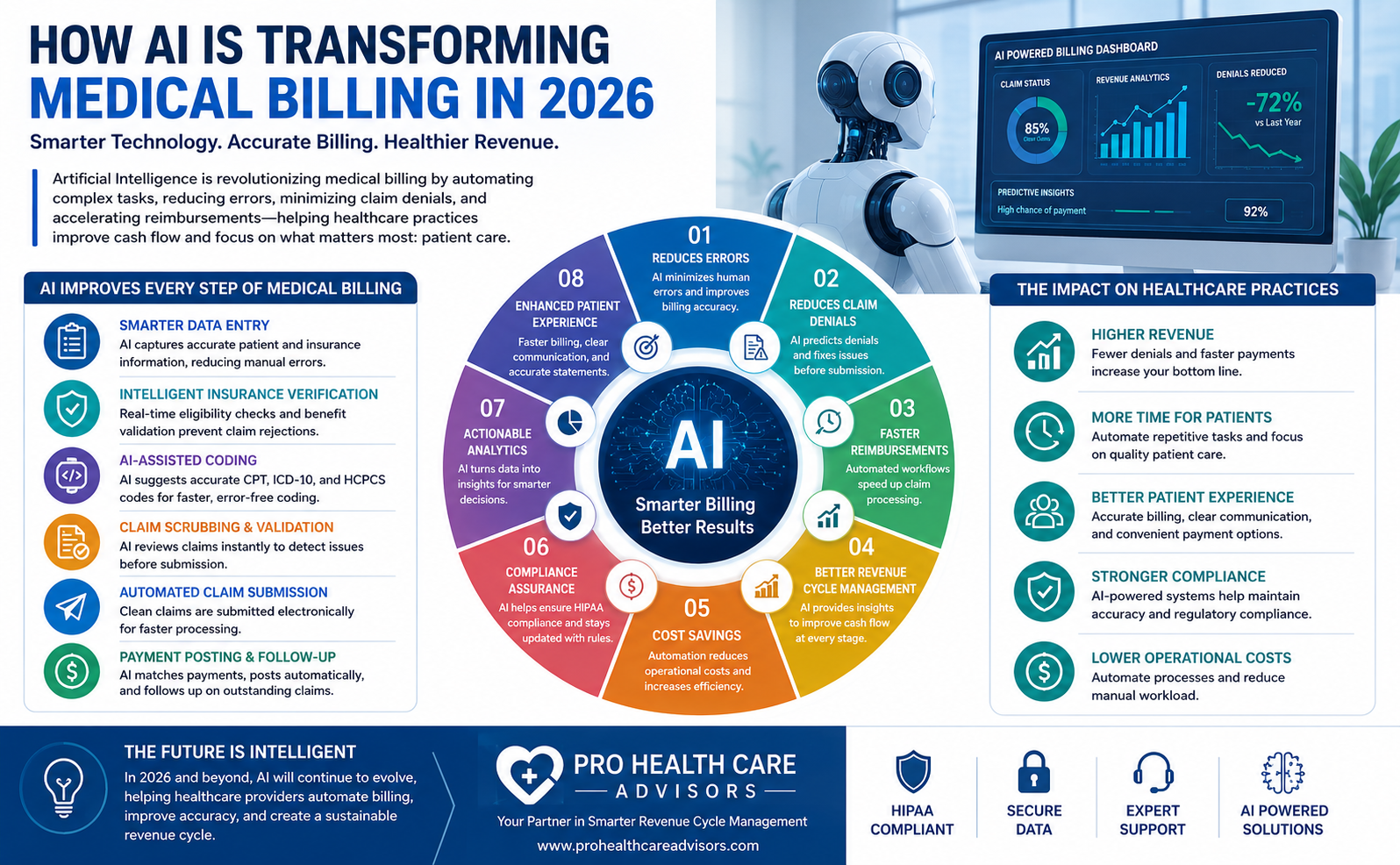
AI Improves Patient Experience
Patients expect faster and more transparent healthcare services.
Billing confusion creates frustration for many patients.
AI-powered systems improve patient communication by:
- Sending automated payment reminders
- Providing accurate billing estimates
- Offering digital payment options
- Reducing billing delays
Clear billing processes improve patient satisfaction and trust.
Happy patients are more likely to return and recommend healthcare providers to others.
AI in Medical Coding
Medical coding is another area experiencing major transformation.
AI-assisted coding tools analyze clinical documentation and suggest accurate billing codes.
This helps:
- Improve coding speed
- Reduce coding errors
- Support compliance requirements
However, human oversight remains important.
Certified coders still play a critical role in reviewing complex cases and ensuring accuracy.
AI works best as a support system rather than a complete replacement for experienced professionals.
Data Security and HIPAA Compliance
Healthcare data security is extremely important.
AI systems used in medical billing must follow strict compliance standards.
Healthcare providers should only work with secure, HIPAA-compliant billing solutions.
The U.S. Department of Health & Human Services (HHS) provides official HIPAA guidelines for healthcare organizations handling patient information.
When choosing AI billing software, practices should review:
- Data encryption standards
- Access controls
- Compliance certifications
- Security monitoring systems
Protecting patient data should always remain a top priority.
Challenges of AI in Medical Billing
Although AI offers many benefits, healthcare providers should also understand potential challenges.
Initial Setup Costs
Some AI billing systems require:
- Software investments
- Staff training
- Workflow updates
However, many practices recover these costs through improved efficiency and faster reimbursements.
Learning Curve
Staff members may need time to adapt to new technology.
Proper onboarding and training are important for successful implementation.
Human Oversight Still Matters
AI is powerful, but healthcare billing still requires human judgment.
Experienced billing professionals remain essential for:
- Complex claim reviews
- Appeals
- Compliance monitoring
- Patient communication
The best results usually come from combining AI technology with experienced billing experts.
Future of AI in Medical Billing
The future of healthcare billing will become even more automated.
Over the next few years, AI systems may provide:
- Predictive financial analytics
- Real-time coding assistance
- Automated appeals management
- Smarter fraud detection
- Personalized patient billing experiences
Healthcare providers that adapt early may gain a major competitive advantage.
Practices using outdated billing systems could struggle with rising administrative demands.
AI is no longer optional for many healthcare organizations. It is becoming an essential part of modern healthcare operations.
How Healthcare Practices Can Start Using AI
Healthcare providers do not need to replace their entire billing system overnight.
A gradual approach often works best.
Step 1: Identify Billing Problems
Start by analyzing:
- Claim denial rates
- Payment delays
- Administrative workload
Step 2: Choose the Right Technology
Look for AI solutions that:
- Integrate with current systems
- Offer healthcare-specific tools
- Support HIPAA compliance
Step 3: Train Staff Properly
Successful implementation requires:
- Clear workflows
- Ongoing support
- Staff education
Step 4: Monitor Results
Track important metrics such as:
- Clean claim rate
- Days in accounts receivable
- Revenue growth
- Denial reduction
Consistent monitoring helps practices improve long-term performance.
Why Outsourced Billing and AI Work Together
Many healthcare providers combine AI technology with outsourced billing services.
This approach offers:
- Professional billing expertise
- Advanced automation tools
- Lower operational stress
- Better financial management
Outsourced billing companies already use modern technology to optimize claim processing and reimbursement workflows.
Healthcare practices can focus more on patient care while experienced billing teams manage financial operations.
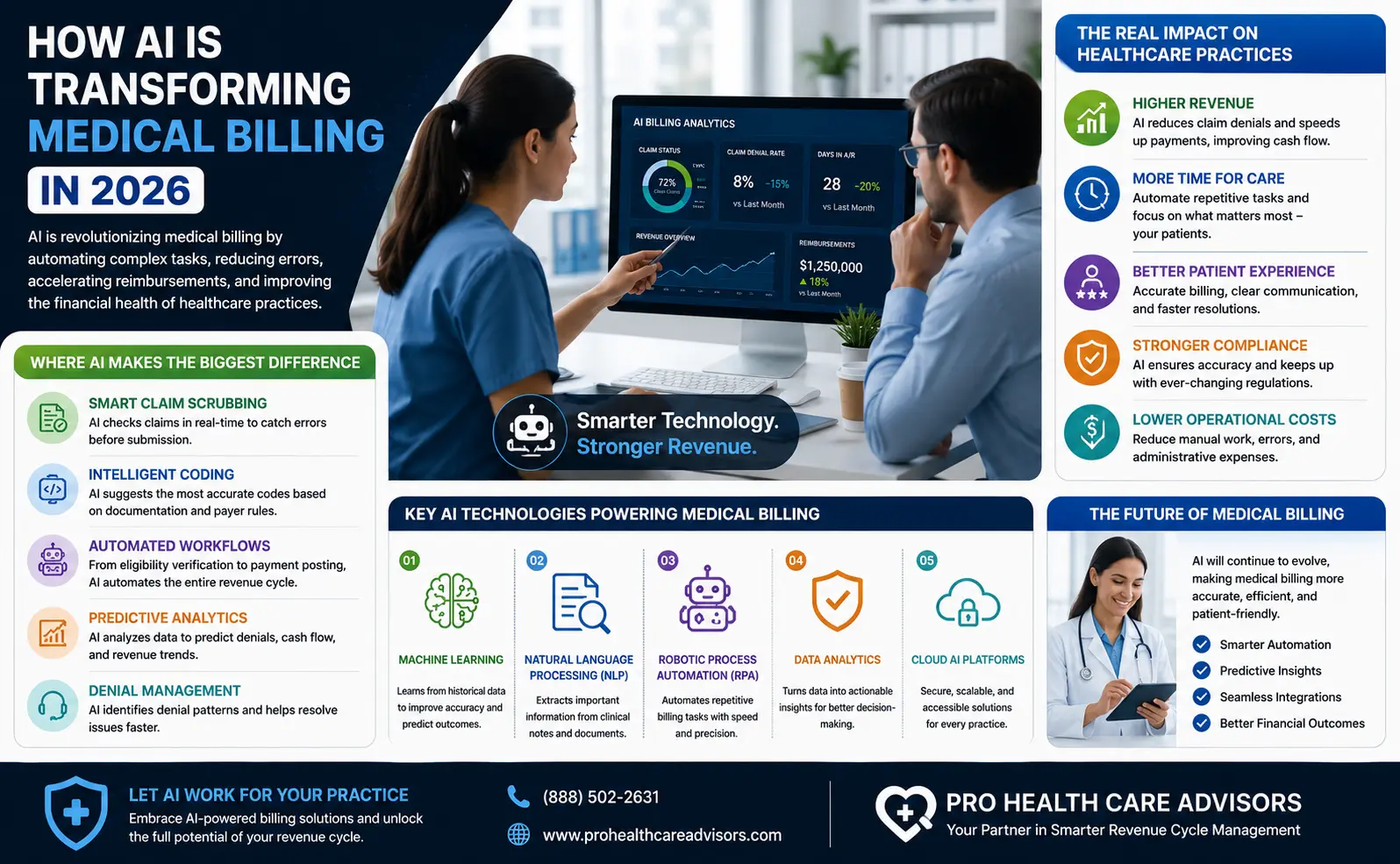
Artificial intelligence is transforming medical billing in ways that were impossible just a few years ago.
Healthcare providers now have access to tools that improve billing accuracy, reduce claim denials, automate repetitive tasks, and strengthen revenue cycle management.
AI is helping practices operate more efficiently while improving the overall patient experience.
At the same time, successful medical billing still depends on experienced professionals who understand healthcare regulations, insurance requirements, and patient communication.
The future belongs to healthcare organizations that combine smart technology with human expertise.
Practices that embrace AI-driven billing solutions today will be better prepared for the growing demands of modern healthcare tomorrow.
Is AI replacing medical billers?
No. AI helps automate repetitive tasks, but experienced billing professionals are still essential for managing complex claims, compliance, and patient communication.
How does AI reduce claim denials?
AI systems analyze claim data, detect errors before submission, and identify patterns that commonly lead to denials.
Is AI medical billing secure?
Yes, when healthcare providers use HIPAA-compliant platforms with strong security protections.
Can small healthcare practices use AI billing tools?
Yes. Many AI billing solutions are designed for small and mid-sized practices looking to improve efficiency and reduce administrative workload.