









Healthcare practices must complete several administrative steps before physicians can participate in insurance networks and receive reimbursement for covered services. Managing applications, verifying professional qualifications, and keeping provider information current can require significant time and attention. Physician credentialing services help healthcare practices organize these responsibilities and maintain a more structured enrollment process.
Whether you operate a private medical office, a specialty clinic, or a growing group practice, an organized credentialing process can support smoother operations and help prevent avoidable administrative delays. Understanding the benefits of professional credentialing support can help you decide which approach best fits your practice.
What Are Physician Credentialing Services?
Physician credentialing services help healthcare organizations collect, review, verify, and submit information about physicians to insurance companies and other relevant organizations. The process may include verifying medical licenses, education, training, certifications, professional history, and other information required by a payer or facility.
Credentialing and insurance enrollment are related but different activities. Credentialing generally focuses on verifying a provider’s qualifications, while payer enrollment involves registering the provider with an insurance program or network so the provider can participate under the applicable requirements.
For Medicare enrollment guidance, visit the official Centers for Medicare & Medicaid Services (CMS) provider enrollment resource.
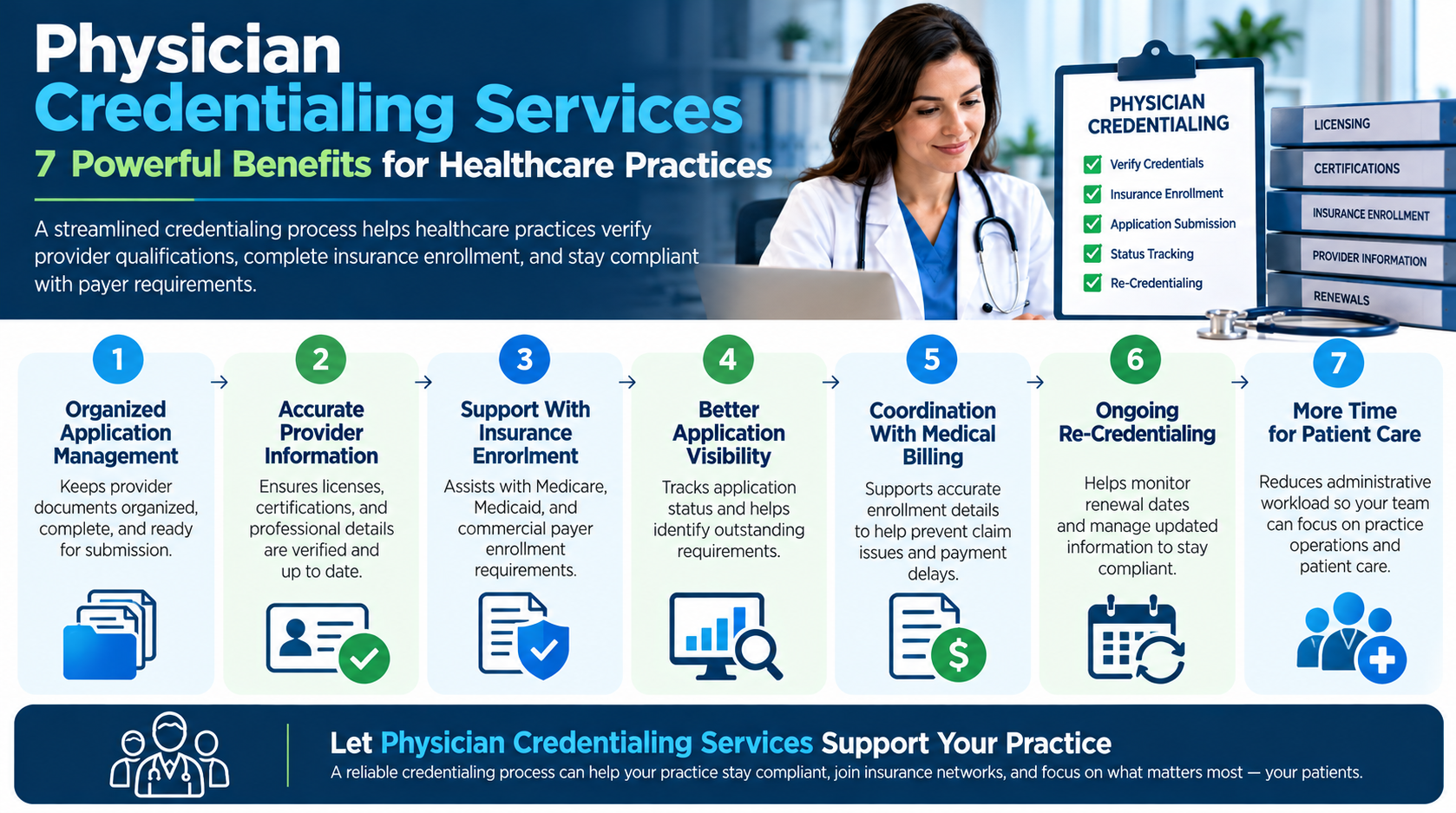
7 Key Benefits of Physician Credentialing Services
1. More Organized Application Management
Credentialing applications often require multiple documents and accurate provider information. Missing paperwork, inconsistent details, or incomplete forms can result in additional requests and processing delays.
Professional medical credentialing services help organize required documents, track application status, and identify missing information before submission. A consistent process can make it easier for practices to manage applications for new providers and existing clinicians.
2. Better Accuracy in Provider Information
Insurance payers may require details about a physician’s education, licenses, certifications, practice locations, and professional background. Inaccurate or outdated information can complicate verification and enrollment.
A structured provider credentialing process helps practices review information carefully and maintain organized records. Providers and practice administrators should still verify the accuracy of submitted details and respond promptly when updated information is requested.
3. Support With Insurance Enrollment
Physicians may need to complete enrollment procedures for Medicare, Medicaid, and commercial insurance networks, depending on their practice and the patients they serve.
Insurance credentialing for physicians can involve preparing applications, collecting supporting documents, submitting information to relevant payers, and monitoring application progress. The exact requirements vary by payer, provider type, and location.
For Medicare-specific requirements, consult the official CMS guide to becoming a Medicare provider or supplier. This resource explains important enrollment steps, including obtaining an NPI when needed and submitting an enrollment application.
4. Improved Visibility Into Application Status
Submitting an application does not mean the process is complete. Applications may remain under review, require additional documentation, or need follow-up with the relevant payer.
Professional credentialing support can help practices maintain application records, document follow-up activities, and identify outstanding requirements. Better status tracking helps administrators understand which applications are pending and which need further attention.
Processing times vary, so practices should avoid assuming that every application will be approved within a fixed period.
5. Better Coordination With Medical Billing
Credentialing and payer enrollment can affect when a practice is eligible to submit claims under the applicable payer rules. Incorrect enrollment details or an unconfirmed effective date can create reimbursement complications.
Coordinating physician insurance enrollment with billing operations helps practices monitor enrollment status and communicate relevant updates to billing staff. Before submitting claims, practices should confirm the provider’s applicable enrollment status, effective dates, and payer requirements.
For related support, explore our Medical Billing and Practice Management Services.
6. Ongoing Re-Credentialing and Information Maintenance
Credentialing is not always a one-time task. Payers and facilities may require periodic re-credentialing or updated documents, while changes in licensure, practice locations, or professional status may need to be reported.
A reliable tracking process helps practices monitor renewal dates, maintain current records, and respond to requests for updated information. Credentialing and enrollment services may provide administrative support with these ongoing responsibilities.
Practices should establish clear procedures for reviewing expiration dates and reporting changes within the applicable deadlines.
7. More Time for Practice Administration and Patient Care
Managing credentialing paperwork internally can add to the administrative workload of physicians and office managers. Organizing documents, tracking submissions, and following up with payers can take time away from other essential practice responsibilities.
Outsourcing selected credentialing tasks may help a practice organize its workflow and reduce the amount of administrative coordination handled internally. The best arrangement depends on the practice’s size, provider volume, existing processes, and budget.
Common Physician Credentialing Challenges
Healthcare practices may experience several challenges during the credentialing process, including:
- Incomplete applications or missing supporting documents.
- Expired licenses or certifications.
- Inconsistent information across application records.
- Delayed responses to payer requests.
- Limited visibility into application progress.
- Missed re-credentialing or renewal deadlines.
- Unclear communication between credentialing and billing teams.
Practices can address these issues by maintaining a central document checklist, assigning clear responsibilities, reviewing provider information regularly, and keeping records of submissions and follow-up activities.
How Healthcare Provider Enrollment Works
Healthcare provider enrollment generally involves registering a clinician or organization with a payer or healthcare program according to its requirements.
Although the precise steps vary, a typical workflow may include:
- Collecting provider information and supporting documentation.
- Reviewing licenses, qualifications, and required identifiers.
- Completing the applicable enrollment application.
- Submitting the application and supporting materials.
- Responding to requests for clarification or additional documents.
- Tracking the application until a decision is received.
- Recording approval details and applicable effective dates.
For Medicare, providers can review enrollment options through the official CMS Provider Enrollment, Chain, and Ownership System (PECOS) information.
Practices should follow the instructions for the relevant payer rather than assuming that one application process applies to every insurance network.
Choosing the Right Credentialing Support
Before selecting a credentialing provider, healthcare practices should assess their administrative needs and the services offered. Useful considerations include:
- Experience with the practice’s specialty and payer requirements.
- Clear communication and application status reporting.
- Organized document collection and verification procedures.
- Processes for monitoring renewals and updated information.
- Appropriate safeguards for sensitive provider information.
- Transparent service scope, pricing, and responsibilities.
A suitable provider should explain what is included in the service, which tasks remain the practice’s responsibility, and how progress will be communicated.
Why Choose Pro Health Care Advisors?
Pro Health Care Advisors supports healthcare practices with credentialing, provider enrollment, and related administrative services. An organized process can help practices manage documentation, track applications, and coordinate enrollment activities with their broader operational needs.
Explore our Physician Credentialing Services to learn more about our services and how we support healthcare providers.
If your practice is managing multiple applications, adding physicians, or trying to keep provider records current, reviewing your existing workflow can help identify opportunities for improvement.
Frequently Asked Questions
What are physician credentialing services?
They provide administrative support for verifying provider qualifications, organizing documents, preparing applications, and managing credentialing-related requirements. Depending on the provider, services may also include payer enrollment and ongoing status tracking.
How long does physician credentialing take?
Processing times vary according to the payer, application completeness, verification requirements, and provider circumstances. Practices should monitor each application and respond promptly to requests for additional information rather than relying on a guaranteed timeline.
What is the difference between credentialing and provider enrollment?
Credentialing generally involves verifying a clinician’s qualifications and professional information. Provider enrollment involves registering the clinician with a payer or program under its applicable requirements. The two processes may overlap but are not identical.
Why is accurate provider information important?
Accurate information helps support verification and application processing. Inconsistent or outdated records may lead to additional questions, corrections, or delays.
Can credentialing affect medical billing?
Yes. Payer enrollment status and effective dates can affect whether services qualify for reimbursement under applicable payer rules. Practices should confirm the relevant requirements before submitting claims.
Should a medical practice outsource credentialing?
Outsourcing may be helpful when a practice needs additional administrative support, application tracking, or help coordinating multiple payer requirements. Practices should compare service scope, experience, security procedures, and cost before making a decision.
Conclusion
Physician credentialing services can help healthcare practices organize provider documentation, manage insurance applications, track enrollment progress, and maintain important renewal information. A consistent process can reduce avoidable administrative problems and improve coordination between credentialing and billing operations.
By choosing an approach that fits their needs and maintaining accurate provider records, healthcare practices can manage credentialing responsibilities more effectively and focus more attention on delivering quality patient care.




