








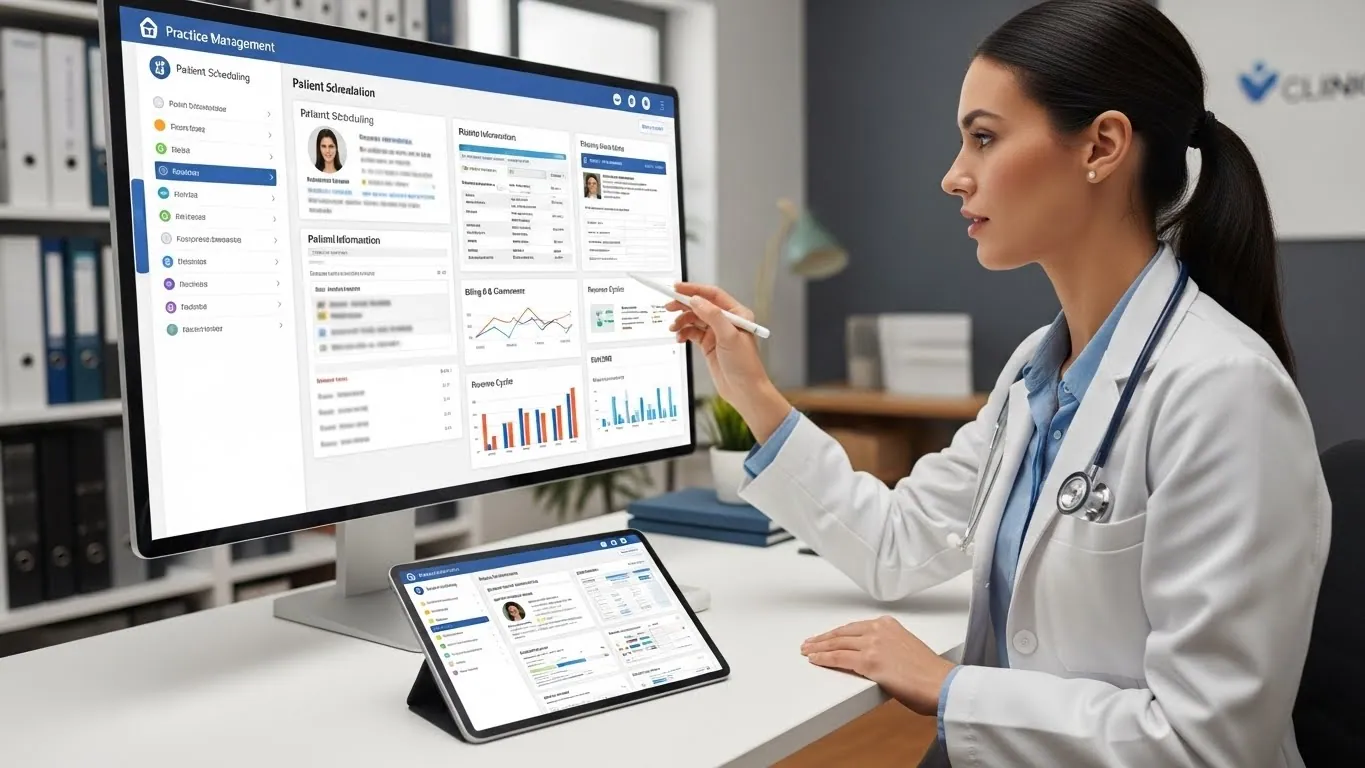
Practice management software in healthcare is a digital platform that streamlines administrative operations including appointment scheduling, medical billing, insurance claims processing, and patient record management. Unlike electronic health records that focus exclusively on clinical documentation, practice management systems handle the business side of healthcare operations, keeping practices financially healthy and operationally efficient. This essential technology enables medical practices to reduce administrative burden, accelerate revenue cycles, and improve patient satisfaction through better organization and communication.
Understanding Practice Management Systems in Modern Healthcare
Practice management software serves as the operational backbone for medical practices, managing the complex administrative workflows that keep healthcare facilities running smoothly. When patients call to schedule appointments, front desk staff use the PMS to check provider availability, book time slots, and send automated reminders that reduce no-show rates. The system tracks patient demographics, insurance information, and contact details in centralized databases accessible to authorized staff members across departments.
Beyond scheduling, these platforms handle the entire revenue cycle from patient registration through final payment collection. Staff can verify insurance eligibility, generate accurate claims, submit bills electronically, and track payments without manual paperwork that creates delays and errors. This automation proves essential for maintaining healthy cash flow and ensuring providers receive timely reimbursement for services rendered.
Core Features of Medical Billing and Practice Management Systems
Modern medical billing and practice management platforms integrate multiple administrative functions into unified systems that eliminate redundant data entry and disconnected workflows. The most effective solutions provide comprehensive toolsets addressing every aspect of practice operations from patient intake through financial reporting.
- Appointment scheduling with automated reminders via email, text, or phone calls
- Patient registration capturing demographics, insurance details, and medical history
- Insurance verification confirming coverage and eligibility before appointments
- Claim submission generating and transmitting electronic claims to payers
- Payment processing accepting credit cards, checks, and electronic payments
- Reporting and analytics tracking key performance indicators and financial metrics
- Patient portals enabling online appointment booking, bill payment, and secure messaging
Pro Health Care Advisors emphasizes that comprehensive Medical Billing and Practice Management systems reduce the time staff spend on administrative tasks, allowing more focus on direct patient care. Integration between scheduling, billing, and reporting modules ensures data flows seamlessly without manual transfers that introduce errors.
How Practice Management Software Differs from Electronic Health Records
Clinical vs Administrative Focus
Electronic health records document clinical encounters, diagnoses, treatment plans, medications, and medical histories for patient care purposes. Practice management systems handle business operations including scheduling, billing, claims processing, and financial reporting without clinical documentation.
Complementary Systems Working Together
Most modern healthcare practices use both EHR and PMS solutions that integrate to share patient demographic information and trigger billing based on documented services. This integration allows providers to document care in the EHR while the PMS automatically generates appropriate billing codes and submits claims.
Different User Groups and Workflows
Clinical staff like physicians and nurses primarily interact with EHR systems during patient encounters and treatment planning. Administrative personnel including front desk staff, billing specialists, and practice managers work mainly in the PMS handling scheduling, claims, and revenue cycle tasks.
Key Benefits of Implementing Practice Management Software
Streamlined scheduling represents one of the most immediate benefits practices experiences after implementing medical billing and practice management systems. Automated appointment reminders reduce no-show rates by 20% to 30%, directly improving revenue and provider productivity. Real-time schedule visibility prevents double booking errors that frustrate patients and create operational chaos.
Revenue cycle improvements deliver substantial financial benefits through faster claim submissions, reduced billing errors, and accelerated payment collection. Practices using advanced medical billing and practice management tools report 15% to 25% reductions in days outstanding in accounts receivable. Automated eligibility verification catches insurance issues before appointments, preventing claim denials that delay payment and require costly rework.
Essential Components of Effective Medical Billing and Practice Management
Scheduling and Registration Tools
Comprehensive scheduling modules display provider availability, appointment types, and room assignments in intuitive calendar views. Online scheduling integrated with patient portals allows 24/7 appointment booking without staff intervention, improving access and convenience.
Revenue Cycle Management Features
Automated claim scrubbing identifies errors before submission, dramatically reducing denial rates and accelerating reimbursement. Integrated payment processing accepts multiple payment methods and automates posting to patient accounts, eliminating manual reconciliation.
Reporting and Analytics Capabilities
Customizable dashboards surface key metrics including appointment volume, revenue trends, collection rates, and payer performance. These data-driven insights enable practice managers to identify operational inefficiencies, optimize staffing levels, and make informed strategic decisions.
Choosing the Right Practice Management System for Your Healthcare Organization
Practice size significantly influences which Medical Billing and Practice Management solution works best for your specific operational needs. Small practices with one or two providers may thrive with straightforward cloud-based systems offering core scheduling and billing features. Large multi-specialty groups require enterprise platforms supporting complex workflows, multiple locations, and sophisticated reporting.
Integration capabilities determine how well your PMS works with existing systems including EHR platforms, lab interfaces, and accounting software. Seamless data exchange eliminates double entry, reduces errors, and ensures information consistency across all platforms. Pro Health Care Advisors recommends prioritizing vendors offering pre-built integrations with your current EHR and other essential systems.
Frequently Asked Questions About Practice Management Software in Healthcare
What Is Practice Management Software in Healthcare?
Practice management software handles administrative operations including scheduling, billing, claims processing, and revenue cycle management for medical practices.
How Does Practice Management Software Differ From EHR?
PMS manages business operations like billing and scheduling while EHR documents clinical information like diagnoses and treatment plans.
What Are the Main Features of Medical Billing and Practice Management Systems?
Core features include appointment scheduling, insurance verification, claim submission, payment processing, reporting, and patient portals.
How Much Does Practice Management Software Cost?
Pricing typically ranges from $200 to $500 per provider monthly for cloud-based systems, with higher costs for enterprise solutions.
Can Small Practices Benefit from Practice Management Software?
Yes, even solo practitioners gain efficiency improvements, better revenue cycle management, and enhanced patient communication through PMS adoption.
Does Practice Management Software Integrate with EHR Systems?
Most modern PMS solutions offer integration with popular EHR platforms, enabling seamless data exchange between clinical and administrative systems.
Should Practices Outsource Billing or Use Practice Management Software?
Both options works depending on practice size, resources, and preferences, with many practices using PMS for scheduling while outsourcing billing functions.